Kakamega Forest National Reserve: Kenya's Last Tropical Rainforest, Biodiversity and Western Kenya Tourism Frontier
Kakamega Forest National Reserve: Kenya's Last Tropical Rainforest, Its Biodiversity, Conservation Politics and Western Kenya Tourism Frontier
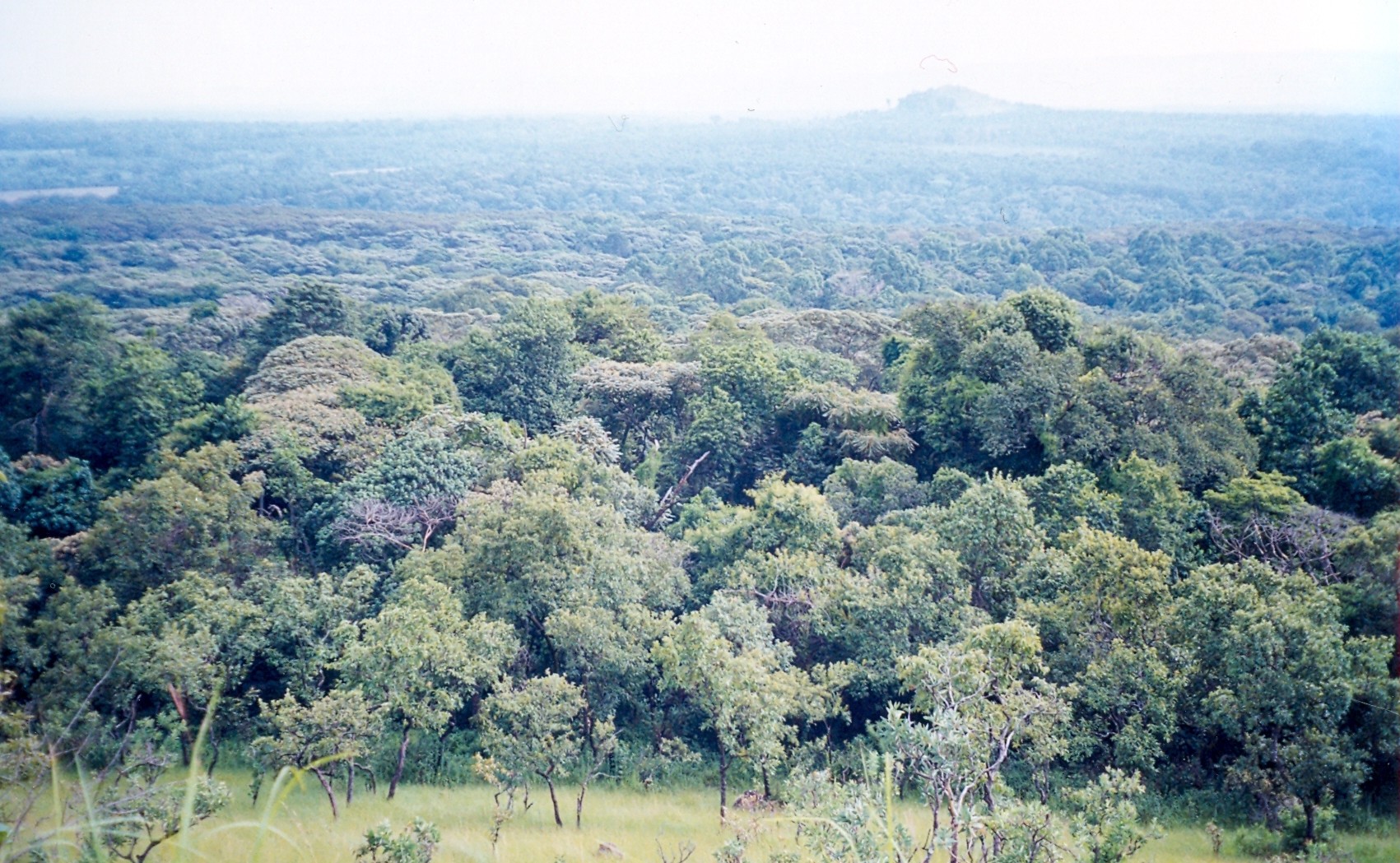
Kakamega Forest National Reserve is the easternmost remnant of the Guineo-Congolian rainforest that once stretched in an unbroken canopy across equatorial Africa. Today the forest sits as a green island of around 240 square kilometres in the densely cultivated western Kenya highlands, jointly managed by the Kenya Forest Service and the Kenya Wildlife Service. It is the most biologically distinct protected area in the country, the only place in Kenya where a traveller can experience true tropical rainforest, and the cornerstone of a slowly growing tourism economy in Kakamega, Vihiga and the wider western counties.
Location, Geography and Climate
The forest reserve straddles the Kakamega and Nandi counties, with the principal entry gates at Isecheno on the southwest side, Buyangu in the north and Udo's Bandas on the eastern edge. The forest lies between 1,500 and 1,700 metres above sea level, with the Yala and Isiukhu rivers draining its terrain into the Lake Victoria basin. Rainfall is high and reliable, averaging between 1,800 and 2,200 millimetres a year in two distinct rainy seasons, and average temperatures stay between 18 and 28 degrees Celsius year-round. The conditions sustain a multi-layered canopy that, in undisturbed sections, reaches more than 35 metres in height, with characteristic emergents of Aningeria altissima, Olea capensis, Antiaris toxicaria and the giant Elgon teak Olea welwitschii.
Biodiversity: Birds, Primates, Butterflies, Trees
Kakamega is celebrated for a level of biodiversity that has no parallel elsewhere in Kenya. Over 380 bird species have been recorded inside the reserve, including the Great Blue Turaco, the Black-and-White Casqued Hornbill, the Blue-Headed Bee-Eater and the rare African Grey Parrot. The forest holds seven primate species, dominated by the eastern black-and-white colobus, the blue monkey and the De Brazza's monkey, alongside the elusive potto, the bushbaby, and the red-tailed monkey. Butterfly diversity exceeds 400 recorded species, with seasonal swarms of forest pierids and nymphalids creating one of the most spectacular invertebrate displays anywhere in East Africa. Tree diversity is in the hundreds of species, many of them not found elsewhere in Kenya, and the National Museums of Kenya's botanical collections from Kakamega remain a foundational reference for East African rainforest flora. The Kenya Wildlife Service maintains updated species lists and visitor advisories at the KWS portal.
Conservation Politics and Forest Loss
The history of Kakamega is, in a deep sense, a history of contested forest boundaries. At the start of the colonial period the forest covered an estimated 240,000 hectares. Subsequent decades of excisions for agriculture, the Nyayo Tea Zone of the 1980s, and the relentless demand for fuelwood, charcoal and building poles reduced the forest to its present footprint. The Kenya Forest Service, established under the Forest Conservation and Management Act 2016, today manages most of the reserve, while the national reserve component on the Buyangu side falls under Kenya Wildlife Service jurisdiction. The Community Forest Associations established under the participatory forest management framework have become the principal interface between forest-edge communities and the management agencies, and have substantially reduced uncontrolled extraction in many sections. Authoritative information on forest policy is curated by the Kenya Forestry Research Institute and the Kenya Forest Service.
Tourism Infrastructure and Visitor Experience
Kakamega Forest visitor infrastructure is modest by comparison with Kenya's headline parks but is well-suited to the niche of birding, butterfly and primate watching. The Isecheno entrance offers self-catering bandas operated by KFS, a research station, and guided walking trails of varying difficulty. The Udo's Bandas option on the KWS side offers more upmarket self-catering accommodation. Local communities operate homestays and small guesthouses along the Khayega-Shinyalu road. Guided nature walks are the principal activity, with sunrise walks for primates and bird display, daytime walks for butterflies and forest botany, and night walks for the pottos and bushbabies that emerge from the canopy. Forest research stations operated by the National Museums of Kenya and several universities periodically host visiting researchers and students.
The Local Economy: Forests, Smallholders and Energy
The economic story of Kakamega cannot be told without the smallholder farms that ring the forest. Most households on the forest edge depend on a mosaic of maize, beans, bananas, tea, sugarcane and dairy, supplemented by forest products such as firewood, herbal medicines, honey and seasonal fungi. The Kakamega county economy is anchored in agriculture, with sugarcane processing in Mumias, gold mining at Rosterman and Ikolomani, and a small but growing manufacturing sector. The forest matters to this economy as a watershed for the Yala and Isiukhu rivers that feed irrigation, fish ponds and household water supply across the county, and as a regulator of local rainfall.
Climate and Watershed Importance
Kakamega Forest is one of Kenya's five major water towers along with Mount Kenya, the Aberdares, the Mau Complex and Mount Elgon. The forest captures and slowly releases rainfall into the Lake Victoria basin, contributing to the perennial flow of the Yala, Isiukhu and Nzoia rivers and ultimately to Lake Victoria itself. Climate research has shown that deforestation in Kakamega in the late twentieth century was accompanied by detectable changes in local rainfall patterns, longer dry seasons and reduced reliability of small-stream flow. The conservation case for Kakamega is therefore not only about birds and butterflies. It is about the water supply of half of western Kenya.
Cultural Heritage and the Luhya Connection
The forest sits at the heart of Luhya country and is woven into the cultural traditions of the surrounding Tiriki, Idakho, Isukha, Maragoli and Banyore sub-communities. The Crying Stone of Ilesi to the southeast, and the sacred forest groves used historically for ritual and circumcision ceremonies, anchor Kakamega's intangible heritage. The forest's herbalists and traditional healers retain a deep ethnobotanical knowledge of the medicinal plants of the forest, and University of Nairobi research has documented dozens of species used in traditional medicine. Cultural tourism, particularly visits to traditional Luhya homesteads and seasonal cultural events, is increasingly bundled with forest tourism to extend visitor stays.
Investment and Diaspora Opportunities
For diaspora Kenyans with roots in Western Kenya, Kakamega Forest opens several investment angles. Eco-lodge and tented camp construction along the forest periphery is one. Bee-keeping and forest honey production, with branding and certification, is another. Community-based tourism partnerships with forest-edge villages can support both ecological and economic outcomes. Conservation philanthropy directed through accredited bodies such as the Kenya Forests Working Group and the Nature Kenya Important Bird Area programme is a low-cost, high-leverage option for those who do not seek to operate businesses directly.
The Future of Kakamega
The forest's future depends on a small number of decisions. First, definitive boundary surveying and gazettement to end ambiguity at the forest edge. Second, sustainable financing for the Kenya Forest Service and the local Community Forest Associations, including a clearer share of tourism receipts flowing back to the communities. Third, expansion of community alternative livelihoods, particularly improved cookstoves and tree-planting on private land, to reduce pressure for forest fuelwood. Fourth, integration of Kakamega into the broader western Kenya tourism circuit alongside Lake Victoria, Mount Elgon, the Cherangani Hills and Saiwa Swamp. The reserve is small in area by Kenyan standards but disproportionately large in ecological and cultural significance. Its protection is a quiet but essential element of the country's national conservation agenda.
More Articles

The Multiparty Era Reforms: Saba Saba, the Repeal of Section 2A and Kenya's Return to Political Pluralism
Jul 02, 2026

Eye Care in Kenya: Cataract, Trachoma and the Long Road to Universal Vision Health
Jul 02, 2026

Shaba National Reserve: Joy Adamson's Last Wilderness and Isiolo's Semi-Desert Safari Gem
Jul 02, 2026

The Rendille People of Northern Kenya: Camel Pastoralism, Clan Traditions and a Culture Under Pressure
Jul 02, 2026

Ukulima Sacco: From Ministry of Agriculture Staff Society to a National Cooperative Open to All Kenyans
Jul 02, 2026