Tsavo East National Park: Red Elephants, the Galana River and Kenya's Largest Wilderness
Tsavo East National Park: Red Elephants, the Galana River and Kenya's Largest Wilderness
Tsavo East National Park is one of the oldest and largest protected areas in Kenya, a vast theatre of red-dust savanna, palm-lined rivers and free-ranging elephant herds that stretches across the country's south-east. Together with neighbouring Tsavo West, it forms one of the biggest conservation landscapes in Africa. For domestic visitors, international tourists and the Kenyan diaspora planning a homecoming safari, Tsavo East offers an accessible yet genuinely wild experience within easy reach of both Nairobi and the coast.
Size, Location and Establishment
Tsavo East covers roughly 13,747 square kilometres and lies near the town of Voi in Taita-Taveta County, between Nairobi and Mombasa. It was established in 1948 and is divided from Tsavo West by the Nairobi-Mombasa railway and highway corridor. Managed by the Kenya Wildlife Service, the park is larger than several countries and forms the core of the wider Tsavo Conservation Area, which sustains one of the most important elephant populations on the continent. Its sheer scale means much of the park remains remote and lightly visited, preserving a sense of untamed wilderness increasingly rare in East Africa.
The Famous Red Elephants
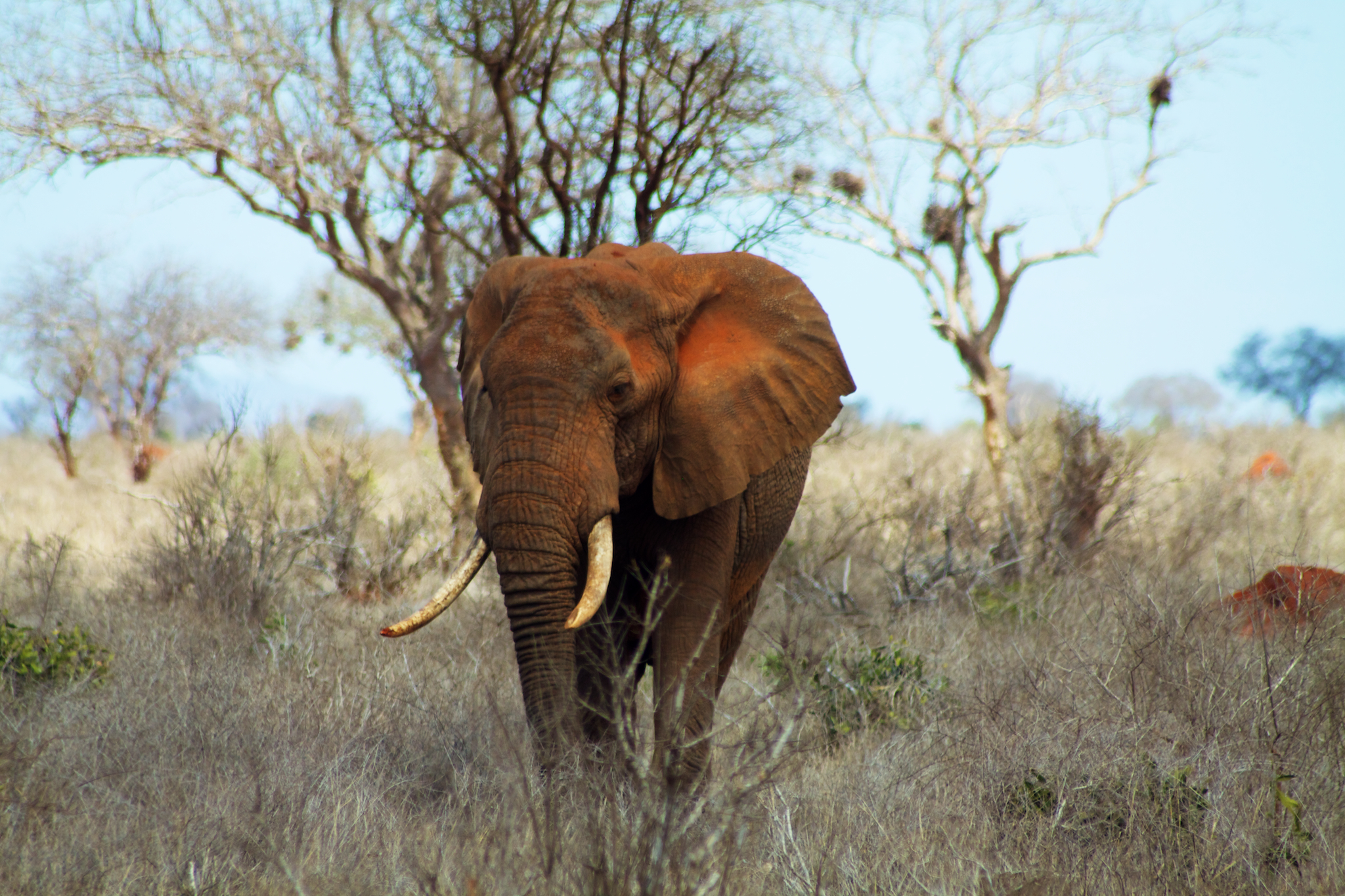
Tsavo's signature spectacle is its red elephants. The animals are not a distinct species or subspecies; rather, they acquire their distinctive rust-red hue by dust-bathing and wallowing in the park's iron-rich, volcanic red soils. The dust coating serves a practical purpose, acting as a natural sunscreen and insect repellent that protects the elephants' skin from the harsh equatorial sun. The Tsavo ecosystem holds the largest elephant population in Kenya, estimated at over 12,000 animals, making sightings of large herds highly likely, particularly around water sources during the dry season. These herds are a living symbol of Kenya's conservation efforts and a major draw for wildlife photographers.
The Galana River, Lugard Falls and Aruba Dam
Water defines wildlife movement across the park. The Galana River, one of Kenya's longest, winds through Tsavo East and provides a permanent lifeline for game. Along its course lie Lugard Falls, named after Captain Frederick Lugard, where the river is forced through a dramatically eroded neck of rock before plunging into foaming rapids and crocodile-filled pools. Further south, the Aruba Dam, built across the seasonal Voi River, creates a reservoir that attracts thousands of animals and ranks among the park's finest game-viewing spots. Other landmarks include the Yatta Plateau, reputed to be one of the world's longest lava flows, and the Mudanda Rock, a natural water catchment that concentrates wildlife in the dry months.
Wildlife Beyond the Elephants
While elephants dominate the park's reputation, Tsavo East supports the full complement of the Big Five, with buffalo, leopard, lion and rhino all present alongside the great herds. The park is also notable for arid-adapted and uncommon species, including the hirola antelope, fringe-eared oryx, lesser kudu, gerenuk and the striking Grevy's zebra at the northern fringes of its range. Birdlife is abundant along the rivers and around the dams, with hundreds of species recorded. The mix of open plains, riverine woodland and semi-arid scrub creates a diversity of habitats that few single parks in Kenya can match.
The Man-Eaters of Tsavo
Tsavo's name carries a dark historical legend. During the construction of the Uganda Railway in 1898, two maneless male lions killed a large number of railway workers near the Tsavo River, halting the project for weeks and entering history as the Man-Eaters of Tsavo. The episode, later dramatised in books and film, cemented Tsavo's reputation in the global imagination and remains a defining chapter in the colonial-era history of the railway. The lions of Tsavo continue to be studied for their unusual social and physical characteristics, adding a layer of scientific intrigue to the park's appeal.
Conservation Challenges and Anti-Poaching
The Tsavo ecosystem has been at the frontline of Kenya's battle against elephant and rhino poaching. During the poaching crises of the late twentieth century, Tsavo's elephant numbers fell dramatically before recovering through sustained anti-poaching operations, aerial surveillance and community engagement. Today the Kenya Wildlife Service, supported by conservation partners and trusts operating in the landscape, runs ranger patrols, water-provision programmes and human-wildlife conflict mitigation along the park boundaries. Drought, habitat pressure and conflict with expanding farming communities on the park's edges remain ongoing management concerns that require continuous investment.
Tourism, Access and the Diaspora Visitor
Tsavo East is among the most accessible major parks in Kenya. It is reachable by road from both Nairobi and Mombasa, and the Voi and Mombasa gates connect conveniently to the coastal tourism circuit, allowing visitors to combine a beach holiday with a genuine bush safari. The Standard Gauge Railway has further improved access, with stations near the park. Accommodation ranges from luxury lodges to self-catering bandas and campsites, and park entry is managed through the Kenya Wildlife Service ticketing system. For diaspora families seeking to reconnect children with Kenya's natural heritage, Tsavo East offers a manageable, rewarding and relatively affordable safari close to major transport links.
Conclusion
Tsavo East National Park condenses much of what makes Kenya a global wildlife destination: immense scale, iconic red elephants, dramatic rivers and a history that blends natural wonder with human legend. As a cornerstone of the country's conservation estate and tourism economy, it carries both extraordinary ecological value and a continuing responsibility to protect it. Whether approached from Nairobi or the coast, Tsavo East remains one of the most authentic wilderness experiences in East Africa, and a powerful reminder of the natural patrimony that underpins Kenya's identity and economy.
More Articles

The Multiparty Era Reforms: Saba Saba, the Repeal of Section 2A and Kenya's Return to Political Pluralism
Jul 02, 2026

Eye Care in Kenya: Cataract, Trachoma and the Long Road to Universal Vision Health
Jul 02, 2026

Shaba National Reserve: Joy Adamson's Last Wilderness and Isiolo's Semi-Desert Safari Gem
Jul 02, 2026

The Rendille People of Northern Kenya: Camel Pastoralism, Clan Traditions and a Culture Under Pressure
Jul 02, 2026

Ukulima Sacco: From Ministry of Agriculture Staff Society to a National Cooperative Open to All Kenyans
Jul 02, 2026