The Maasai Community of Kenya: Pastoralist Heritage, the Maasai Mara and Amboseli Homeland, Cultural Tradition and Contemporary Identity
The Maasai Community of Kenya: Pastoralist Heritage, the Maasai Mara and Amboseli Homeland, Cultural Tradition and Contemporary Identity
The Maasai are one of the most internationally recognised East African ethnic communities, with approximately 1.2-1.5 million Maasai across Kenya (the 2019 Census recorded approximately 1.2 million Kenya Maasai, approximately 2.5 per cent of the national population) and a comparable population in Tanzania across the international border. The community is concentrated in southern Kenya in the counties of Narok (the largest Maasai-population county and the location of the Maasai Mara), Kajiado (the area south of Nairobi extending to the Tanzanian border, including Amboseli), Samburu (where the closely related Samburu community is sometimes treated as a Maasai sub-group), and the broader Maa-speaking corridor extending from Kenya to Tanzania. The Maasai language (Maa) is a Nilotic language closely related to Samburu, Camus, and the broader Maa-language cluster. The community is famous globally for the distinctive cultural practice — the red shuka cloth, the warrior tradition, the ceremonial dance forms, the cattle-centred pastoral economy, the moran (warrior) age-grade system, the beadwork that is one of the most distinctive African artistic traditions, and the broader cultural heritage that has made the Maasai one of the most visually recognised African ethnic communities in international media. The Maasai are also at the centre of one of Kenya's most successful conservation models — the community conservancies surrounding the Maasai Mara and the Amboseli ecosystem that have produced both wildlife conservation success and meaningful community economic benefit. This guide walks through the Maasai history, the cultural traditions, the contemporary economy, the conservation conservancies, the challenges, and the broader place of the Maasai in Kenyan and East African society.
Origins and Migration
The Maasai migration story places the community as part of the broader Nilotic movement southward from the Nile valley, with the Maasai-specific migration arriving in the southern Rift Valley between the 15th-18th centuries. The community expanded across the broader savannah grasslands of present-day southern Kenya and northern Tanzania over the subsequent centuries, with the broader Maa-speaking population establishing the contemporary settlement pattern. The Maasai oral tradition centres the historical narrative around the broader pastoral expansion, the cattle-raiding traditions that defined inter-community relations of the pre-colonial period, and the broader Maa-language community identity.
Pre-Colonial Society
Pre-colonial Maasai society was organised around the age-grade system — the moran (warrior, junior adult), the elder, and the broader age-stratified social organisation. Cattle were the principal economic and cultural focus, with Maasai cosmology placing the community in a unique relationship with cattle (the Maasai oral tradition includes the foundational narrative that the deity Enkai gave all cattle to the Maasai). The community's pastoral economy combined seasonal grazing across substantial territories with the broader social-organisation that supported the cattle-centred lifestyle. Religious practice centred on Enkai (God) with the broader spiritual practice involving the laibon (spiritual leader, traditional medicine practitioner, ritual specialist).
The Colonial Land Dispossession
The colonial era was particularly devastating to the Maasai. The 1904 and 1911 "Maasai Agreements" between the British colonial administration and the Maasai elders — negotiated under duress and subsequently the subject of substantial historical and legal controversy — alienated approximately 50,000 square kilometres of the most fertile Maasai grazing land into European settler farms, restricting the community to the Southern Reserve (today's Narok and Kajiado counties). The 1911 Agreement extended the dispossession by relocating northern Maasai to the southern reserve, completing the colonial land alienation. The historical Maasai land grievances have been subject to subsequent legal cases including the 2004 Maasai Centenary land case that sought compensation for the historical dispossession.
Cultural Traditions
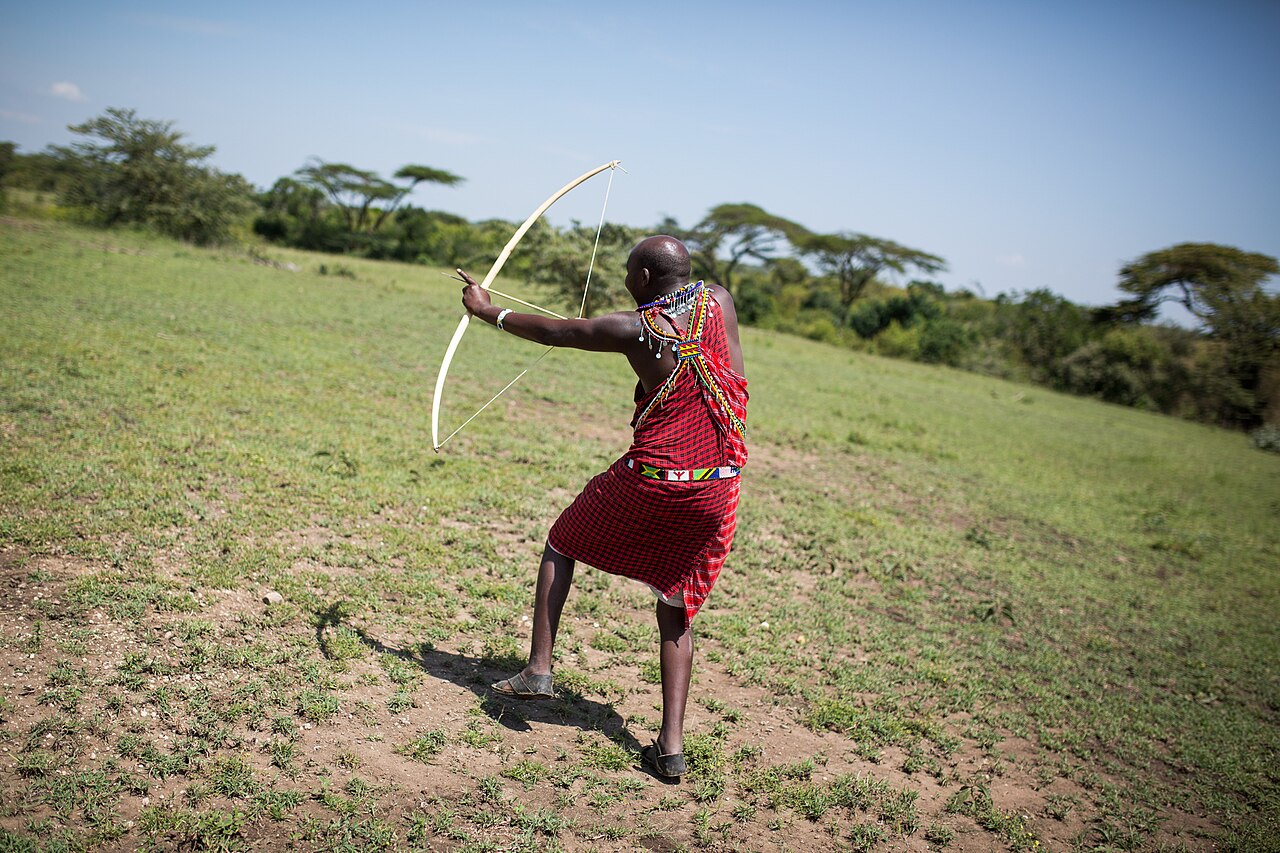
Maasai cultural traditions are among the most documented and internationally recognised African cultural heritage. The age-grade system — the moran initiation marking the transition from boyhood to junior-adult warrior status, the subsequent age-set progression through senior warrior, junior elder, and senior elder stages, and the broader age-defined social structure — organises Maasai male social life. The eunoto ceremony marking the transition from moran to elder status is one of the most elaborate community-wide ceremonies. The cultural traditions include the distinctive dance forms (the high jumping dance of the moran, the broader ceremonial dance forms), the beadwork traditions (the distinctive Maasai beadwork that is one of the most internationally recognised African artistic traditions), the body adornment practices, the architectural traditions (the enkang homestead built from mud, sticks, and cattle dung), the music traditions, and the broader cultural heritage.
The Maasai Mara and Amboseli Conservancies
The community conservancies surrounding the Maasai Mara National Reserve and the Amboseli National Park represent one of the most successful integrations of conservation and community development in Africa. The conservancy model — described in our companion articles on the Maasai Mara and Amboseli — leases Maasai community-owned land to tourism operators under long-term agreements that share revenue with the host communities. The cumulative impact has been substantial: tens of millions of dollars annually in conservancy revenue distributed to Maasai land-owners, expanded wildlife habitat that supports the broader ecosystem, reduced human-wildlife conflict through the structured land-use planning, and the broader integration of conservation with community development objectives. The model has been studied as a template for community-anchored conservation across Africa.
Contemporary Economy
The contemporary Maasai economy combines traditional pastoralism (cattle, sheep, and goats remain economically and culturally central), conservancy and tourism income (substantial flows particularly in the Mara and Amboseli regions), substantial wheat farming in Narok (the Narok wheat-and-livestock belt is one of Kenya's principal wheat-producing regions), the broader smallholder agriculture in the higher-rainfall areas, the substantial real estate and infrastructure development in Kajiado (the southern Nairobi metropolitan area, with Maasai land progressively converted to residential and commercial real estate), and the broader urban-professional economy of the Maasai diaspora in Nairobi and beyond.
Challenges
The Maasai community faces several challenges. Land subdivision and sale — the historical communal land tenure has progressively been formalised into individual titled holdings, with substantial subsequent sale that has reduced the community land base. Climate change affecting the pastoral environment through more frequent droughts has pressured the traditional pastoral economy. Education access in remote pastoral areas remains a challenge despite substantial improvement. Cultural transformation pressures from the broader Kenyan economy require careful navigation between cultural preservation and economic-development opportunities. The Maa Council, the Maasai Civil Society, and the broader community institutions address these challenges through advocacy, education, and the conservation conservancy infrastructure.
The Bigger Picture
The Maasai community combines deep cultural heritage, substantial international visibility through tourism, successful community-anchored conservation, and the broader contemporary economic transformation. The community's continued cultural vitality alongside the engagement with the modern Kenyan economy represents one of the most documented examples of African indigenous-community navigation of contemporary development. For Kenyans, for visitors to the Mara and Amboseli, and for the broader audience interested in African pastoralist communities, the Maasai experience is one of the most distinctive elements of Kenyan and East African cultural heritage.
The National Museums of Kenya hosts ethnographic collections relevant to Maasai cultural heritage. The Kenya Wildlife Conservancies Association coordinates the conservancy network that anchors much of the contemporary Maasai conservation economy.
More Articles

The Multiparty Era Reforms: Saba Saba, the Repeal of Section 2A and Kenya's Return to Political Pluralism
Jul 02, 2026

Eye Care in Kenya: Cataract, Trachoma and the Long Road to Universal Vision Health
Jul 02, 2026

Shaba National Reserve: Joy Adamson's Last Wilderness and Isiolo's Semi-Desert Safari Gem
Jul 02, 2026

The Rendille People of Northern Kenya: Camel Pastoralism, Clan Traditions and a Culture Under Pressure
Jul 02, 2026

Ukulima Sacco: From Ministry of Agriculture Staff Society to a National Cooperative Open to All Kenyans
Jul 02, 2026