Kenya Finance Bill 2026 Mobile Money VAT: How the 16% Tax on M-Pesa, Airtel Money and Pesapal Will Hit Consumers and the Diaspora
Kenya Finance Bill 2026 Mobile Money VAT: How the 16% Tax on M-Pesa, Airtel Money and Pesapal Will Hit Consumers and the Diaspora
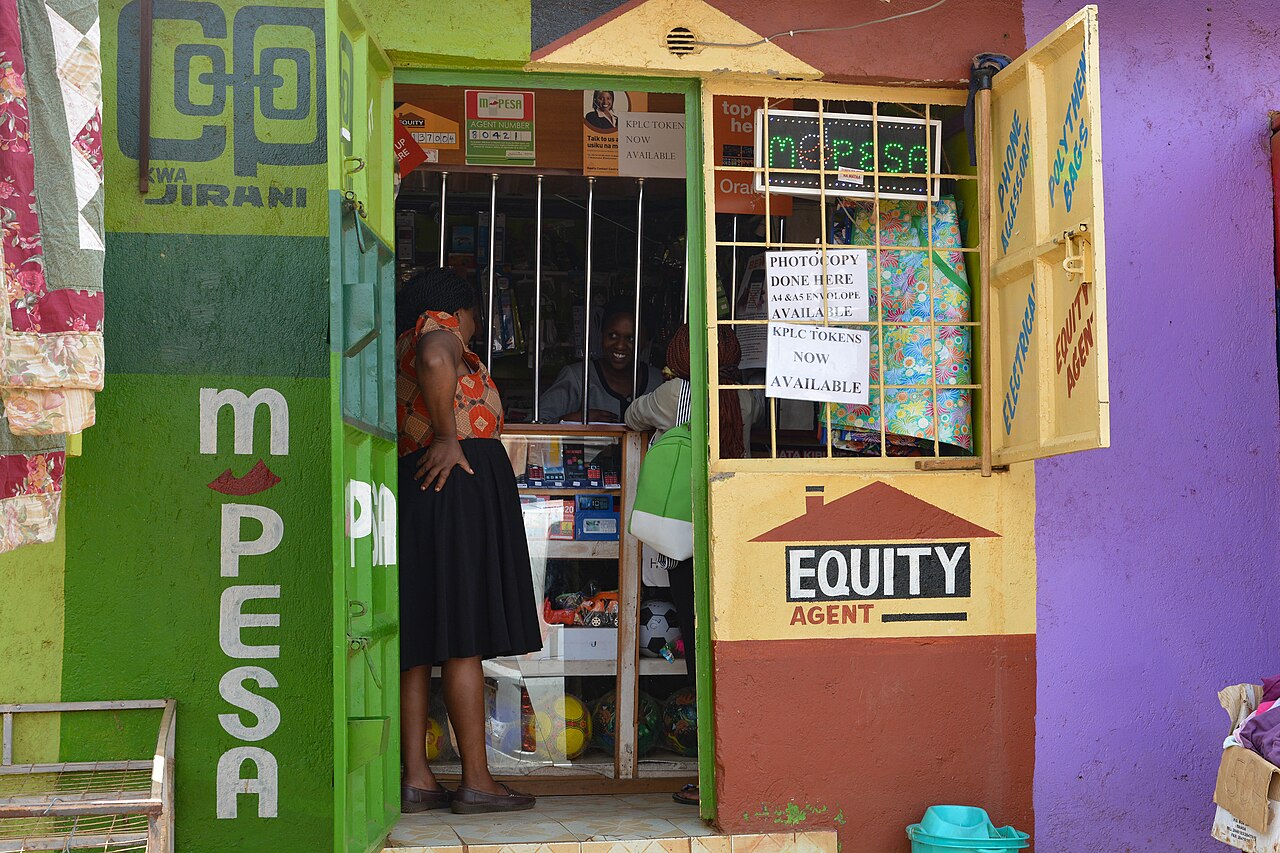
The National Treasury tabled the Finance Bill 2026 in the National Assembly on 9 May 2026, and one of its most consequential proposals is a 16% Value Added Tax on fees charged by digital payment platforms. The provision, which lists more than 40 platforms including Safaricom's M-Pesa, Airtel Money, Pesapal, Kenswitch, Cellulant, Jambopay and other licensed payment service providers, is intended to broaden the VAT base and unlock the additional Sh120 billion that the Treasury says it needs to fund the 2026/27 budget without expanding deficit borrowing.
For diaspora Kenyans, business owners and ordinary consumers, the question is not whether the tax will exist on paper but how quickly it filters down to transaction fees, paybill charges, agent commissions and the cost of moving money across borders.
What the Finance Bill 2026 Actually Says About Payment Platforms
Under the current VAT Act, Cap 476, financial services and money transfers are largely exempt or zero-rated. The Finance Bill 2026 proposes to narrow that exemption. The drafting targets "services offered by payment service providers" rather than the money transfer itself. In practical terms, that means the platform fee paid by a merchant or biller when a customer pays through a paybill, till number, e-commerce checkout or aggregator API would attract 16% VAT.
Treasury officials have repeatedly emphasised that ordinary person-to-person mobile money transfers will not be taxed. Director-General of Budget Albert Mwenda told the Business Daily that the tax applies to the operator who supplies the ICT layer enabling payments, not to the consumer sending money to a relative. However, payment service providers have indicated that they will pass the cost on to merchants, who will in turn build it into their pricing, raising the effective cost of paying with mobile money.
Why The Treasury Wants This Tax
Kenya's payments industry is enormous. The Central Bank's monthly statistics show that mobile money transactions consistently exceed Sh1 trillion per month, with paybill and merchant payments growing at double-digit rates as more small businesses move off cash. From the Treasury's perspective, this is a high-growth, high-margin sector that has been operating below normal VAT rules, partly because of how the existing exemption was drafted. By bringing platform fees into the VAT net, the government estimates collections of tens of billions of shillings annually without needing to raise income tax rates or introduce new payroll levies.
The proposal also follows a 2025 High Court ruling that barred the Kenya Revenue Authority from collecting tax from certain payment service providers on the basis that the previous statutory language was ambiguous. The Finance Bill 2026 is, in part, an attempt to fix that ambiguity by making the chargeability of VAT on platform fees explicit. Further detail on the legislative process and current tax statutes is available on the Kenya Revenue Authority website and the National Treasury portal.
Who Pays In Practice
The technical incidence of VAT and its economic incidence are rarely the same. Although the platform is the legal taxpayer, every merchant that accepts paybill or till payments is likely to see an increase in the fees deducted from each transaction. Larger merchants negotiate bespoke rates, but small businesses paying flat tariffs of 0.5% to 1.5% of the transaction value could see their effective rate climb. For a kiosk owner accepting Sh500,000 in mobile payments per month, even a small percentage increase translates into thousands of shillings in additional cost.
Consumers will then encounter these higher fees in three ways. First, some merchants will switch to cash-preferred pricing, advertising a discount for cash payments. Second, others will quietly raise prices. Third, aggregators that handle online checkout for e-commerce stores will pass on the VAT directly in their pricing pages, which is already standard practice for international payment processors.
The Diaspora Angle
Diaspora senders typically use either bank wires, M-Pesa Global, WorldRemit, Wise, Remitly or Western Union to push money home. The Finance Bill 2026 does not directly tax the inbound remittance, but it does change the economics on the receiving end. Once funds land in a recipient's M-Pesa wallet, the recipient often uses paybill or till payments to settle rent, school fees, utility bills, insurance premiums and SACCO contributions. If those paybill receipts now carry a VAT-inclusive platform fee, more of every dollar sent home is consumed by transaction costs rather than reaching the intended purpose.
Diaspora investors with rental properties in Kenya, fee-paying schools in their portfolio or businesses that rely on digital collections will also see margin compression. The fee uplift may be small per transaction, but for a landlord collecting Sh200,000 in monthly rent through paybill, it can add up to a meaningful annual cost.
The Fuliza and M-Shwari Carve-Out
One technical detail worth noting is that Safaricom-linked credit and savings products such as Fuliza, M-Shwari and KCB M-Pesa are structured as bank partnerships rather than as standalone payment services. Treasury has indicated that these products will remain outside the VAT net, since the credit and deposit functions fall under separate banking regulation. That means short-term overdrafts and savings remain unaffected, even as the platform layer that delivers them is being taxed elsewhere.
Industry Pushback
Within days of the Bill being tabled, fintech industry associations, mobile network operators and small business groups had filed memoranda with the Finance and National Planning Committee of the National Assembly. The Communications Authority of Kenya, the Central Bank, banks, telcos and the Association of Fintechs in Kenya have warned that taxing the digital payment layer risks reversing more than a decade of progress on financial inclusion. They argue that Kenya's transition away from cash has reduced the cost of doing business, supported tax visibility and made it possible for the Kenya Revenue Authority to identify and onboard small traders through electronic tax invoice management. Raising the cost of digital payments, the argument goes, could push transactions back into cash, undermining the very tax visibility the Treasury is trying to expand.
Civil society groups have also raised equity concerns. Because mobile money is disproportionately used by lower-income Kenyans who do not have full bank accounts, any rise in transaction costs is regressive. Public participation hearings convened by the National Assembly through May and June 2026 are likely to produce significant amendments before the Bill becomes law, and stakeholders are watching the schedules published by the Parliament of Kenya closely.
What Diaspora Kenyans Can Do Now
While the Bill is still under parliamentary scrutiny, diaspora senders can take a number of practical steps. First, review the cost stack of any remittance you make regularly. Many senders default to the same provider for years without comparing fees and exchange rates between Wise, Remitly, WorldRemit, Sendwave and M-Pesa Global. Even a one-percentage-point improvement in the cost ratio compounds significantly over a year.
Second, consider consolidating smaller transfers. The platform fee structure typically rewards larger single transactions over many small ones. For senders who fund rent, school fees and family upkeep separately each month, a single larger transfer that is then distributed locally via M-Pesa can be cheaper, even after accounting for any future VAT pass-through.
Third, monitor the structure of your Kenyan billers. Some institutions, notably SACCOs, insurers and schools, allow direct bank transfer or pesalink as an alternative to paybill. Where the fee differential is meaningful, switching collection channels can save money over the course of a year.
The Bigger Picture
The Finance Bill 2026 is part of a wider attempt to broaden Kenya's tax base after years of public protest against headline rate increases. By targeting digital infrastructure rather than salaries or consumer goods directly, the Treasury hopes to raise revenue with less political resistance. However, the experience of the Digital Service Tax, the introduction of the Affordable Housing Levy and the Social Health Insurance Fund suggests that any tax that touches the daily transactions of ordinary Kenyans inevitably becomes politically charged.
For Kenyans abroad, the practical takeaway is simple. Watch the final form of the Bill once it is enacted, expect transaction costs in the local payment system to creep upwards in 2026, and review the structure of your remittances and Kenyan financial commitments at least once a year. The cost of doing nothing is no longer trivial.
Compliance Timing And Implementation Risk
If the Finance Bill 2026 is passed without major amendments, the operative date for the VAT on digital payment platforms is expected to be 1 July 2026, in line with the start of the 2026/27 fiscal year. That gives platforms only a few weeks to update their billing systems, file revised pricing notices with the Communications Authority and the Central Bank, and notify their merchant base. Industry stakeholders have asked for a longer transition period, citing the complexity of recalibrating tariff structures across millions of agents and merchants. Implementation guidance and gazette notices, once issued, will be published on the KRA legal notices page and indexed through the Kenya Law portal.
A separate compliance risk is mismatched invoicing. Under the Tax Invoice Management System, every VAT-registered supplier is required to issue electronic tax invoices for taxable supplies. If platform operators charge VAT on fees but cannot match those invoices automatically to merchant accounts, small businesses may find themselves unable to claim input VAT and effectively bearing the full cost. Resolving that requires coordinated upgrades from the platforms, KRA's eTIMS system and merchant accounting software.
Conclusion
The 16% VAT on payment platforms is one of the most technically significant proposals in the Finance Bill 2026, even though it has received less media attention than the changes to capital gains tax and rental income tax. For diaspora Kenyans, the practical effect is a slow, distributed increase in the cost of moving money through Kenya's digital rails. For merchants and small businesses, it is a direct hit on already thin margins. For the Treasury, it is a calculated bet that the convenience of mobile money is now so deeply embedded in daily life that users will absorb a marginal cost increase rather than revert to cash. Whether that bet pays off will become clear once the Bill is enacted and the first quarter of compliance data lands at the National Treasury.
More Articles

The Multiparty Era Reforms: Saba Saba, the Repeal of Section 2A and Kenya's Return to Political Pluralism
Jul 02, 2026

Eye Care in Kenya: Cataract, Trachoma and the Long Road to Universal Vision Health
Jul 02, 2026

Shaba National Reserve: Joy Adamson's Last Wilderness and Isiolo's Semi-Desert Safari Gem
Jul 02, 2026

The Rendille People of Northern Kenya: Camel Pastoralism, Clan Traditions and a Culture Under Pressure
Jul 02, 2026

Ukulima Sacco: From Ministry of Agriculture Staff Society to a National Cooperative Open to All Kenyans
Jul 02, 2026