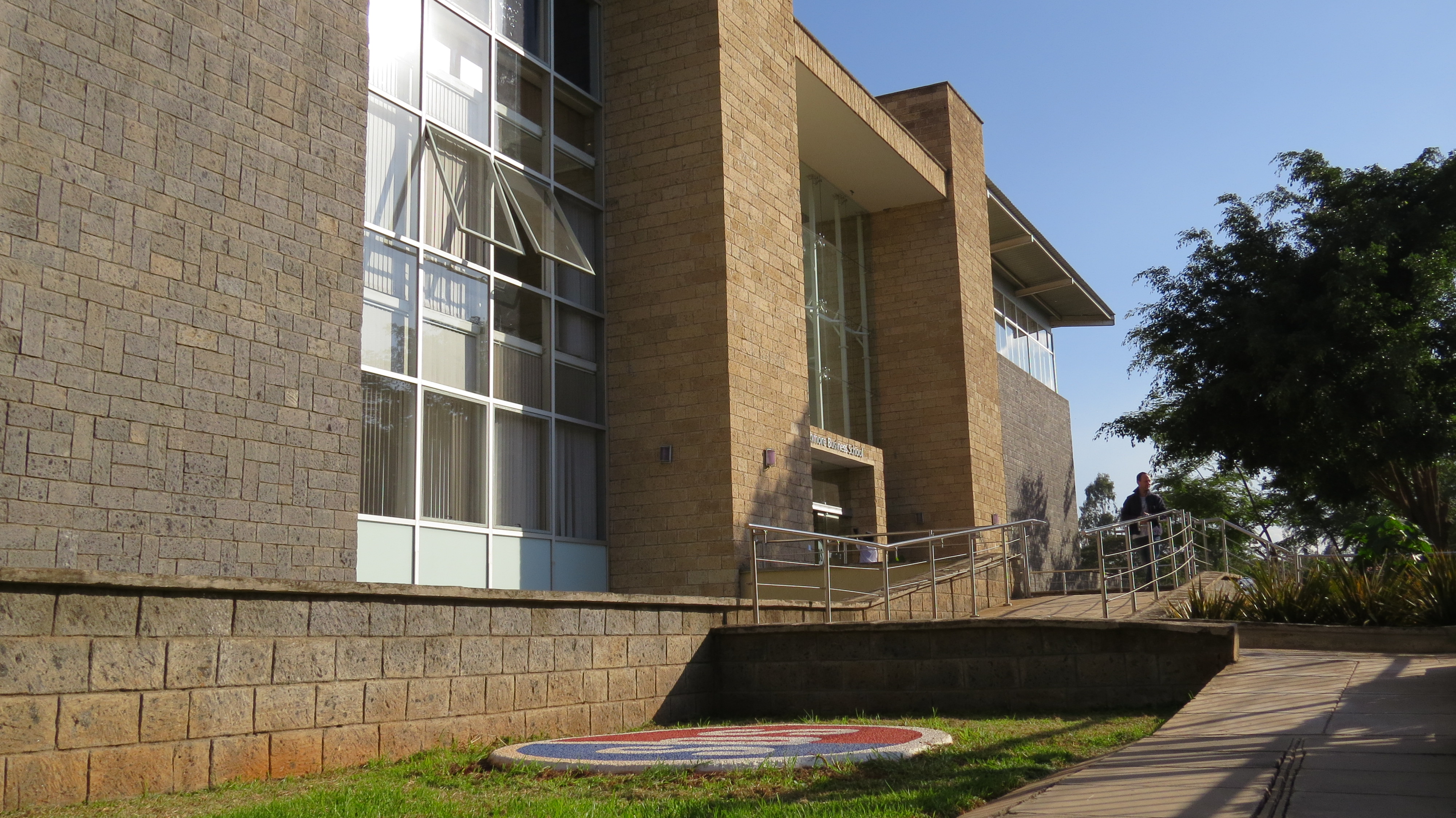
Strathmore University: From 1961 Sixth-Form College to a Modern Charter, the Business School and Kenya's Private University Standard
Strathmore University: From 1961 Sixth-Form College to a Modern Charter, the Business School and Kenya's Private University Standard
Strathmore University traces a longer institutional history than most Kenyan universities. Founded in 1961 as Strathmore College, an Advanced-level Sixth-Form College for sciences and arts, it broke ground in colonial Kenya as the first institution in the country to admit students across all races, religions and social classes. Over six decades it has grown from a small sixth-form college on Mbagathi Road into a full-fledged university on its Madaraka Estate campus, with a faculty of commerce, an information technology school, a renowned business school, and a chartered degree programme that today serves more than eight thousand students. This article traces Strathmore's history, examines its current academic structure, looks at the Strathmore Business School partnership with IESE, considers the role the institution has played in Kenya's higher education ecosystem and reflects on what makes Strathmore distinctive in the private university landscape.
Origins: A 1961 College for Independent Kenya
Strathmore College was established by a group of professionals associated with the Strathmore Educational Trust at a time when Kenya was on the eve of independence. The college began offering A-Level science and arts subjects at its first premises in Lavington, Nairobi, then moved to a more permanent campus near Madaraka Estate. Its founding ideal of accommodating students from all races was rooted in the principles of the Trust's founders, who looked to create a model of inclusive academic excellence at a moment when most secondary institutions in the country were segregated.
In 1966 Strathmore opened a department for professional accounting studies, which became one of the most important pipelines for Certified Public Accountant qualifications in the country. By the 1980s the college had expanded into a wider range of business and IT programmes, and its alumni were prominent across the East African corporate sector.
The Madaraka Estate Campus and the 1989 Construction
In 1986 the Government of Kenya donated five acres of land on Ole Sangale Road, Madaraka Estate, to the Strathmore Educational Trust. Construction commenced in 1989 and the new campus opened in January 1993, with Strathmore College merging with the Kianda College of business and secretarial training to consolidate operations on the new site. The Madaraka campus has since been expanded substantially with academic blocks, a business school building, sports facilities, student residences and an architecturally distinctive auditorium known as the Strathmore University Auditorium.
Becoming a University: Letter of Interim Authority to Charter
In August 2002 the Commission for Higher Education, now the Commission for University Education, awarded Strathmore a Letter of Interim Authority to operate as a university with a Faculty of Commerce and a Faculty of Information Technology. The Commission approved the award of a charter to Strathmore University in June 2007. The charter formalised Strathmore's transition into a fully chartered private university, allowing it to confer its own degrees rather than partner with external universities for accreditation. The transition placed Strathmore alongside institutions such as the Catholic University of Eastern Africa, the United States International University and Daystar University in the small but influential group of chartered private universities.
Schools, Faculties and Programmes
Strathmore University today is organised into several schools and faculties. The School of Accountancy, building on the institution's accountancy heritage, prepares students for chartered accounting examinations and for university-level commerce degrees. The School of Management and Commerce offers undergraduate degrees in business administration, finance, marketing and entrepreneurship. The School of Computing and Engineering Sciences runs computer science, information technology, telecommunications and software engineering programmes. The Strathmore Law School, opened in 2012, has become one of the most respected law programmes in the country. The School of Tourism and Hospitality, the Strathmore Institute of Mathematical Sciences, the Strathmore Energy Research Centre and the School of Humanities and Social Sciences round out the academic offering. A growing portfolio of post-graduate degrees includes Masters and Doctoral programmes in business administration, public policy, statistical sciences and law.
Strathmore Business School and the IESE Partnership
Strathmore Business School (SBS) was established in 2005 in partnership with IESE Business School of the University of Navarra in Spain. SBS focuses on graduate executive education, an Executive MBA programme launched in 2007, leadership and policy programmes for the public and private sectors, and customised in-company training. The school regularly ranks among the leading business schools in Africa and is accredited by the Association of African Business Schools and the AACSB process. Its case-based teaching method, its faculty of practitioner-academics, and its long-term residential programmes for senior executives differentiate it from most graduate business offerings in the region.
SBS has also contributed to a network of partner schools across Africa through its Africa Programme for Strategic Management for Executive Leaders, with cohorts drawn from Nairobi, Kigali, Kampala, Lagos and Accra. Many of Kenya's top executives in banking, telecommunications, health and government have completed an Executive MBA or specialised programme at SBS in recent years.
Student Body, Enrolment and Diversity
Strathmore enrols approximately eight thousand students across its full-time and part-time programmes, with about 86 per cent on a full-time basis and 14 per cent in part-time or executive tracks. The student community is highly diverse, drawing from across Kenya and from more than thirty African and non-African countries. Religious and cultural inclusivity remains a hallmark, even as the university maintains its founding Catholic ethical orientation through chaplaincy services and the Christian Spiritual Education programme.
Tuition fees place Strathmore in the upper tier of Kenyan private universities. Generous scholarships, bursaries and partnerships with employers, professional bodies and donors expand access for high-achieving applicants from lower-income backgrounds. The Wezesha Strathmore Scholarship Fund, established to commemorate the university's golden jubilee, has supported hundreds of students.
Research Output and Innovation
While Strathmore is smaller than the largest public universities, its research output per faculty member is competitive. The Strathmore Energy Research Centre is one of the leading independent renewable energy testing facilities in the region, certified for solar PV equipment testing and home to Kenya's only solar PV technician training programme. The university hosts a Center for Public Policy and Competitiveness, the iLab Africa for innovation and entrepreneurship, the @iLabAfrica @iBizAfrica incubator, and several thematic research centres in tax law, intellectual property, financial systems and energy regulation. The Strathmore Tax Research Centre and the Centre for Intellectual Property and Information Technology Law publish widely cited work on East African policy.
Campus Life, Sports and Alumni
The Madaraka campus combines academic blocks with social and athletic spaces. The Strathmore University Auditorium is a venue for graduation ceremonies, public lectures and cultural events. Sports facilities include basketball courts, a gymnasium, football pitches and a swimming pool. The Strathmore Blues basketball team has been a perennial contender in the Kenya Basketball Federation league, and the university fields competitive teams in football, rugby, swimming and athletics.
Strathmore alumni are prominent across Kenyan and regional business, accountancy, law and public service. The Strathmore Alumni Association maintains chapters in Nairobi, Mombasa, Kisumu, London, Dubai, Toronto and New York. Annual reunions and the President's Address provide platforms for alumni to engage with the university's strategy.
The Role in Kenya's Higher Education Ecosystem
Within Kenya's higher education ecosystem, Strathmore plays a distinctive role. Unlike the large public universities that absorb tens of thousands of government-sponsored students, Strathmore operates as a relatively small, selective institution that competes on academic quality, employability of graduates and partnership with industry. It contributes to the diversification of the higher education sector that the Commission for University Education seeks to encourage, and its programmes in tax law, financial systems, energy regulation and executive education complement the broader offerings of the public universities. The institution is widely cited as setting standards for ethics, time management and academic discipline in private higher education.
Diaspora Engagement and International Partnerships
Strathmore has cultivated extensive international links. Beyond the foundational IESE partnership for SBS, the university has formal collaborations with the IE Business School in Madrid, the Lauder Institute at the University of Pennsylvania, the Vlerick Business School in Belgium, the University of Notre Dame and several leading European law faculties. These partnerships support student exchanges, joint research and visiting faculty appointments. The Strathmore International Office coordinates inbound and outbound semester programmes, while the alumni chapters in the diaspora engage Kenyan professionals abroad in mentorship, recruitment and philanthropy.
Looking Forward
Strathmore continues to expand its physical and academic footprint. Plans for a new health sciences school, a research centre for climate finance, additional postgraduate research capacity and an executive education campus reflect the institution's ambition to remain at the front rank of African private universities. Sustained investment in faculty research, in industry partnerships and in scholarships for under-represented students will shape the university's trajectory through the 2030s.
Conclusion
From its 1961 origins as a multiracial sixth-form college through its 2007 charter and the steady growth of its schools, Strathmore University has carved out a distinctive position in Kenyan higher education. The Strathmore Business School partnership with IESE, the chartered law school, the energy research centre, the technology incubators, the strong alumni network and the disciplined academic ethos all contribute to a university that is small by enrolment but outsized in influence. For Kenyan students choosing between public and private universities, and for diaspora alumni considering how to support their alma mater, Strathmore offers a clear value proposition rooted in academic excellence, ethical leadership and industry relevance.
More Articles

The Multiparty Era Reforms: Saba Saba, the Repeal of Section 2A and Kenya's Return to Political Pluralism
Jul 02, 2026

Eye Care in Kenya: Cataract, Trachoma and the Long Road to Universal Vision Health
Jul 02, 2026

Shaba National Reserve: Joy Adamson's Last Wilderness and Isiolo's Semi-Desert Safari Gem
Jul 02, 2026

The Rendille People of Northern Kenya: Camel Pastoralism, Clan Traditions and a Culture Under Pressure
Jul 02, 2026

Ukulima Sacco: From Ministry of Agriculture Staff Society to a National Cooperative Open to All Kenyans
Jul 02, 2026