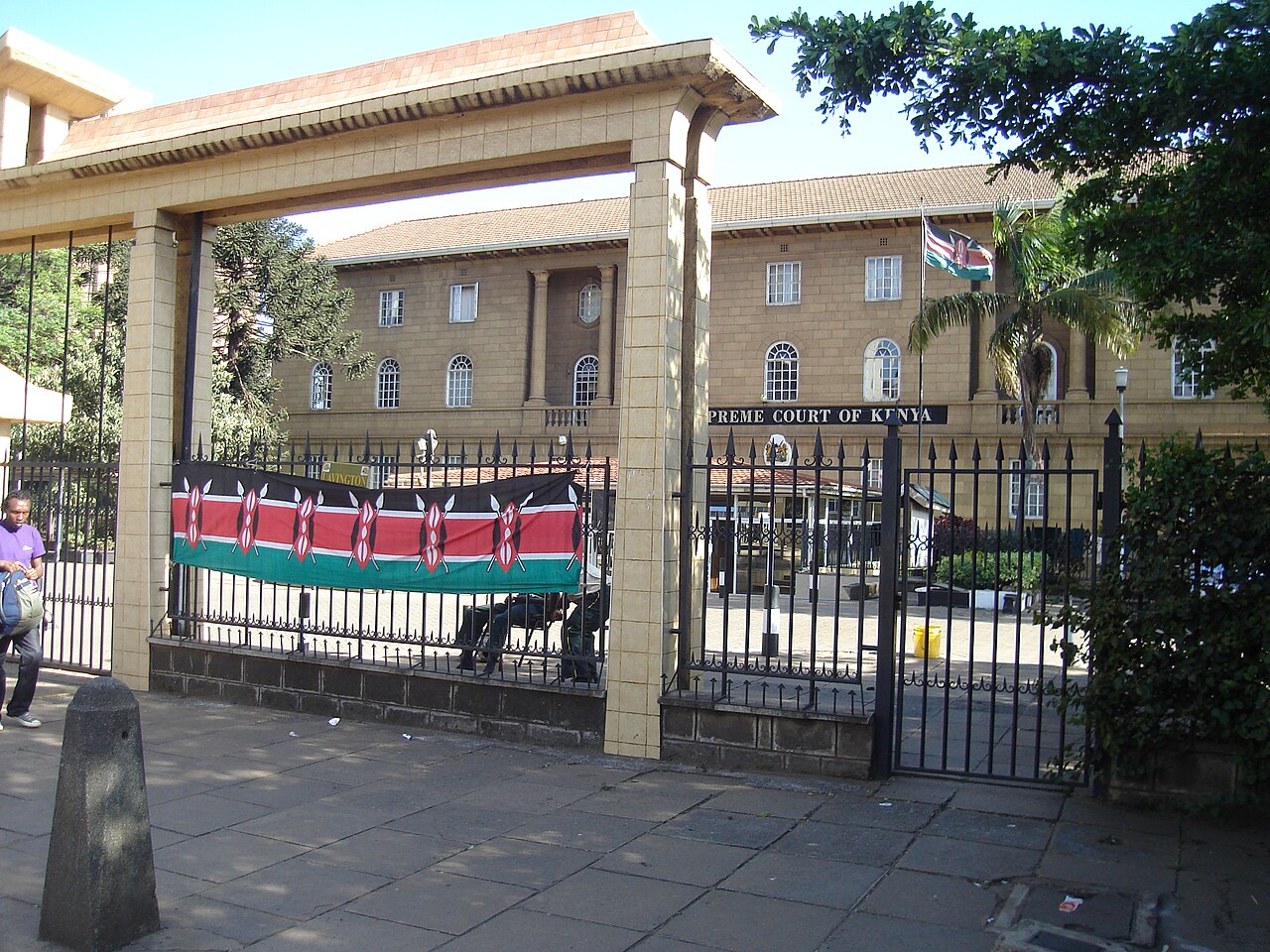
How the Small Claims Court Works in Kenya: A Step-by-Step Self-Representation Guide to the 60-Day Resolution Under the Small Claims Court Act, 2016
How the Small Claims Court Works in Kenya: A Step-by-Step Self-Representation Guide to the 60-Day Resolution Under the Small Claims Court Act, 2016
For most ordinary Kenyans facing a civil dispute — a tenant who has not paid rent, a contractor who has delivered defective work, a supplier whose cheque has bounced, a friend who has refused to repay a loan — the traditional court system has been functionally inaccessible. Filing in the Magistrate's Court requires advocates, takes years, and produces costs that often exceed the amount in dispute. The Small Claims Court, established under the Small Claims Court Act, 2016, was designed to fix this. Cases up to KSh 1,000,000 in value are heard with simplified procedure, low filing fees of around KSh 1,000, a statutory determination period of 60 days from filing, and an explicit right of self-representation. The result is one of the most accessible justice innovations in Kenya's recent legal history — but most Kenyans still do not know how to use it. This guide walks through what the Small Claims Court can and cannot do, who can file, the step-by-step filing and hearing process, the documents needed, the fee schedule, the timeline, the limited grounds of appeal, and the practical tips that turn a credible claim into a real recovery.
The Legal Framework
The Small Claims Court Act, 2016 (Act No. 2 of 2016) is the master statute. The Small Claims Court Rules, 2019 (Legal Notice 145 of 2019) set out the procedural detail. The Court is a subordinate court within the Kenyan judicial system, established and supervised by the Judiciary under the Constitution of Kenya, 2010. Decisions of the Small Claims Court can be appealed only on questions of law, not on questions of fact, to the High Court — a deliberate choice that limits the avenue of appeal and supports the Court's mission of finality.
Jurisdiction: What the Court Can Decide
The Small Claims Court has jurisdiction over civil and commercial claims not exceeding KSh 1,000,000 in value. The categories of claim that the Court can hear are set out in Section 12 of the Act and include: a contract for the sale and supply of goods or services; a contract relating to money lent; debt arising out of a transaction; compensation for personal injury arising out of negligence; compensation for property damage arising out of negligence; the recovery of property; landlord and tenant disputes for non-payment of rent up to the monetary limit; and any other dispute or matter the Chief Justice may by gazette notice declare. The Court does not have jurisdiction over criminal matters, divorce or matrimonial property disputes, defamation, employment matters (these go to the Employment and Labour Relations Court), or land-title disputes (these go to the Environment and Land Court).
The KSh 1,000,000 limit applies to the principal claim; interest and costs awarded by the Court are separate from this cap. A claim that exceeds the limit cannot be split into multiple smaller claims to fit within the Court's jurisdiction — that would be an abuse of process.
Who Can File and Where
Any person — Kenyan citizen or foreign national — with a claim within the jurisdictional limit can file in the Small Claims Court. A claimant can represent themselves or be represented by an advocate. Importantly, representation is also permitted by a person who is not an advocate of the High Court — a friend, family member, employer, or knowledgeable lay representative — provided the Court is satisfied that the representative is acting in good faith and not for reward.
Small Claims Courts have been established in major court stations across Kenya. The first courts opened in Milimani (Nairobi), and the network has expanded to other major court stations including Mombasa, Kisumu, Nakuru, and other regional centres as the Judiciary completes its rollout. Claimants file at the Small Claims Court station with territorial jurisdiction over the place where the cause of action arose, where the defendant resides, or where the contract was performed.
Step 1: Prepare the Statement of Claim
Filing begins with the Statement of Claim, completed on Form SCC-1 prescribed by the Small Claims Court Rules. The Statement of Claim must contain: the claimant's name, identification details, and contact information; the defendant's name, identification details (where known), and contact information; a concise statement of the facts giving rise to the claim including dates, amounts, and the relationship between the parties; the legal basis for the claim (debt owed, contract breached, property damaged, etc.); the relief sought (the specific amount of money claimed, plus interest if applicable, plus costs); and the claimant's signature.
The Statement of Claim must be accompanied by copies of any documents that support the claim — contracts, invoices, receipts, photographs of damaged property, demand letters previously sent, bank statements showing the disputed payment, WhatsApp or SMS evidence of the agreement. The Court does not insist on perfectly drafted pleadings; the rules expressly allow informal drafting provided the core facts are clear.
Step 2: File the Claim and Pay the Fee
The claimant takes the completed Statement of Claim and supporting documents to the Small Claims Court registry. The filing fee is approximately KSh 1,000 for a claim up to KSh 1,000,000 — substantially less than the KSh 2,000 fee for the equivalent claim in the Magistrate's Court. The registry stamps the Statement of Claim, issues a court reference number, and schedules the first hearing date, typically within two to three weeks.
Step 3: Serve the Defendant
The claimant is responsible for serving the Statement of Claim and the hearing notice on the defendant. Service must be effective — handed personally to the defendant or to an authorised representative, or left at the defendant's known place of business or residence in accordance with the Rules. The claimant files an Affidavit of Service confirming that the defendant has been served. Without proper service, the case cannot proceed.
Step 4: The Defendant's Response
The defendant has the right to file a Response — admitting the claim in whole or in part, or contesting it. The Response may include a counter-claim if the defendant has their own claim against the claimant arising from the same or a related transaction (subject to the same KSh 1,000,000 cap). Where the defendant fails to respond and fails to appear at the hearing, the Court may enter judgment in default against them in favour of the claimant.
Step 5: The Hearing
The Court is required to hear and determine cases within 60 days of filing. The hearing is conducted by an Adjudicator — a magistrate, advocate of at least seven years' standing, or other qualified person appointed by the Judicial Service Commission. The hearing is informal. The Adjudicator is expressly empowered to relax the rules of evidence and procedure to do substantive justice. The Adjudicator hears each side, examines documents, may ask questions of either party, and is encouraged to mediate where settlement appears possible.
Witnesses can be called. Documents are produced. WhatsApp messages, email correspondence, and other electronic evidence are admissible. The Adjudicator may give the parties an opportunity to settle the case at any point in the proceedings — and many Small Claims Court cases settle either at the first hearing or after brief discussion in chambers.
Step 6: Judgment and Enforcement
The Adjudicator delivers judgment on the day of hearing or within seven days thereafter. The judgment specifies the amount payable, interest where applicable, and costs. The defendant has a defined period to settle the judgment. If the defendant does not pay within the prescribed time, the claimant can move to execute the judgment — through attachment of the defendant's bank accounts, attachment of movable property by a court bailiff, or registration of the judgment as a charge against the defendant's immovable property at the Land Registry.
Enforcement remains the practical bottleneck of the Small Claims Court system — and indeed of all Kenyan litigation. A defendant who has no traceable assets is difficult to recover from, however unequivocal the judgment. Smart claimants think about enforcement at the point of filing: is the defendant employed, in a traceable business, in possession of movable property of value, the registered owner of land or vehicles? If yes, recovery is likely straightforward. If the defendant is a "professional debtor" with no assets in their own name, the claimant should be realistic about expected recovery.
Limited Right of Appeal
Appeals from the Small Claims Court lie only to the High Court and only on questions of law. A party who is dissatisfied with the finding of fact — for example, the Adjudicator's assessment that one witness was more credible than another — has no right of appeal on that basis. Only legal errors — for example, the Adjudicator applying the wrong statute, exceeding the Court's jurisdiction, or denying a party fair hearing — can be appealed. This limitation is deliberate and supports the Court's mission of swift, final resolution.
Practical Tips That Improve Your Chances
First, write the Statement of Claim as a clear story. The Adjudicator should be able to follow the chronology and understand the dispute without confusion. Second, bring every document and message you have. Originals are best; clear photocopies are acceptable. Third, send a written demand letter to the defendant before filing. The letter establishes the dispute, gives the defendant an opportunity to pay or respond, and supports the seriousness of the claim. Fourth, be present at every hearing. Failure to appear can result in dismissal. Fifth, dress professionally. The Adjudicator's job is to do justice, but presentation matters in any human process. Sixth, do not exaggerate the claim. Adjudicators discount inflated claims and may treat the claimant's credibility as damaged. Seventh, consider whether settlement at the first hearing is the better outcome — half of KSh 800,000 paid today is often better than the full KSh 800,000 in a judgment that may never be enforced.
Cases Suited to Small Claims Court
The Court works best for clear-cut disputes with documentary evidence: bounced cheques with the cheque and the dishonour notice; rent arrears with a tenancy agreement and unpaid invoices; a contractor's defective work with photographs and the contract; a supplier's failure to deliver paid-for goods; a friend's failure to repay a documented loan; insurance refund disputes. Cases that turn on contested oral evidence with no documentation are harder — not because the Court cannot hear them, but because the burden of proof is difficult to discharge without paper.
The Bigger Picture
The Small Claims Court is one of the most important judicial reforms of the past decade. It has put real, affordable, fast justice within the reach of ordinary Kenyans who would otherwise have written off legitimate claims as too expensive or too slow to pursue. The Court is not a substitute for advocacy and lawyers; it is a complement that fits a specific class of dispute. Used well, it produces credible judgments at low cost and on a timeline that respects the parties. Used badly — with overblown claims, weak evidence, or unrealistic enforcement expectations — it disappoints both sides.
The Judiciary of Kenya publishes the Small Claims Court registry directory, the Statement of Claim form, and the procedural guides. The Kenya Law portal hosts the full text of the Small Claims Court Act, 2016 and the Small Claims Court Rules, 2019. The International Commission of Jurists, Kenya Section publishes lay-friendly explanatory materials on Kenyan civil justice.
More Articles

The Multiparty Era Reforms: Saba Saba, the Repeal of Section 2A and Kenya's Return to Political Pluralism
Jul 02, 2026

Eye Care in Kenya: Cataract, Trachoma and the Long Road to Universal Vision Health
Jul 02, 2026

Shaba National Reserve: Joy Adamson's Last Wilderness and Isiolo's Semi-Desert Safari Gem
Jul 02, 2026

The Rendille People of Northern Kenya: Camel Pastoralism, Clan Traditions and a Culture Under Pressure
Jul 02, 2026

Ukulima Sacco: From Ministry of Agriculture Staff Society to a National Cooperative Open to All Kenyans
Jul 02, 2026