Standard Gauge Railway in 2026: What the Operating Reality of the Madaraka Express Means for Diaspora Travellers, Logistics Investors, and Property Buyers Along the Corridor
Standard Gauge Railway in 2026: What the Operating Reality of the Madaraka Express Means for Diaspora Travellers, Logistics Investors, and Property Buyers Along the Corridor
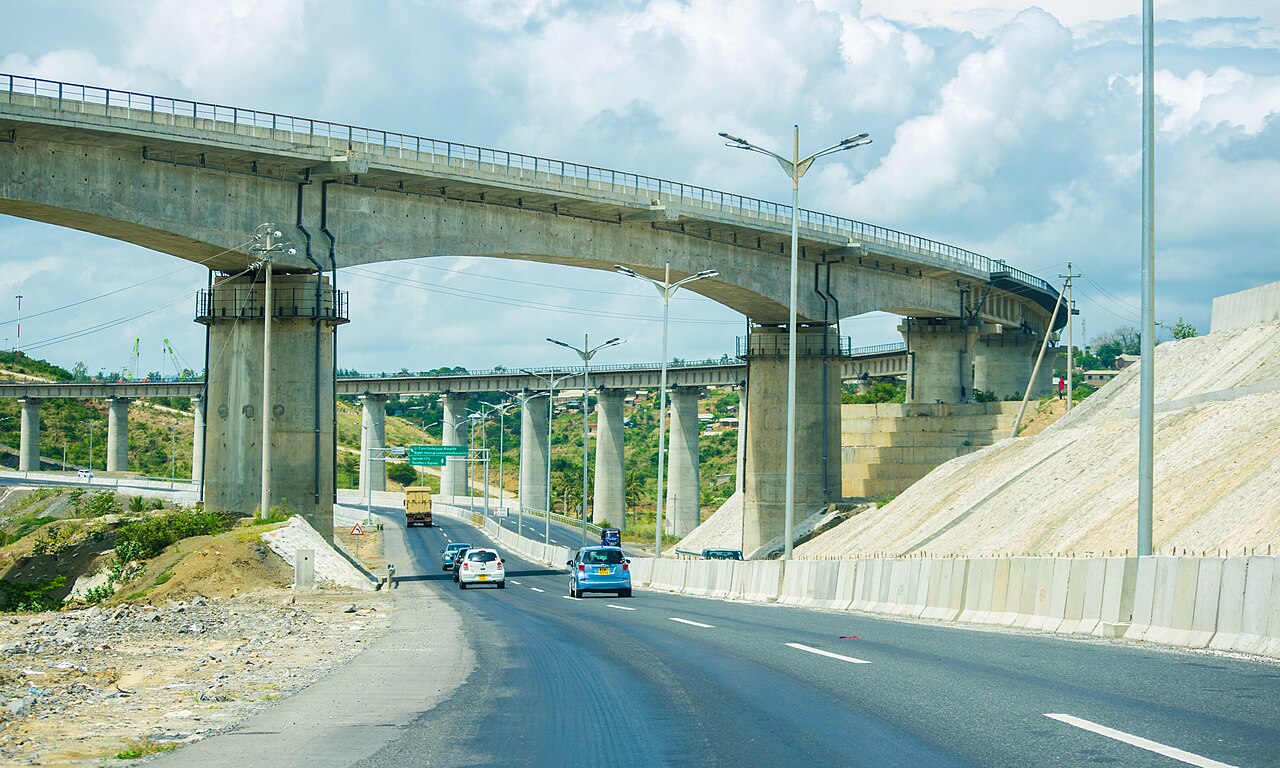
When the Standard Gauge Railway (SGR) was commissioned in 2017, the political debate was loud, the engineering achievement was undeniable, and the operating economics were uncertain. Nine years later, in 2026, much of the debate has moved from forecasts to facts. The Madaraka Express passenger service between Nairobi and Mombasa is mature, popular, and operationally reliable. The freight service has slowly absorbed a meaningful share of the Northern Corridor container traffic. The Phase 2A extension to Naivasha has redirected port-bound and inland-bound cargo into a new logistics anchor at the Naivasha Inland Container Depot (ICD). For diaspora Kenyans, the SGR is now a tool to be used rather than a project to debate, and its impact on travel, logistics, and property along the corridor is real.
This article walks through the operating reality of the SGR in 2026, the passenger service options, the freight performance, the implication for diaspora-owned logistics ventures, the property impact along the corridor, and the practical planning guidance for diaspora travel and investment along the line.
The Madaraka Express: Passenger Service Today
The Madaraka Express runs daily between Nairobi Terminus (Syokimau) and Mombasa Terminus (Miritini), with intermediate stops at Voi, Mtito Andei, Athi River, and selected smaller stations. There are two classes — Economy and First Class — with First Class offering reserved seating, complimentary refreshments on selected runs, and a quieter cabin. Booking is online through the SGR booking portal, or via the M-Pesa USSD service for resident travellers without internet access.
Fares in mid-2026 are approximately KSh 1,000 for Economy and KSh 3,000 for First Class on the Nairobi-Mombasa route. Travel time is approximately five hours, comfortably faster than driving the corridor, and the on-board catering and luggage handling have improved meaningfully since launch. For diaspora travellers visiting Kenya, the SGR is now a viable option for the Nairobi-Mombasa trip, often offering a more comfortable journey than a connecting flight when factoring in airport time and security overheads.
Freight Service and the Naivasha ICD
The SGR freight service moves containers and bulk cargo from Mombasa Port through the Port of Naivasha ICD and onward to Nairobi and Western Kenya by road. The freight tariff is structured to be competitive with road transport for long-haul, high-density loads, with the SGR taking a growing share of trans-Kenya containerised freight. Specific shipper classes — bulk grain, refined petroleum products, and high-cube containerised cargo — have moved most strongly onto rail.
The Naivasha ICD has emerged as a meaningful logistics anchor, with diaspora-funded clearing and forwarding firms, container yard operators, and warehousing players establishing positions to serve the corridor. The Special Economic Zone designation around the ICD provides the same tax framework discussed in our Konza Technopolis guide.
Property Impact Along the Corridor
The SGR has reshaped the property market along its route. Land prices around the Nairobi Terminus at Syokimau and the surrounding Athi River subcounty have appreciated meaningfully since 2017, with mid-tier residential, industrial, and logistics-zone land doubling in some pockets. The Mtito Andei and Voi station areas have absorbed lower-density development, particularly for transit hospitality and small-scale logistics. The Mombasa Terminus area in Miritini has driven new residential and commercial demand in a previously quiet quarter of the city.
The Naivasha ICD has been the largest single property re-pricing event. Land around the ICD and the Phase 2A station has appreciated substantially, and the broader Naivasha sub-county has seen new residential development on the back of the logistics and tourism cross-currents. Diaspora investors who established positions in Naivasha pre-ICD are now in meaningfully appreciated territory.
The Phase 2B and 2C Questions
The original SGR master plan envisaged Phase 2A from Nairobi to Naivasha (completed and operating), Phase 2B from Naivasha to Kisumu (financed in part, with construction debates ongoing), and Phase 2C from Kisumu to the Uganda border (subject to financing). Phase 2B remains the most discussed extension in 2026, with policy makers, financiers, and political stakeholders working through the financing structure. The economic case for Phase 2B is contested; the case for Phase 2C is stronger because of regional rail integration but depends on Uganda's parallel SGR commitments.
For diaspora investors, the practical signal is that the Naivasha terminus is likely to remain the western end of the SGR network for the next several years, with the Kisumu extension a longer-term prospect rather than a near-term certainty.
The Operating Economics
The SGR has not been a financial success in narrow farebox terms. Passenger revenue covers part of operating cost; freight revenue covers more, but the original financing model assumed cargo volumes that have been slow to materialise. The renegotiation of the loan terms with the Export-Import Bank of China and the operational handover from China Road and Bridge Corporation to Kenya Railways Corporation have improved the operational unit cost. The wider economic contribution — reduced road congestion, lower trucking emissions, faster transit times for shippers — is substantial and largely captured outside the SGR P&L.
For diaspora investors, the implication is that direct SGR-related investment opportunities (logistics, warehousing, residential property near stations) have stronger economics than the SGR itself, because they capture the spillover value of the network without the financial overhead.
Practical Planning for Diaspora Travellers
First, book SGR tickets at least 7-14 days ahead of travel during the December peak and the Easter and August seasons. Tickets sell out during peaks and the queue at the station ticket office is real. Second, consider First Class for longer family travel; the comfort differential is meaningful and the price differential is modest. Third, plan onward connections from Mombasa Terminus carefully; the terminus is some distance from the city centre, and taxi or shuttle service should be pre-arranged for evening arrivals. Fourth, for short trips, the SGR is a credible alternative to flying once airport overheads are factored in.
Logistics Investment Angle
Diaspora investors with logistics interests should look at three opportunities. First, clearing and forwarding through the Naivasha ICD, where the Nairobi-Naivasha rail logistics chain has created a new corridor demand pattern. Second, warehousing within 10-15 km of the Nairobi Terminus, where the SGR-related last-mile distribution business has grown. Third, transit hospitality and trucker services along the road and rail-road interface points, where the new traffic patterns have created underserved demand.
Property Investment Angle
For diaspora property investors, the corridor stations — particularly Syokimau, Athi River, Naivasha, and Voi — offer meaningful capital-appreciation potential alongside rental yield. The Syokimau and Athi River sub-counties are now in the second wave of development, with diaspora-funded gated communities, mid-tier apartment blocks, and small commercial developments delivering steady rental returns. Naivasha is the most dynamic of the recently-emerged corridor markets, with both tourism (lake-facing properties) and logistics (ICD-adjacent industrial) drivers.
What Diaspora Households Should Do This Quarter
First, plan any near-term Kenya travel that includes a Mombasa leg around the SGR rather than the road or a connecting flight. Second, if you have logistics interests, request a Naivasha ICD investor briefing through Kenya Railways and the Kenya Ports Authority. Third, if you have property interests, request market data for the SGR station catchments through a CMA-licensed real estate professional. Fourth, monitor Phase 2B announcements through the Kenya Railways Corporation portal.
The Bigger Picture
The SGR has been Kenya's most debated mega-project of the past decade. The political debate is unlikely to fully settle, but the operating reality has matured into something useful and increasingly profitable for the spillover economy around it. Diaspora households that use the SGR for travel, invest in the logistics and property opportunities it has created, and engage with the corridor's longer-term build-out will capture meaningful value from a piece of public infrastructure that is here to stay.
For complementary reading, see our LAPSSET corridor guide and Konza Technopolis guide.
More Articles

The Multiparty Era Reforms: Saba Saba, the Repeal of Section 2A and Kenya's Return to Political Pluralism
Jul 02, 2026

Eye Care in Kenya: Cataract, Trachoma and the Long Road to Universal Vision Health
Jul 02, 2026

Shaba National Reserve: Joy Adamson's Last Wilderness and Isiolo's Semi-Desert Safari Gem
Jul 02, 2026

The Rendille People of Northern Kenya: Camel Pastoralism, Clan Traditions and a Culture Under Pressure
Jul 02, 2026

Ukulima Sacco: From Ministry of Agriculture Staff Society to a National Cooperative Open to All Kenyans
Jul 02, 2026