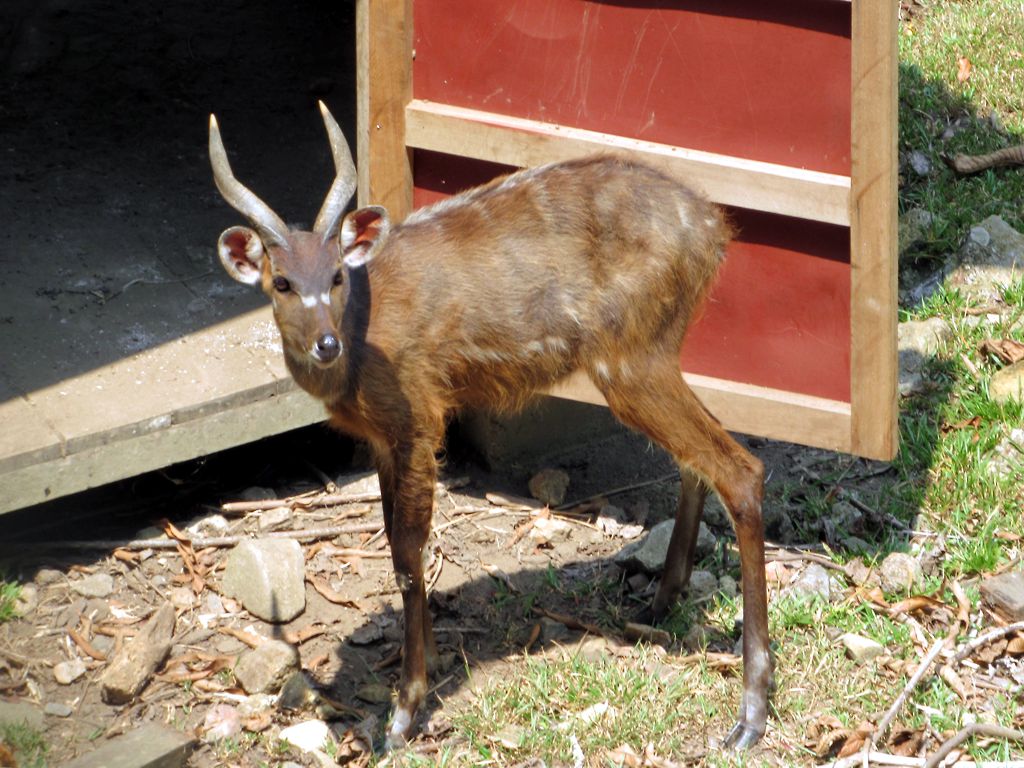
Saiwa Swamp National Park: Kenya's Smallest Park, the Sitatunga Antelope and the Trans Nzoia Wetland Sanctuary
Saiwa Swamp National Park: Kenya's Smallest Park, the Sitatunga Antelope and the Trans Nzoia Wetland Sanctuary
Saiwa Swamp National Park is the smallest national park in Kenya, a meticulously protected three square kilometre wetland just north of Kitale in Trans Nzoia County. Although diminutive in area, it shelters one of the most charismatic and ecologically specialised antelopes on the continent, the sitatunga, alongside more than 370 bird species and several primates. Gazetted in 1974 specifically to safeguard the sitatunga, the park has grown into a model of compact, low-impact tourism that complements the larger landscapes of Mount Elgon, Cherangani Hills and the Kerio Valley. This article examines the park's geography, the biology of the sitatunga, the wider wetland ecology, the visitor experience and the conservation challenges that face this often overlooked corner of western Kenya.
Geographic Setting and the Saiwa River
Saiwa Swamp sits at an altitude of approximately 1,860 metres above sea level on the western foothills of the Cherangani escarpment. The Saiwa River, a small but reliable stream fed by the moist highland rainfall of Trans Nzoia, snakes through the centre of the park and feeds a papyrus and sedge wetland of exceptional ecological richness. The wetland complex is surrounded by a fringe of acacia woodland, mixed riverine forest and farmland that supplies the constant input of nutrients that sustain the swamp ecosystem. The park lies 22 kilometres north of Kitale town, accessed via a tarmacked road from the Kitale-Kapenguria highway then a short murram track from the Kipsaina junction to the only gate.
The Sitatunga: An Antelope Built for the Swamp
The sitatunga (Tragelaphus spekii) is one of Africa's most specialised antelopes. Its elongated, widely splayed hooves distribute body weight across soft, waterlogged substrates and allow it to walk over floating vegetation that would trap a bushbuck or impala. The animal's shaggy, oily coat repels water and provides camouflage in the dappled light of the papyrus stands. Males develop a pair of spiralled horns and grow significantly larger than females, with mature bulls reaching 125 kilograms while females typically weigh 50 to 60 kilograms. The species lives across central and East Africa in swamps from the Sudd in South Sudan to the Okavango Delta in Botswana, but reliable observation in Kenya is essentially limited to Saiwa Swamp and a few isolated populations in the lower Yala Swamp around Lake Kanyaboli.
Sitatungas at Saiwa typically feed in the morning and late afternoon, browsing on aquatic plants including papyrus shoots, sedges and reeds. They are largely silent and shy, and visitors are most likely to spot them from the elevated observation platforms that the Kenya Wildlife Service has constructed at strategic points around the swamp. Patience and binoculars are essential; sightings reward the careful observer with a glimpse of an animal that few visitors to East Africa ever see.
The Wider Mammal Community
Beyond the sitatunga, Saiwa hosts several other primates and small mammals worth observing. The De Brazza's monkey, a striking guenon with a white beard and orange brow band, has its only sizeable Kenyan population around the riverine forest of the park. Black-and-white colobus monkeys leap through the canopy, and vervet monkeys forage along the edges. The reclusive spotted-necked otter has been recorded along the Saiwa River, and African civet, genets and various mongoose species inhabit the surrounding woodland. The bushbuck, the suni and the bohor reedbuck are sometimes spotted at the swamp edges.
An Ornithologist's Reward
Saiwa Swamp's bird list of more than 370 species is remarkable for a park of its size. Ross's turaco displays its electric blue and red plumage across the riverine forest, while the African black duck, lesser jacana, blue-headed coucal, white-faced whistling duck and several heron species frequent the swamp. The grey-crowned crane, Kenya's national bird, can sometimes be seen in adjacent pastures. The papyrus and sedge zones host the elusive papyrus gonolek and the highland tinkerbird. Birders combine Saiwa with Kakamega Forest, Kongelai Escarpment and Mount Elgon for a productive western Kenya circuit.
Visitor Experience and the Observation Platforms
Saiwa is one of the very few Kenyan parks designed for foot exploration. There are no vehicles permitted within the park, and the network of boardwalks, footpaths and four elevated observation platforms allows visitors to traverse the wetland on a quiet, low-impact circuit. The platforms range from six to ten metres in height, providing wide views across the swamp and a chance to scope distant sitatunga grazing in the early hours. The full walking circuit, including all platforms, takes about three hours and is suitable for visitors of moderate fitness. Light walking boots and insect repellent are recommended.
Accommodation around the park includes a tented camp run by the Kenya Wildlife Service inside the park, several small lodges and self-catering cottages near Kitale, and homestays operated by community-based tourism groups in the Kipsaina area. The Sirikwa Safaris campsite and the Treetops Hotel north of Kitale are popular options for birders. Day visitors from Kitale or Eldoret will find Saiwa an easy half-day excursion.
Community Conservation and the Buffer Zone
Trans Nzoia County is one of Kenya's most productive farming regions, with maize, wheat, dairy and horticulture dominating the surrounding land. Pressure on the buffer zone is significant. Encroachment, drainage of small wetlands for agriculture, and run-off of agrochemicals into the Saiwa River are persistent threats. The Kenya Wildlife Service, the Kenya Forest Service and local community forest associations have worked together to maintain riparian buffers, support agroforestry on adjacent farms and engage schools in conservation education. The Kipsaina Crane and Wetland Conservation Group has been particularly effective at integrating crane and waterbird conservation with smallholder livelihoods.
Research and Long-Term Monitoring
Despite its small size, Saiwa is well represented in the East African research literature. Sitatunga ecology, De Brazza's monkey demography, wetland plant ecology and papyrus carbon storage have all been studied by university researchers and conservation organisations. Long-term bird counts and amphibian surveys feed national datasets coordinated by the National Museums of Kenya and Nature Kenya. The proximity to academic centres in Eldoret and Nairobi makes Saiwa a practical field site for student projects.
Threats: Habitat Loss, Climate Change and Visitor Pressure
The principal threats to Saiwa are habitat loss in the buffer zone, agricultural intensification, climate variability and occasional poaching. The swamp depends on a consistent inflow of clean water from the Saiwa River, and changes in upstream land use can shift hydrological patterns. Climate change is altering rainfall timing in the Cherangani highlands, with potential implications for wetland flooding cycles. Visitor pressure is currently modest, but careful management is required to prevent disturbance to the shy sitatunga and the breeding crane populations.
Investment, Diaspora Engagement and the Future
Saiwa Swamp National Park presents a small but distinctive case study in how compact, well-managed protected areas can deliver outsized conservation and tourism value. Diaspora-supported initiatives have funded conservation education in nearby primary schools, provided binoculars and field guides for community guides, and contributed to tree-planting drives on adjacent farms. Eco-tourism enterprises catering to birders, biology students and corporate retreats provide an emerging revenue stream. With sustained investment in the buffer zone, in research and in the visitor infrastructure, Saiwa can continue to anchor the western Kenya conservation circuit alongside Mount Elgon and Kakamega Forest.
Practical Information
The park is open daily, with the best months for sitatunga viewing typically falling in the drier months of December to February and June to August, when swamp vegetation is more open. Entry fees are listed by the Kenya Wildlife Service and are among the lowest in the KWS schedule. Travellers from Nairobi can reach Kitale by air via the Kitale Airstrip or by road via Eldoret, with the road journey taking approximately seven hours. Combined itineraries with Mount Elgon and the Cherangani Hills are highly recommended.
Saiwa Swamp does not compete with the large savanna parks in terms of charismatic megafauna. It rewards a different kind of visitor: the patient birder, the antelope enthusiast, the field naturalist seeking to add a sitatunga sighting to a life list, the student of wetland ecology, or the traveller looking for a quiet morning of slow walking with a knowledgeable local guide. As the country's smallest national park, it demonstrates that effective conservation does not always require vast acreage. The Kenya Wildlife Service deserves credit for protecting a small, specialised habitat that would otherwise have been drained for agriculture decades ago.
Conclusion
Saiwa Swamp National Park is a quiet jewel in the Kenya Wildlife Service portfolio. Its three square kilometres host the sitatunga, the De Brazza's monkey, and a remarkable bird community, all enjoyed on foot from raised observation platforms over a papyrus wetland. With careful management of the buffer zone, continued community engagement and modest but consistent investment in the visitor infrastructure, Saiwa will remain one of the most rewarding small-park experiences in East Africa, a destination for the patient traveller who treasures specialised wildlife over the long roll-call of the big five.
More Articles

The Multiparty Era Reforms: Saba Saba, the Repeal of Section 2A and Kenya's Return to Political Pluralism
Jul 02, 2026

Eye Care in Kenya: Cataract, Trachoma and the Long Road to Universal Vision Health
Jul 02, 2026

Shaba National Reserve: Joy Adamson's Last Wilderness and Isiolo's Semi-Desert Safari Gem
Jul 02, 2026

The Rendille People of Northern Kenya: Camel Pastoralism, Clan Traditions and a Culture Under Pressure
Jul 02, 2026

Ukulima Sacco: From Ministry of Agriculture Staff Society to a National Cooperative Open to All Kenyans
Jul 02, 2026