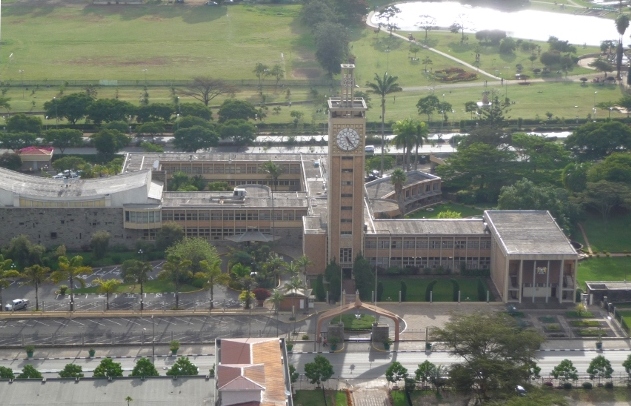
The Office of the Auditor-General Explained: How OAG Audits Public Money, Files Reports With Parliament and Holds State Agencies Accountable
The Office of the Auditor-General Explained: How OAG Audits Public Money, Files Reports With Parliament and Holds State Agencies Accountable
The Office of the Auditor-General (OAG) is one of the constitutional institutions established under Chapter 12 of the Constitution of Kenya, 2010 to support the accountability of public finance management. Operating from headquarters at Anniversary Towers on University Way in Nairobi, OAG audits every public entity in Kenya — the national government and its constitutional commissions, the 47 county governments and their departments, state corporations, public funds, parastatals, and the broader universe of bodies that handle public money. The Auditor-General is appointed by the President with the approval of the National Assembly for a single seven-year term, and reports directly to Parliament rather than to the Executive — a constitutional design intended to insulate the office from political pressure. The OAG's reports — published annually for each audited entity — are the principal documentary record of how public money has been spent and form the basis for parliamentary follow-up through the Public Accounts Committee (PAC) for national-government and constitutional commissions, the Public Investments Committee (PIC) for state corporations, and the County Public Accounts Committees at the county level. This guide walks through the constitutional framework, the audit process, the types of audit opinion, the relationship with Parliament, the recent reforms in audit standards and reporting, and the practical considerations for citizens using OAG reports for accountability advocacy.
The Constitutional Framework
Article 229 of the Constitution establishes the Auditor-General and the OAG. The Public Audit Act, 2015 (Act No. 34 of 2015) provides the detailed framework. The OAG is one of the constitutional independent offices alongside the Controller of Budget. The Auditor-General is appointed by the President with the approval of the National Assembly through a transparent recruitment process conducted by the Public Service Commission, serves a single non-renewable seven-year term, and can be removed only on prescribed grounds through a parliamentary procedure that protects independence.
The Audit Universe
OAG audits a wide range of public entities including: the national government ministries and state departments; constitutional commissions (the IEBC, KNCHR, NLC, EACC, and others); state corporations and parastatals (KenGen, KPLC, Kenya Power, KPC, KAA, KRC, and the dozens of other parastatals); the 47 county governments and their departments; the Judiciary, the National Assembly, the Senate, and other Parliamentary services; public universities and other tertiary institutions; public funds (the Equalization Fund, the National Government Constituency Development Fund, the Youth Enterprise Development Fund, the Women Enterprise Fund, the Uwezo Fund); and the broader universe of bodies handling public money.
Types of Audit
OAG conducts several types of audit. Financial audits verify that the audited entity's financial statements are accurate, comply with accounting standards (predominantly International Public Sector Accounting Standards), and reflect the underlying transactions. Compliance audits verify that the entity has complied with the legal and regulatory framework — the Public Finance Management Act, the Public Procurement and Asset Disposal Act, sector-specific statutes, and broader compliance requirements. Performance audits assess whether public programmes have achieved their objectives economically, efficiently, and effectively. Special audits address specific concerns referred to OAG by Parliament, by the Executive, or by the broader public-interest framework.
The Audit Process
Each audit cycle runs annually with the financial year (1 July to 30 June). After the financial year ends, the audited entity prepares its financial statements and submits them to OAG within the statutory three-month deadline. OAG audit teams plan the audit, conduct fieldwork at the entity's offices and field operations, collect audit evidence, draft preliminary findings, engage with the entity's management on the draft findings (allowing the entity to respond and clarify), and finalise the audit report. The final report is signed by the Auditor-General and submitted to Parliament for tabling.
Types of Audit Opinion
OAG's audit reports conclude with one of four principal opinions. An "unqualified opinion" (sometimes called a "clean" opinion) confirms that the financial statements are accurate and the entity has complied with the relevant framework. A "qualified opinion" identifies specific concerns or material misstatements that do not affect the overall financial statement reliability. An "adverse opinion" concludes that the financial statements are materially misstated and do not fairly present the entity's financial position. A "disclaimer of opinion" indicates that the Auditor-General was unable to obtain sufficient evidence to express an opinion (often because of incomplete records or denied access). The trend of audit opinions across an entity over multiple years is a strong signal of the entity's financial governance.
Parliamentary Follow-Up: PAC, PIC, and CPACs
OAG reports are tabled in Parliament and referred to the relevant accountability committees. The Public Accounts Committee (PAC) handles the audit reports of the national government, constitutional commissions, and other national-government bodies. The Public Investments Committee (PIC) handles the audit reports of state corporations and parastatals. The County Public Accounts Committees at each County Assembly handle the audit reports of the county government and its entities. The committees conduct hearings, summon Accounting Officers to explain audit findings, recommend remedial actions, and refer specific matters to other bodies including the EACC, the DPP, and the Auditor-General himself for further investigation.
The Citizen's Use of Audit Reports
OAG reports are public documents available for download from the OAG portal. Citizens, civil society organisations, journalists, and academic researchers regularly use the reports to: track the financial management of specific entities; identify governance and procurement irregularities; advocate for specific reforms in response to documented audit findings; support investigative journalism into public money management; and conduct research on the broader accountability and governance landscape. The reports are detailed, evidence-based, and offer one of the most credible documentary sources on Kenyan public sector accountability.
Recent Reforms
OAG has undergone substantial modernisation over the past decade. The transition to International Public Sector Accounting Standards (IPSAS) accrual accounting from the cash-basis accounting traditional to the public sector has produced more comprehensive financial reporting. The shift to risk-based audit methodology has improved audit efficiency and coverage. The integrated audit software and electronic audit working papers have improved the speed and quality of audits. The expansion of performance audit work alongside financial and compliance audits has broadened the accountability framework. The continued investment in audit staff training, certification, and capacity-building has strengthened the office's professional foundation.
Challenges
The OAG operates with substantial workload pressure — annual audit of more than 700 public entities by an office of approximately 1,500 audit staff is a stretching scope. Audit backlogs in some entities, the historical pattern of late tabling of reports, the limited follow-through on the parliamentary recommendations, the structural under-funding of certain audit work, and the broader political-economy pressures on accountability institutions all remain active concerns. The office's continued strengthening is the focus of sustained policy and civil-society engagement.
The Bigger Picture
The Office of the Auditor-General is one of the principal pillars of Kenyan public accountability under the 2010 constitutional dispensation. The audit reports, the parliamentary follow-up, and the broader accountability ecosystem operate together to track how public money is used and to identify where improvement is needed. For citizens engaged with public sector accountability, the OAG framework is the principal documentary source supporting informed advocacy and engagement.
The Office of the Auditor-General publishes audit reports, the framework documents, and operational information.
More Articles

The Multiparty Era Reforms: Saba Saba, the Repeal of Section 2A and Kenya's Return to Political Pluralism
Jul 02, 2026

Eye Care in Kenya: Cataract, Trachoma and the Long Road to Universal Vision Health
Jul 02, 2026

Shaba National Reserve: Joy Adamson's Last Wilderness and Isiolo's Semi-Desert Safari Gem
Jul 02, 2026

The Rendille People of Northern Kenya: Camel Pastoralism, Clan Traditions and a Culture Under Pressure
Jul 02, 2026

Ukulima Sacco: From Ministry of Agriculture Staff Society to a National Cooperative Open to All Kenyans
Jul 02, 2026