The Mijikenda Community of Coastal Kenya: Nine Sub-Tribes, Sacred Kayas and Heritage
The Mijikenda Community of Coastal Kenya: Nine Sub-Tribes, Sacred Kayas and Heritage
The Mijikenda are one of the most historically and culturally distinctive ethnic clusters in Kenya. The name itself—"miji kenda", meaning "nine homesteads" or "nine villages" in the Mijikenda dialect of Mijikenda—captures the structural fact of the community: nine closely related but separately constituted sub-tribes that share a common origin, a language family within the Northeast Coast Bantu group and a system of sacred forest settlements known as the Kayas. The community is concentrated in the present-day counties of Kilifi, Kwale, Mombasa, Taita Taveta and parts of Tana River, and accounts for the dominant share of the indigenous coastal population. Mijikenda identity—expressed in the language, the cuisine, the music, the oral traditions and the long association with the Kaya forests—remains one of the most resilient and consequential cultural systems in Kenya today.
Who Are the Mijikenda?
The nine Mijikenda sub-tribes are the Giriama, Digo, Duruma, Chonyi, Kauma, Ribe, Rabai, Jibana and Kambe. Each speaks its own dialect of a closely related family of languages, mutually intelligible to varying degrees and all considered part of the broader Mijikenda language. The Giriama are the largest sub-tribe and are concentrated in Kilifi County, particularly around Kaloleni and Malindi. The Digo are dominant in Kwale County and extend across the border into Tanga in Tanzania. The Duruma are spread across Kwale and Kilifi, the Chonyi, Kauma, Ribe, Rabai, Jibana and Kambe are mostly concentrated in central and western Kilifi. Cultural identity is anchored in clan systems, kinship relations and the recognition of specific Kaya forests as the original homestead of each sub-tribe.
Origins and the Shungwaya Tradition
Oral tradition holds that the ancestors of the Mijikenda originated in Shungwaya (Singwaya), a region somewhere along the southern Somali coast or in the lower Tana basin, and migrated south during the sixteenth and seventeenth centuries under pressure from the Oromo and other northern groups. As they moved through the coastal hinterland, the migrating groups split, each settling in a particular cleared hilltop site that became the original Kaya. These nine original Kayas are the foundational reference points of Mijikenda identity, even though most of the community now lives in dispersed homesteads in the surrounding areas. Detailed ethnographic and oral-history work on Mijikenda origins is documented in the National Museums of Kenya collections and in the UNESCO files.
The Sacred Kayas
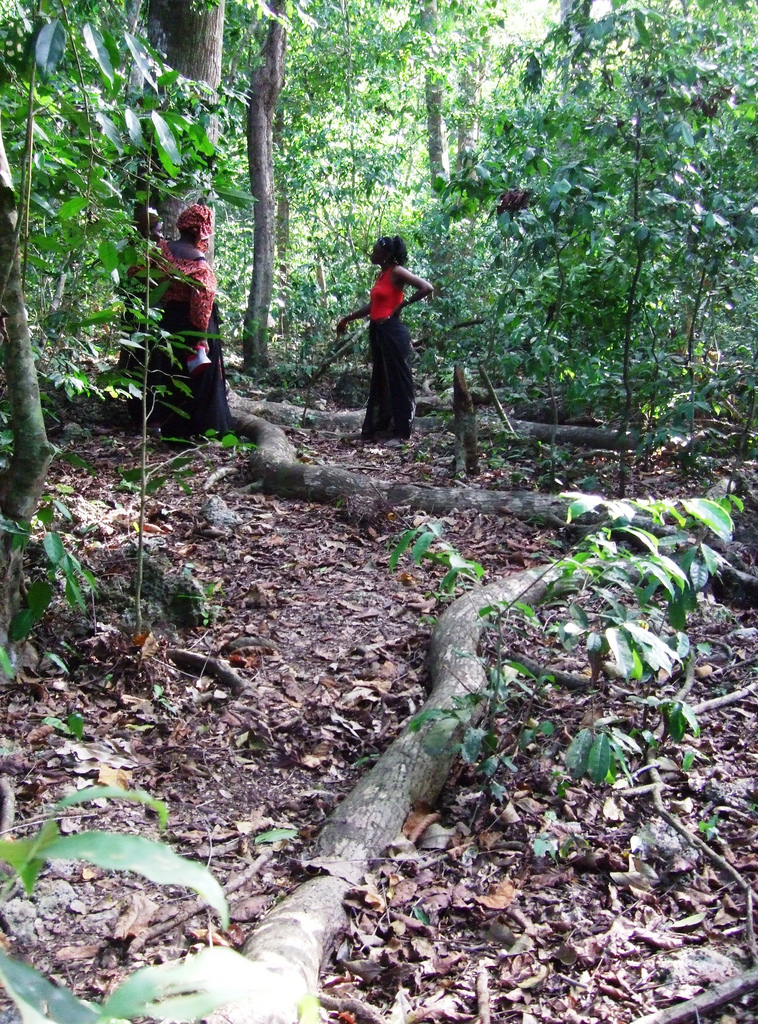
The Kaya is the spiritual, judicial and historical centre of each Mijikenda sub-tribe. Each Kaya is a fortified clearing on a hilltop surrounded by dense forest, accessed by a small number of carefully maintained paths. Until the mid-nineteenth century, each Mijikenda group lived together in or near its Kaya. Today, the Kayas function principally as sacred sites for ritual, oath-taking, burial of elders, naming of newborns, reconciliations, initiations, coronations of the Kambi council of elders and the resolution of disputes. They are protected by strict rules—on entry, on dress, on speech and on the harvesting of plants and animals—that are enforced by community elders. Eleven of the approximately thirty surviving Kaya forests were inscribed in 2008 on the UNESCO World Heritage List as the Sacred Mijikenda Kaya Forests, and the broader Mijikenda intangible heritage associated with the Kayas was inscribed on the UNESCO List of Intangible Cultural Heritage in Need of Urgent Safeguarding in 2009. Authoritative records are held by the Government of Kenya through the National Museums and the Kenya Forest Service.
Vigango and Material Culture
Material culture among the Mijikenda is marked by the vigango—carved memorial posts erected by the Giriama and some other sub-tribes to commemorate deceased members of the secret Gohu society. Each kigango is a slender, anthropomorphic wooden plank with stylised geometric incisions and a head, and is set into the ground at the homestead of the deceased. The vigango are sacred. Their unauthorised removal is considered a profound violation of community heritage. A significant repatriation campaign has, over recent years, returned a number of vigango illegally exported to United States museums and private collections during the colonial and early post-colonial period, supported by the National Museums of Kenya and by Mijikenda heritage organisations. Other distinctive material culture includes carved wooden chairs and stools, woven palm-leaf mats, kofia caps, kanga and leso textile traditions and the use of natural cosmetic dyes from sandalwood, cassia and turmeric.
Language, Literature and Music
Mijikenda is a Northeast Coast Bantu language with the nine principal dialects—Giriama, Digo, Duruma, Chonyi, Kauma, Ribe, Rabai, Jibana and Kambe—accompanied by a rich body of oral literature including epic chants, sung poetry, riddles, proverbs, lullabies and historical narratives. The genres of the Mwanzele and Kifudu among the Giriama, the Sengenya among the Digo, the Chechere drumming traditions and the modern reinterpretations through artists such as Them Mushrooms and Mighty King Kong continue to keep the musical tradition alive. The annual Mwakogotu cultural festival and the various Kaya-based commemorations are documented and supported by the Ministry of Tourism and Wildlife and the National Museums.
Economy and Livelihoods
The Mijikenda economy traditionally combined subsistence farming of maize, cassava, sorghum, millet, coconuts, cashew nuts and mangoes with palm-wine tapping, salt extraction, fishing and pastoral keeping of cattle and goats. Coastal trade with Arab, Persian and later European traders embedded Mijikenda communities in the long-running Indian Ocean trade economy in ivory, gum, slaves, copra and grain. Modern Mijikenda livelihoods are dominated by smallholder farming, fishing, tourism employment in Diani, Watamu and Malindi, urban service-sector work in Mombasa, and significant white-collar professional careers in Nairobi and abroad. The diaspora population in the Gulf, the UK, the US and Tanzania is substantial and is an important channel of remittances back into Kilifi and Kwale.
Religion and the Coexistence of Faiths
The Mijikenda traditional religion centres on a supreme creator god—called Mulungu, Mungu or Mvungu depending on the dialect—worshipped through ancestors and through the rituals of the Kaya. Christianity arrived early through the Church Missionary Society at Rabai—where Johann Ludwig Krapf established a mission in 1846 that produced the first Kiswahili-English dictionary and the first translation of the Bible into Swahili—and has since become the majority religion in much of the Mijikenda hinterland. Islam is the dominant faith among the Digo and a major faith among the Duruma and along the immediate coastal strip, with deep ties to Swahili-Arab civilisation. Interfaith coexistence within Mijikenda communities is historically strong.
The Mijikenda Today
Contemporary challenges for the Mijikenda community include sustained pressure on Kaya forest land from agricultural expansion, infrastructure development and unregulated tourism, the loss of intergenerational language transmission as younger Mijikenda are increasingly educated in Kiswahili and English, the slow erosion of oral tradition as elders pass on, and the long-running political and historical debate over land rights along the coastal strip. Heritage organisations such as the Mijikenda Heritage Trust and the Council of Mijikenda Elders work with national institutions to support language documentation, Kaya forest conservation and youth-led cultural transmission. The Coast Cultural Industries policy, embedded in the broader Cultural and Creative Industries policy at the Ministry of Sports, Culture, the Arts and Heritage, is the principal national policy vehicle for sustaining Mijikenda heritage. Current information is available through the State Department for Culture, the Arts and Heritage.
Outlook
The Mijikenda are at the centre of one of Kenya's most important conversations about what it means to be a coastal Kenyan in the twenty-first century, with the Kaya forests, the language and the relationship between tradition and modernity all in flux. The community's combination of strong cultural infrastructure, a vibrant creative output, a strategic geographic location at the gateway to the Kenyan coast and a growing professional diaspora makes it likely that Mijikenda identity will continue to evolve in highly visible ways. For Kenyans in the diaspora and for visitors, engaging with Mijikenda heritage through the Kayas, the language, the music and the cuisine is one of the most rewarding ways of understanding the coastal Kenyan story in depth.
More Articles

The Multiparty Era Reforms: Saba Saba, the Repeal of Section 2A and Kenya's Return to Political Pluralism
Jul 02, 2026

Eye Care in Kenya: Cataract, Trachoma and the Long Road to Universal Vision Health
Jul 02, 2026

Shaba National Reserve: Joy Adamson's Last Wilderness and Isiolo's Semi-Desert Safari Gem
Jul 02, 2026

The Rendille People of Northern Kenya: Camel Pastoralism, Clan Traditions and a Culture Under Pressure
Jul 02, 2026

Ukulima Sacco: From Ministry of Agriculture Staff Society to a National Cooperative Open to All Kenyans
Jul 02, 2026