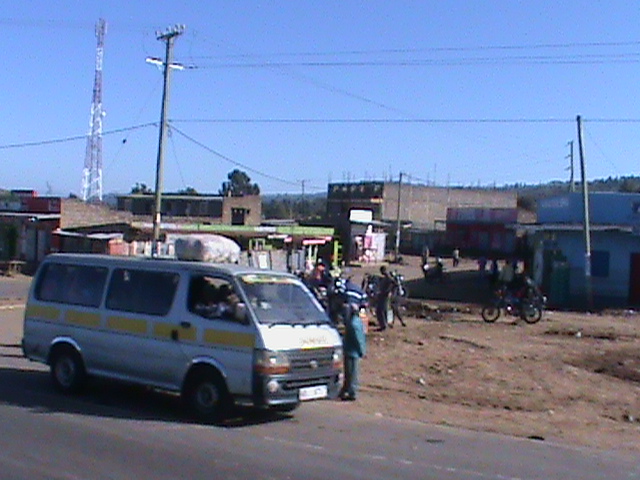
How to Register a Matatu SACCO and Obtain a PSV Operator Licence in Kenya: The NTSA Framework, TLB Reforms and the Path to Compliant Public-Transport Operation
How to Register a Matatu SACCO and Obtain a PSV Operator Licence in Kenya: The NTSA Framework, TLB Reforms and the Path to Compliant Public-Transport Operation
Kenya's matatu industry is one of the most visible and economically consequential public-transport systems in Africa. The estimated 70,000+ commercial matatus operating across the country move millions of passengers daily across urban, peri-urban, and rural routes. The industry employs an estimated 300,000-500,000 drivers, conductors, route managers, mechanics, and ancillary workers, and indirectly supports the wider informal economy that has grown up around the routes and terminals. The 2010 reforms that consolidated commercial matatu operations under registered SACCOs and the subsequent regulatory framework administered by the National Transport and Safety Authority (NTSA), the Transport Licensing Appeals Board (which replaced the former Transport Licensing Board), and the County Governments have substantially formalised the sector while preserving its essentially small-operator economic structure. This guide walks through the regulatory framework, the SACCO registration process specific to matatu operations, the PSV operator licensing through NTSA, the route allocation arrangements, the vehicle inspection regime, the speed governor and seatbelt requirements, the fee structure, and the practical considerations for entrants into the sector.
The Regulatory Framework
The Traffic Act (Cap 403), the National Transport and Safety Authority Act, 2012, the Co-operative Societies Act, and the various subsidiary regulations together set the legal framework. NTSA regulates the vehicles and the route operations. The State Department for Co-operatives registers and supervises the SACCOs. County Governments handle the local-government dimensions including terminal facilities and selected route operations within county boundaries. The 2010 reforms — driven by passenger safety concerns, accident statistics, and revenue-collection considerations — required that every commercial matatu operate under a SACCO or limited liability company structure rather than as an individual operator.
Step 1: Form or Join a Matatu SACCO
To operate commercially, a matatu owner must either form a new SACCO with a minimum of ten members or join an existing SACCO operating the relevant route. New SACCO formation follows the standard Co-operative Societies Act process — at least ten founding members, a common bond (operators on the same route or geographic area), a draft set of by-laws, an interim management committee, a chief's letter confirming the founding members, and the registration application to the Commissioner for Co-operative Development. Established matatu SACCOs operating major Nairobi and inter-county routes have several hundred members each and provide route management, operator support, and the regulatory interface for individual matatu owners.
Step 2: Obtain the PSV Vehicle Licence
Each matatu must be registered as a Public Service Vehicle (PSV) with NTSA. The PSV registration includes: vehicle inspection by NTSA-licensed inspectors confirming roadworthiness, vehicle conformance to PSV specifications (yellow band, seat configuration, body strength, fire safety equipment, first aid kit, fire extinguisher); installation of NTSA-approved speed governor limiting maximum speed to 80 km/hour; installation of seatbelts for all passengers; and display of route information including the SACCO name, the route, the maximum number of passengers, and the operator's contacts. The PSV licence is renewed annually and the vehicle is re-inspected on each renewal.
Step 3: Obtain the PSV Operator Licence (Route Allocation)
The SACCO holds the route operator licence — historically issued by the TLB and now under NTSA's authority following statutory reorganisations. The route licence specifies the route, the number of vehicles authorised on the route, the operator association, and the operating conditions. Route allocation has historically been a contentious process, with established SACCOs on profitable routes resisting new entrants. The 2010 reforms and subsequent operational adjustments have sought to manage route allocation more transparently. NTSA-licensed route allocation is the legal foundation of the operator's commercial right to operate on a specific route.
Step 4: Driver and Conductor Licensing
Every driver and conductor on a matatu must hold appropriate licensing. Drivers require a PSV-endorsed Driving Licence issued by NTSA, with documented health fitness (medical examination, vision test), Certificate of Good Conduct, and PSV-specific training. Conductors require a Conductor's Badge issued by NTSA. The SACCO is responsible for verifying that all crew members operating its vehicles hold current licences.
Vehicle Inspection and Compliance
NTSA inspections cover roadworthiness (brakes, tyres, lights, suspension, body integrity), PSV-specific equipment (speed governor function, seatbelt installation, fire safety), and documentation (licence currency, insurance, route compliance, driver records). Inspections occur on annual licence renewal and on demand at NTSA enforcement checks. Vehicles found non-compliant are detained until the defects are cured.
The Speed Governor Question
NTSA has required PSV speed governors limiting maximum speed to 80 km/hour since 2003, with implementation periodically tightened. The speed governor regime has been a focus of operator concern (citing the impact on competitive route operations) and of safety advocacy (citing the substantial reduction in serious accident rates following governor implementation). The current rules require governors of approved makes installed and certified by NTSA-approved installers.
SACCO Operations
The matatu SACCO performs several functions for its members. Route management — coordinating dispatch schedules, managing terminal operations, allocating route slots among members, and resolving operational disputes. Revenue management — in some SACCOs, fare collection is consolidated through SACCO-managed systems with subsequent distribution to members. Operator support — vehicle maintenance facilities, bulk fuel purchasing, insurance brokerage, and other shared services. Regulatory interface — single-window engagement with NTSA, the County Government, and the police service. Welfare — savings products, loan facilities, and member benefit schemes for SACCO members.
Worked Economics: A Single Matatu Operation
A single 14-seater matatu operating on a viable Nairobi suburban route grosses approximately KSh 5,000-15,000 per day depending on route, fare structure, and operating hours. Daily operating costs (fuel, driver and conductor wages, SACCO levies, fare-collection commissions, terminal fees, traffic policing payments, vehicle maintenance allocation) typically run KSh 3,000-8,000. Net daily margin to the owner typically runs KSh 1,500-5,000. Monthly net income to the matatu owner therefore runs in the KSh 45,000-150,000 range depending on route, vehicle utilisation, and operational discipline. Capital recovery on the matatu (typically a 5-year-old imported vehicle costing KSh 1.2-2.0 million) typically takes 3-5 years.
Practical First Steps
First, identify the SACCO operating your target route and engage with their membership process. Forming a new SACCO is feasible but operationally demanding; joining an established one is the common entry path. Second, source the vehicle from a reputable importer (the 8-year rule and PSV-specific specifications apply). Third, complete the NTSA registration, PSV inspection, speed governor installation, and all driver/conductor licensing before commencing operations. Fourth, plan working capital for the first three months of operations as route revenues stabilise. Fifth, engage proactively with the SACCO's operational management — successful matatu ownership depends on the relationships and discipline within the SACCO ecosystem.
The Bigger Picture
The matatu sector is one of Kenya's most distinctive economic structures — a competitive, small-operator, highly visible public-transport system that has evolved through repeated regulatory reform into the modern SACCO-anchored framework. The sector continues to face ongoing reform debates around safety, fare regulation, route management, and the broader public-transport policy. Operators who engage with the framework, comply with the regulatory requirements, and operate within disciplined SACCO structures earn meaningful incomes and contribute to the country's transport economy. Operators who attempt to operate outside the framework face progressively stronger enforcement.
The National Transport and Safety Authority publishes the licensing forms, the fee schedule, and the operational regulations. The State Department for Co-operatives publishes the SACCO registration framework relevant to matatu operations.
More Articles

The Multiparty Era Reforms: Saba Saba, the Repeal of Section 2A and Kenya's Return to Political Pluralism
Jul 02, 2026

Eye Care in Kenya: Cataract, Trachoma and the Long Road to Universal Vision Health
Jul 02, 2026

Shaba National Reserve: Joy Adamson's Last Wilderness and Isiolo's Semi-Desert Safari Gem
Jul 02, 2026

The Rendille People of Northern Kenya: Camel Pastoralism, Clan Traditions and a Culture Under Pressure
Jul 02, 2026

Ukulima Sacco: From Ministry of Agriculture Staff Society to a National Cooperative Open to All Kenyans
Jul 02, 2026