Malaria in Kenya: Epidemiological Zones, Treatment and Prevention
Malaria in Kenya: Epidemiological Zones, Treatment and Prevention
Malaria remains one of Kenya's most significant public-health challenges, a leading cause of illness and a persistent drain on household incomes and the health system. Although the disease is preventable and treatable, its burden falls unevenly across the country, shaped by altitude, rainfall, temperature and proximity to standing water. Understanding the geography of malaria in Kenya, the tools used to treat it, and the strategies deployed to prevent it is essential for residents, travellers and the diaspora alike, particularly families visiting endemic regions.
The Parasite and the Vector
Malaria in Kenya is caused predominantly by the parasite Plasmodium falciparum, the most dangerous of the human malaria species, transmitted through the bite of infected female Anopheles mosquitoes. The parasite's life cycle, alternating between human host and mosquito vector, means that controlling transmission requires breaking the chain at multiple points: preventing mosquito bites, killing vectors, and rapidly treating human infections before they can be transmitted onward. Pregnant women and children under five are the most vulnerable to severe disease and death.
Epidemiological Zones
Kenya's malaria control framework divides the country into several distinct epidemiological zones reflecting widely varying transmission intensity. The lake-endemic zone of western Kenya, encompassing counties such as Busia and Siaya around Lake Victoria, carries the highest and most stable transmission, with malaria prevalence reaching close to one in five people in some surveys. Surrounding counties including Bungoma, Kakamega, Kisumu and Migori form a zone of moderate transmission, where Plasmodium falciparum prevalence ranges between roughly 10 and 30 percent and which together account for a large share of the at-risk population. The coastal endemic zone sustains lower but persistent transmission, the semi-arid and seasonal zones of the north and east experience periodic epidemics, and the highland epidemic-prone areas face unstable transmission that can flare during unusually warm or wet conditions. The cool central highlands and Nairobi fall into a low-risk category. Guidance from the Ministry of Health tailors interventions to each zone.
Diagnosis and Treatment
Kenyan policy emphasises parasitological confirmation of malaria before treatment, using rapid diagnostic tests or microscopy rather than treating on the basis of symptoms alone. The first-line treatment for uncomplicated Plasmodium falciparum malaria is artemisinin-based combination therapy, most commonly artemether-lumefantrine, abbreviated AL. Prompt administration of the first dose at the health facility has been shown to improve outcomes, particularly in high-transmission lake-endemic areas. Severe malaria is treated with injectable artesunate followed by a full course of oral ACT. Adherence to national case-management guidelines among frontline health workers has improved over time, although gaps in testing and treatment quality persist in some settings, underscoring the need for continued training and supervision.
Prevention: Nets, Spraying and Chemoprevention
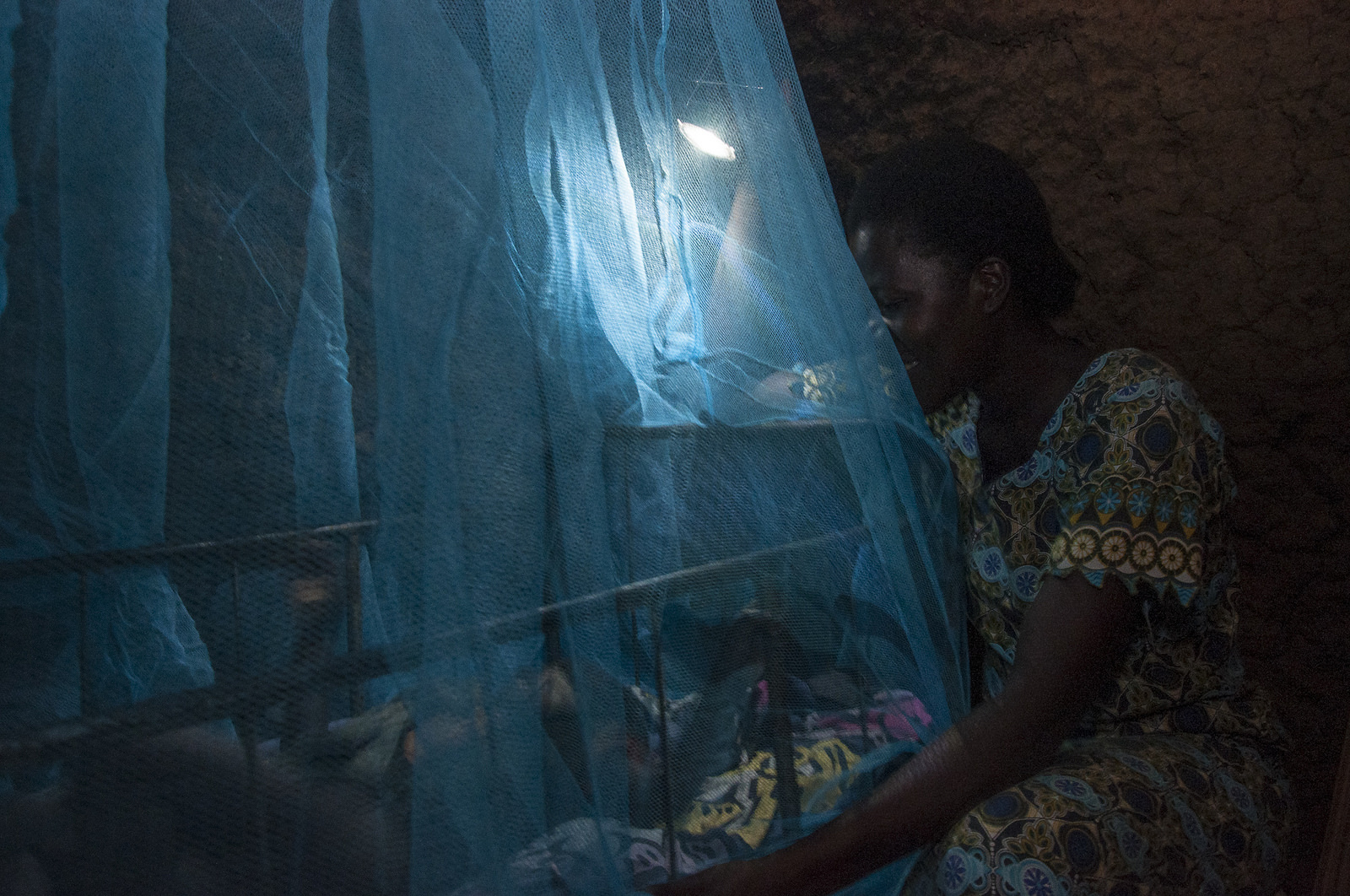
The cornerstone of malaria prevention in Kenya is the long-lasting insecticidal net, or LLIN. Mass net-distribution campaigns periodically target tens of millions of people in the highest-risk counties; a recent campaign has aimed to distribute over 15 million nets across 22 counties to protect a population of around 27 million at risk. Indoor residual spraying is deployed in selected high-burden and epidemic-prone areas to kill mosquitoes resting on walls. Intermittent preventive treatment in pregnancy protects expectant mothers and their babies, and seasonal chemoprevention is being explored for children in appropriate settings. Environmental management, including draining or treating mosquito breeding sites, complements these measures.
The National Malaria Strategy
Kenya's response is coordinated through successive national malaria strategies that set ambitious targets for reducing incidence and deaths. The strategy combines vector control, case management, surveillance, social and behaviour-change communication, and programme management, supported by domestic funding and international partners. Strengthening malaria surveillance so that it functions as a real-time core intervention, improving data quality at county level, and sustaining financing are recurring priorities. The roll-out of malaria vaccines for young children in selected endemic counties represents an important addition to the prevention toolkit and a sign of the evolving response.
Economic and Social Burden
Beyond its direct health toll, malaria imposes heavy economic costs. Episodes of illness reduce productivity, keep children out of school, and push families toward out-of-pocket spending on tests, drugs and transport to clinics. In the lake-endemic west, where transmission is most intense, these costs compound existing development challenges. Investment in prevention and prompt treatment therefore yields returns far beyond the health sector, supporting education, agricultural productivity and household financial stability.
Practical Guidance for Travellers and Diaspora
For diaspora visitors and travellers heading to endemic regions, particularly western and coastal Kenya, prevention is essential. Sleeping under an insecticide-treated net, using repellents, wearing protective clothing in the evenings, and seeking prompt testing for any fever during or after travel are basic precautions. Visitors should consult a health professional about chemoprophylaxis before travelling, since long-term residents may have partial immunity that returning diaspora members and children born abroad do not share. Any fever following travel to a malaria zone should be treated as a medical priority.
Conclusion
Malaria in Kenya is a story of stark geographic contrasts and steady, hard-won progress. The lake-endemic west bears the greatest burden, while large parts of the highlands remain at low risk. Through confirmed diagnosis, effective ACT treatment, mass net distribution, targeted spraying and an evolving national strategy now incorporating vaccination, Kenya continues to drive down a disease that is both preventable and curable. Sustained financing, strong surveillance and community engagement remain the keys to pushing the malaria burden ever lower.
Note: This article is informational and does not substitute for professional medical advice. Anyone with symptoms of malaria should seek testing and treatment from a qualified health provider.
More Articles

The Multiparty Era Reforms: Saba Saba, the Repeal of Section 2A and Kenya's Return to Political Pluralism
Jul 02, 2026

Eye Care in Kenya: Cataract, Trachoma and the Long Road to Universal Vision Health
Jul 02, 2026

Shaba National Reserve: Joy Adamson's Last Wilderness and Isiolo's Semi-Desert Safari Gem
Jul 02, 2026

The Rendille People of Northern Kenya: Camel Pastoralism, Clan Traditions and a Culture Under Pressure
Jul 02, 2026

Ukulima Sacco: From Ministry of Agriculture Staff Society to a National Cooperative Open to All Kenyans
Jul 02, 2026