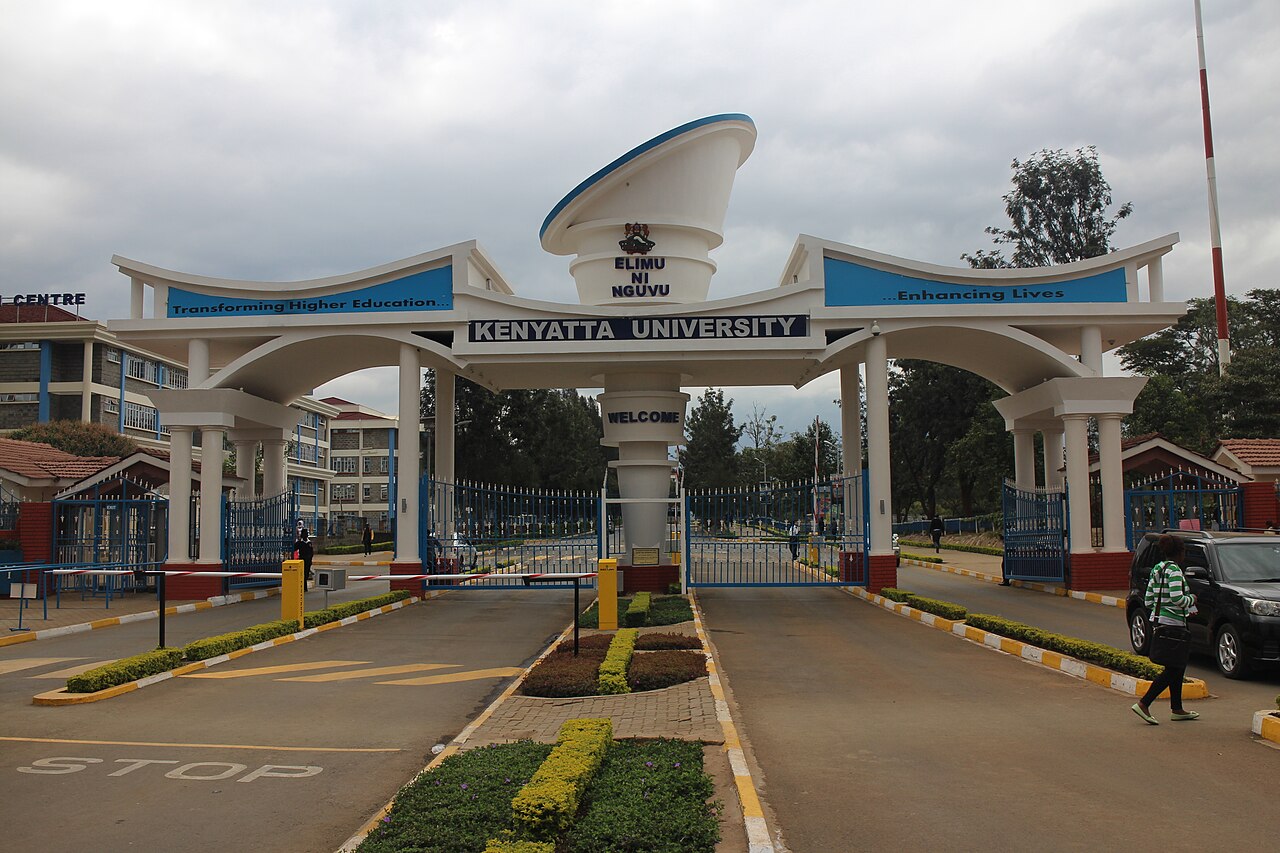
Kenyatta University: History, Schools, Campuses and Its Place in Kenya's Higher Education Landscape
Kenyatta University: History, Schools, Campuses, Research Profile and the Place It Holds in Kenya's Higher Education Landscape
Kenyatta University is among the oldest and largest of Kenya's public universities, an institution whose academic footprint reaches from the principal Kahawa campus on the northern edge of Nairobi to satellite campuses in Mombasa, Kitui, Nakuru, Embu, Ruiru, Nyeri, Kiambu, Kericho and Dadaab. With an undergraduate and postgraduate enrolment that has at times exceeded 70,000 students, Kenyatta University is one of the largest higher education employers in the country, a major engine of the teacher-training pipeline and the production base for a sizeable share of Kenya's professional workforce in the sciences, education, business and health.
Origins: From Templer Barracks to a National University
The institution traces its origin to 1965, when the British Government handed over the Templer Barracks at Kahawa, about 17 kilometres northeast of central Nairobi, to the Government of Kenya. The barracks were converted into Kenyatta College, which initially offered Advanced Level secondary education at Form 5 and 6, and a small number of undergraduate diploma programmes. In 1978 the entire Faculty of Education of the University of Nairobi was transferred to Kenyatta College, and the institution was renamed Kenyatta University College under an Act of Parliament, operating as a constituent college of the University of Nairobi. In 1985 it was granted full and independent university status as Kenyatta University. The transition from teacher training college to fully fledged university captured, in a single institutional biography, the trajectory of Kenya's post-independence higher education system itself.
The Kahawa Main Campus and Its Layout
The main campus at Kahawa sits on more than one thousand acres in Kasarani Sub-county, a site of striking scale by Kenyan campus standards. The campus is organised around academic schools, central administrative blocks, libraries, laboratories, lecture halls, students' centres, hostels and an internal road network served by a fleet of campus buses. The Post-Modern Library, completed in the 2010s, is the largest single university library structure in East Africa and a recognisable architectural landmark. The Kenyatta University Teaching, Referral and Research Hospital, a level six facility on the campus grounds, provides specialist clinical services to the surrounding community and serves as the principal teaching hospital for the School of Medicine. The campus also hosts a chapel, a mosque, a recreation centre, sports grounds and the Kenyatta University Conference Centre, which is a node of national academic conferencing.
Academic Schools and Programme Breadth
Kenyatta University is organised into multiple academic schools spanning the full breadth of disciplines expected of a comprehensive university. The principal schools include the School of Education, which remains the country's largest teacher-training institution; the School of Pure and Applied Sciences; the School of Agriculture and Environmental Sciences; the School of Business, Economics and Tourism; the School of Health Sciences with its faculties of medicine, nursing, pharmacy and public health; the School of Engineering and Architecture; the School of Law, Arts and Social Sciences; the Graduate School; and the Digital School of Virtual and Open Learning. The Digital School in particular has supported the university's expansion into open and distance learning, with significant uptake among working professionals, mature learners and Kenyans in the diaspora seeking postgraduate qualifications without returning home.
Enrolment, Faculty and Output
At peak enrolment, the university registered more than 70,000 students across undergraduate and postgraduate programmes, taught by an academic staff of around 1,500 lecturers and professors. Programmes are offered in regular full-time, parallel evening, weekend and open learning modes. Postgraduate offerings span masters and doctoral degrees in fields ranging from education and public health to engineering, finance, agribusiness and the humanities. The annual graduation ceremony, held over multiple days at the open-air graduation square on the main campus, is one of the largest single graduation events in East Africa.
Research and Innovation
Research at Kenyatta University spans applied agriculture, climate science, public health, education policy, materials science, financial inclusion and the digital economy. The university hosts a number of designated research centres and chairs, including chairs in indigenous knowledge, women's health and food security. Partnerships with the Kenya Agricultural and Livestock Research Organization, the Kenya Medical Research Institute, the International Centre of Insect Physiology and Ecology, and a range of overseas research partners support student and faculty research output. Kenyatta University researchers have made notable contributions to maternal and child health, water and sanitation, biotechnology and rural energy. The Commission for University Education, which regulates all universities operating in Kenya, lists Kenyatta University as one of the country's chartered public universities; standards and quality assurance information is published on the Commission for University Education portal.
The Satellite Campuses
Beyond Kahawa, Kenyatta University operates satellite campuses across the country. The Mombasa campus serves the coastal region with programmes in business, education and the social sciences. The Nakuru, Embu, Nyeri and Kericho campuses serve the central and Rift Valley regions, while the Ruiru and Kiambu campuses extend the university's reach into the densely populated peri-urban belts north of Nairobi. The Dadaab campus, a uniquely positioned site adjacent to the world's largest refugee complex, hosts education programmes for refugee learners and host communities under partnership arrangements with the United Nations High Commissioner for Refugees and other partners. The campuses operate on a hub-and-spoke model with academic oversight from the main campus and local administrative leadership.
Student Life and Alumni Networks
Student life at Kenyatta University is anchored in academic clubs, sports teams, religious groups and culture associations that span Kenya's ethnic and regional diversity. The university's sporting teams have produced national champions in athletics, basketball, soccer, hockey and chess. Cultural festivals, debate competitions and entrepreneurship pitch days form the annual rhythm of student life. The university's alumni network is one of the largest in Kenya, with graduates working across the public service, the education sector, the financial services industry, the legal profession, the medical workforce and the broader private sector. Alumni in the diaspora have organised chapters across the United Kingdom, the United States, Canada, the Gulf, Germany and Australia, supporting fundraising for scholarships and infrastructure on the campuses back home.
Financing, Tuition and Funding for Students
Kenyatta University tuition for undergraduate Kenyan students sits at levels comparable to other public universities, supported by the Higher Education Loans Board, which provides means-tested loans and bursaries to needy students. The Higher Education Loans Board administers loans and bursaries through digital platforms accessible to applicants in Kenya and in the diaspora. Diaspora parents with children studying at Kenyatta University face slightly higher international student fee structures unless their children are Kenyan citizens, in which case the standard Kenyan fees apply. Information on funding and on Kenya's national qualifications framework is curated by the Kenya National Qualifications Authority, while the Helb portal lists current bursary opportunities.
Diaspora Pathways and Open Learning
For diaspora Kenyans, Kenyatta University presents two principal pathways. The Digital School of Virtual and Open Learning offers degrees that can be completed online while abroad, with assessments arranged through approved examination centres in major diaspora cities. Onsite programmes are open to Kenyan and international students who return for full study. The university has begun marketing its postgraduate programmes more actively in the United Kingdom, the United States and the Gulf, where many Kenyans pursue mid-career professional qualifications while maintaining residence abroad. Tuition and fees structures, when paid in foreign currency, are typically denominated in US dollars and are competitive with other African public universities.
Looking Forward
Kenyatta University's challenges are those of the Kenyan public university sector as a whole. Public funding has tightened, parallel programme revenue has plateaued, payroll cost pressures from a unionised academic workforce remain a structural reality, and aging physical infrastructure on the main campus is overdue for capital reinvestment. At the same time, the university retains the foundational strengths that have carried it through six decades: a large and diversified academic offering, a strong teacher-training brand, a wide regional footprint and an alumni network that reaches deep into every sector of the Kenyan economy. As Kenya's higher education system continues to evolve under devolution, the funding reforms of the Universities Funding Board and the digital transformation of teaching and learning, Kenyatta University is positioned to remain one of the central institutions of the national academic project. The university's continued investment in research output, in faculty development, in student-centred teaching and in international partnerships will determine its competitive position in the next decade against the rapidly expanding network of private and constituent public universities across the country.
More Articles

The Multiparty Era Reforms: Saba Saba, the Repeal of Section 2A and Kenya's Return to Political Pluralism
Jul 02, 2026

Eye Care in Kenya: Cataract, Trachoma and the Long Road to Universal Vision Health
Jul 02, 2026

Shaba National Reserve: Joy Adamson's Last Wilderness and Isiolo's Semi-Desert Safari Gem
Jul 02, 2026

The Rendille People of Northern Kenya: Camel Pastoralism, Clan Traditions and a Culture Under Pressure
Jul 02, 2026

Ukulima Sacco: From Ministry of Agriculture Staff Society to a National Cooperative Open to All Kenyans
Jul 02, 2026