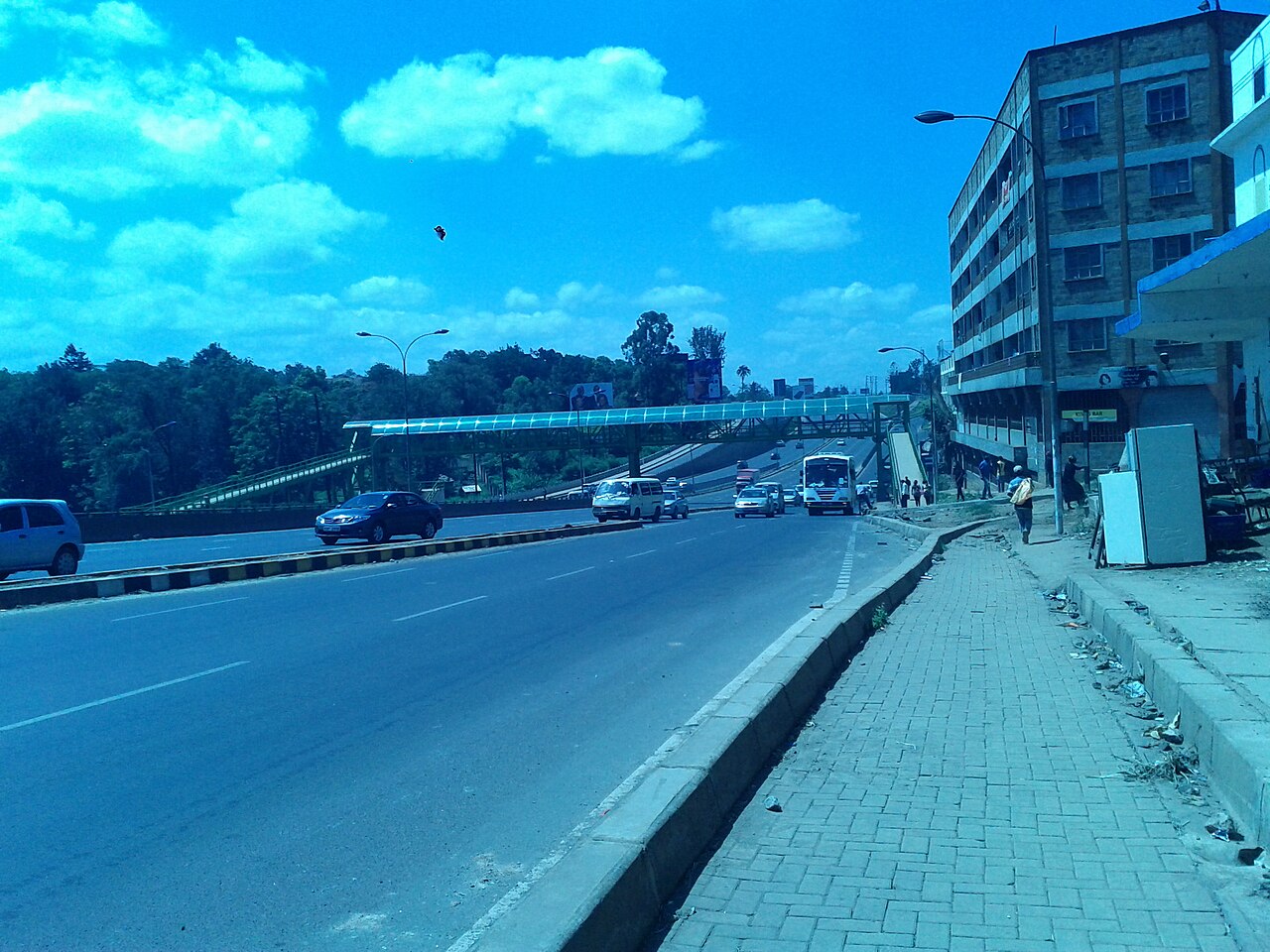
Kenya Roads Board Levy, Roads Annuity Programme and the Public-Private Partnership Toll Road Framework: How Kenyan Highways Get Built and Maintained
Kenya Roads Board Levy, Roads Annuity Programme and the Public-Private Partnership Toll Road Framework: How Kenyan Highways Get Built and Maintained
Kenya's road infrastructure has expanded substantially over the past two decades, with paved highway kilometres roughly doubling, the Nairobi Expressway opening as the country's first major toll road, the SGR-supporting access roads being upgraded, and the broader rural-roads paving programme covering thousands of additional kilometres. The financing of this expansion has involved several complementary mechanisms, each with its own strengths, limitations, and political-economy implications. The Roads Maintenance Levy Fund (RMLF), administered by the Kenya Roads Board, finances routine and periodic maintenance of the existing network. Direct Treasury allocations finance major new construction from the consolidated budget. Donor and concessional financing — from the World Bank, the African Development Bank, JICA, KfW, EIB, China Exim Bank, and selected bilateral partners — supports specific projects under defined repayment terms. The Roads Annuity Programme finances projects through deferred-payment arrangements where contractors construct first and are paid annual instalments over an extended period from the RMLF. The Public-Private Partnership Tolling framework, anchored by the Nairobi Expressway, finances projects through user tolls collected by the private concessionaire over a long-term concession. This guide walks through each financing mechanism in turn, the institutional framework, the case studies, and the practical considerations for contractors, lenders, and citizens engaged with Kenya's road financing landscape.
The Roads Maintenance Levy Fund
The RMLF is financed through the road maintenance levy charged on petrol and diesel at the wholesale level. The levy has been progressively adjusted upward through legislative interventions to reflect the maintenance funding need; recent levy rates have generated annual fund inflows of tens of billions of shillings. The Kenya Roads Board allocates the Fund across the four road agencies (KeNHA, KURA, KeRRA, KWS Roads) based on prescribed formulas reflecting road network length, traffic volume, condition, and broader maintenance priorities. The Fund covers routine maintenance (pothole repair, drainage clearing, vegetation control, traffic-sign maintenance) and periodic maintenance (resurfacing, structural repairs, bridge rehabilitation). New construction is typically financed through other mechanisms.
Treasury Direct Allocations
The annual national budget allocates substantial direct funding from the consolidated revenue to road construction and major upgrades. The allocations cover the principal capital projects that exceed the RMLF maintenance scope — the major dual-carriageway upgrades, the new highway construction, the urban-network expansion, and the rural-roads programme. The budget allocations are visible in the annual Budget Statement, the Programme-Based Budget, and the County Allocation of Revenue (for county-handled road segments).
Donor and Concessional Financing
Kenya has used substantial donor financing for major road projects. The World Bank has financed multiple road projects, particularly in the Northern Corridor and the broader trade-corridor framework. The African Development Bank has financed projects across the country. JICA (Japan International Cooperation Agency) has financed major projects including significant contributions to the Mombasa-Nairobi route. KfW (Germany), the European Investment Bank, and various bilateral partners have funded specific projects. The China Exim Bank financed the Standard Gauge Railway and several major road projects under terms that have been the subject of public debate. Donor financing typically combines concessional rates, technical assistance, and conditions related to procurement, environmental and social safeguards, and broader sector-policy reforms.
The Roads Annuity Programme
The Roads Annuity Programme launched around 2014 was designed to accelerate road construction by deferring payment to the contractor over an extended period. Under the programme, the contractor designs, builds, and maintains a defined road for a contracted period (typically 10-15 years), receiving annual payments from the RMLF over the contract life. The programme aimed to overcome the immediate-capital constraint by spreading payments over time. The programme has been the subject of substantial discussion regarding its financial sustainability and the long-term burden on the RMLF; subsequent administrations have adjusted the programme's scope and terms.
The PPP Toll Road Framework
The Public-Private Partnership Act, 2021 and the broader PPP framework support private participation in road infrastructure through several models. The Build-Operate-Transfer (BOT) toll-road model is the most prominent, anchored by the Nairobi Expressway. Under BOT, a private concessionaire (in the Nairobi Expressway case, the China Road and Bridge Corporation) finances and constructs the road, operates and collects tolls over a defined concession period (27 years for the Nairobi Expressway), and transfers the road to public ownership at the end of the concession. Other PPP models include availability-payment structures, design-build-finance arrangements, and operation-and-maintenance concessions.
The Nairobi Expressway: Kenya's First Major PPP Toll Road
The Nairobi Expressway, opened in 2022, runs approximately 27 kilometres from JKIA in the south-east to Westlands in the north-west, with intermediate access points serving the major urban traffic generators. The project was financed and constructed by China Road and Bridge Corporation under a concession agreement with the Kenya National Highways Authority. Tolls are collected electronically through ETC (Electronic Toll Collection) with the Manual Toll Collection booths as backup. Toll levels have been the subject of public debate, with motoring associations and civil society arguing for lower toll rates and the operator arguing for the rate levels needed to recover the concession investment. Pre-pandemic forecasts projected the road would meaningfully reduce travel time on the Nairobi north-south axis; the operational period has progressively confirmed and refined those projections.
The Broader PPP Pipeline
Several additional road PPP projects are in development under the broader pipeline. Major projects include the proposed Nairobi-Nakuru Expressway, the Mombasa Port second access road, the Mau Summit-Eldoret upgrade, the Nairobi Western Bypass extension, and several other corridor projects. Each project is in a different stage of feasibility, procurement, or contracting. The PPP Directorate at the National Treasury coordinates the pipeline alongside KeNHA's project-level execution.
Procurement and Contract Award
Road financing is closely tied to road procurement. Major capital projects are procured under the Public Procurement and Asset Disposal Act with the supplementary PPP framework for PPP projects. Donor-financed projects additionally comply with the donor's procurement requirements. NCA-registered contractors at the appropriate tier (typically NCA-1 for major projects, NCA-2 for mid-scale projects, lower tiers for maintenance and smaller works) bid for the projects with technical and financial evaluation. The Kenya Bureau of Standards, the Engineers Board of Kenya, the National Environment Management Authority, and the Public Procurement Regulatory Authority all play roles in the broader oversight.
Practical Considerations
For motorists, the financing mechanisms affect daily life — the petrol-and-diesel levy in the per-litre fuel price, the toll rates on PPP routes, the broader pace of road expansion and maintenance. For contractors, the financing mechanism affects bidding strategy — donor-financed projects have different evaluation criteria from RMLF-financed maintenance from PPP tendering. For lenders and infrastructure investors, the financing mechanism affects credit assessment — government-guaranteed flows differ in risk from concession-based toll revenue. For policy advocates and citizens engaged with the broader infrastructure debate, the financing mechanisms are at the centre of how Kenya can sustainably expand and maintain its road network.
The Bigger Picture
Kenya's road financing model has evolved substantially over the past two decades and continues to evolve. The combination of RMLF, Treasury allocations, donor financing, the Annuity Programme, and PPP tolling creates a layered architecture with strengths and limitations. The expansion of the road network has been visible and substantial, but the sustained maintenance funding gap, the cumulative debt burden of donor-financed and Annuity projects, and the political-economy of tolling all remain active policy concerns. Citizens, professionals, and businesses engaged with the broader infrastructure debate benefit from understanding the institutional and financing architecture in which roads get built and maintained.
The Kenya Roads Board publishes the RMLF allocation reports. The Kenya National Highways Authority publishes the major-project pipeline. The PPP Directorate at the National Treasury publishes the PPP framework and pipeline information.
More Articles

The Multiparty Era Reforms: Saba Saba, the Repeal of Section 2A and Kenya's Return to Political Pluralism
Jul 02, 2026

Eye Care in Kenya: Cataract, Trachoma and the Long Road to Universal Vision Health
Jul 02, 2026

Shaba National Reserve: Joy Adamson's Last Wilderness and Isiolo's Semi-Desert Safari Gem
Jul 02, 2026

The Rendille People of Northern Kenya: Camel Pastoralism, Clan Traditions and a Culture Under Pressure
Jul 02, 2026

Ukulima Sacco: From Ministry of Agriculture Staff Society to a National Cooperative Open to All Kenyans
Jul 02, 2026