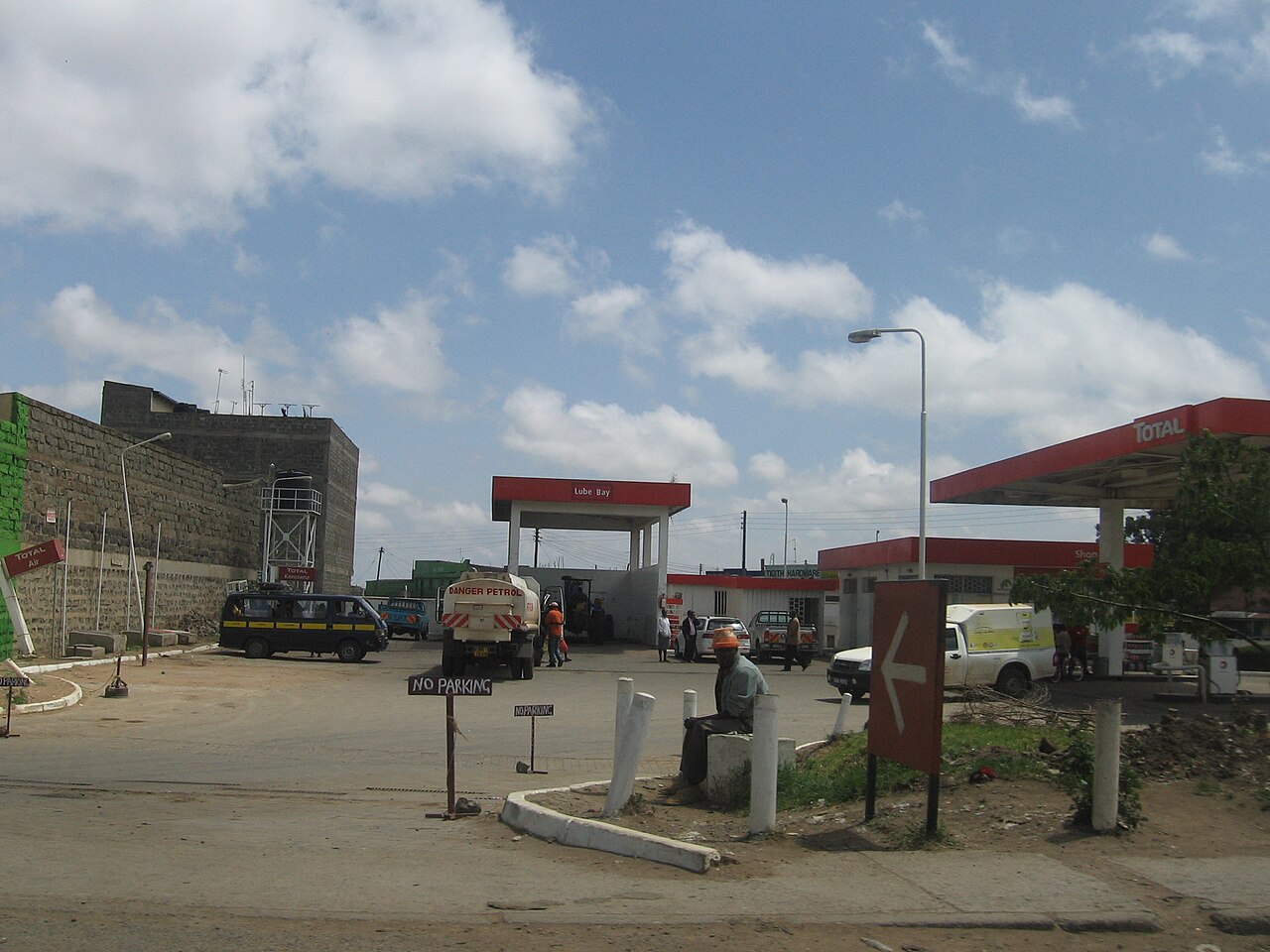
Kenya Fuel Prices May 2026: How the EPRA Pump Review, Matatu Strike, and Tax Stack Affect Diaspora Families
Kenya Fuel Prices May 2026: How the EPRA Pump Review, Matatu Strike, and Tax Stack Affect Diaspora Families
Few line items shape household budgets in Kenya as fast as the monthly Energy and Petroleum Regulatory Authority (EPRA) pump review. In May 2026 that review produced the highest pump prices ever recorded in the country, triggered a nationwide matatu strike that paralysed public transport, and forced an unusual mid-cycle recalculation. For Kenyans in the diaspora who fund rent, school fees, and food at home, the chain reaction from EPRA's notice to the kitchen table is short and unforgiving.
What EPRA Announced for the May-June 2026 Cycle
In the regular monthly review that took effect on 14 May 2026, EPRA raised super petrol by KSh16.65 per litre and diesel by KSh46.29 per litre, with kerosene also rising. In Nairobi, super petrol jumped to KSh214.25 a litre and diesel to KSh242.92, both record highs since the regulator began publishing monthly caps. Within five days, after intense pressure from transport operators, EPRA published a revised schedule for 19 May to 14 June 2026 that cut diesel by KSh10.06 to KSh232.86 in Nairobi, increased kerosene by KSh38.60 to KSh191.38, and left super petrol unchanged at KSh214.25.
The other major towns followed the same pattern with the standard inland transport differentials. Mombasa landed at KSh211.09 for super petrol, KSh229.58 for diesel, and KSh188.09 for kerosene. Nakuru sat at KSh213.15, KSh232.27, and KSh190.81. Kisumu posted KSh213.91, KSh233.08, and KSh191.63. EPRA publishes the full town-by-town table on its official portal at epra.go.ke, and it remains the single authoritative reference for diaspora users sending money for fuel-sensitive household budgets.
Why Prices Spiked: The Landed Cost and the Shilling
Kenya imports virtually all of its refined petroleum, mostly through the Open Tender System administered by the Ministry of Energy and Petroleum. The landed cost — the international purchase price converted into shillings, plus port handling, storage, financing, and inland transport from Mombasa — is the single largest component of every litre. When the global Murban or Brent crude benchmarks rise, or when the shilling weakens against the dollar, the landed cost climbs and EPRA's monthly cap follows. May 2026 combined a firmer global price with a modest shilling weakening that pushed landed diesel costs sharply higher.
Diaspora Kenyans tracking the shilling for remittance timing already saw the connection. The currency had been hovering around KSh129 to the US dollar through April and early May 2026, but oil purchases settled in dollars amplify even small currency moves. A one-shilling depreciation against the dollar adds roughly one shilling per litre to landed cost on its own, before any tax effect.
The Tax and Levy Stack on Every Litre
By 2026, taxes and levies make up roughly 46 per cent of the retail price of fuel in Kenya. Two taxes and seven levies are layered on each litre. Excise duty stands at about KSh21.95 on petrol and KSh11.37 on diesel. Value Added Tax was cut back to 8 per cent in April 2026 after years of debate over the impact of the original 16 per cent rate on transport and manufacturing.
The levies include the Road Maintenance Levy of KSh25 per litre, which funds the Kenya Roads Board and the national, county, and rural road agencies. There is also the Petroleum Regulatory Levy of KSh0.75 per litre that funds EPRA itself, the Petroleum Development Levy, the Anti-Adulteration Levy on kerosene, the Railway Development Levy, the Merchant Shipping Levy of KSh0.03 per litre for maritime safety, and the Import Declaration Fee. The Kenya Revenue Authority collects most of these, with details available on the kra.go.ke portal under customs and excise.
For households, the practical effect is that taxes and levies now contribute about KSh82.09 per litre of petrol, KSh74.90 for diesel, and KSh68.03 for kerosene. The Road Maintenance Levy alone — increased from KSh18 to KSh25 in 2024 — has been the single most contentious post-pandemic addition.
The Matatu Strike and the Government Climbdown
The May 14 hike triggered the Transport Sector Alliance to call a nationwide strike from midnight on 18 May 2026. Matatus, boda boda riders, freight transporters, and other public service vehicle operators withdrew from the roads. Commuters in Nairobi, Mombasa, Kisumu, Nakuru, Eldoret, Thika, and several smaller towns were stranded. Schools sent learners home early. Markets ran short of fresh produce. Protesters blocked roads with burning tyres in parts of Nairobi and other counties. Police responded with teargas. The Interior Cabinet Secretary later confirmed that four people had died, more than 30 had been injured, and 348 suspects had been arrested.
After a marathon six-hour meeting between government, EPRA, and transport operators, EPRA published the revised price schedule that took effect on 19 May 2026. Diesel was cut by KSh10.06 per litre, kerosene was raised by KSh38.60 to recover the revenue diverted from the diesel reduction, and super petrol was held at the post-14 May level. Matatu operators initially rejected the smaller cut and demanded a full reversal of the KSh46 diesel increase, but the strike was suspended for a week to allow further talks.
Inflation and Food Pass-Through
Diesel is the single most important fuel for Kenya's logistics. Trucks moving maize from the North Rift to Nairobi, sukuma wiki from Kiambu to Mombasa, and milk from Kericho to Nakuru all run on diesel. When diesel jumps KSh46 in one cycle, transport fares and farm-gate freight pass through to retail prices within days. The Kenya National Bureau of Statistics tracks the resulting inflation in the monthly Consumer Price Index, which diaspora readers can monitor on knbs.or.ke. Transport and food categories carry the heaviest weights and respond the fastest to pump price changes.
Manufacturers have repeatedly warned that the tax stack is eroding competitiveness. The Kenya Association of Manufacturers and other private sector bodies asked the National Treasury during the run-up to the Finance Bill 2026 to remove at least the Petroleum Development Levy and the Anti-Adulteration Levy and to cap the Road Maintenance Levy. Treasury has so far resisted, citing the need to fund road maintenance and the Petroleum Insurance Fund.
What This Means for Diaspora Households
For Kenyans abroad sending money home, fuel-driven inflation translates into recurring upward pressure on the standard household basket. Three practical effects are worth tracking. First, matatu fares typically rise within a week of a major diesel increase and rarely fall back fully when the price reverses. A Nairobi commuter who was paying KSh80 from Rongai to town in April 2026 was paying KSh120 to KSh150 by late May. Second, food prices, particularly perishables, rise on the same lag. Third, school transport and boarding-school catering contracts are renegotiated quarterly, and the May spike will feed into the third-term levy in many private schools.
Diaspora senders can soften the impact by timing larger remittances around EPRA review dates, which fall on the 14th of each month. The schedule and the methodology are documented on the EPRA portal. Households can also be steered toward bulk grocery shopping immediately after a remittance lands, before retail prices fully reset, and toward using cooking gas where the LPG price gap to kerosene narrows. The current cycle, with kerosene at KSh191.38, has narrowed that gap considerably and pushed many households back toward 6kg and 13kg LPG cylinders.
What to Watch Through to the Next Review
The next EPRA review covers 15 June to 14 July 2026 and will be issued on or about 14 June. Three variables drive the outcome. The first is the international product price, which can be tracked through the Platts Mediterranean and Arab Gulf benchmarks that EPRA uses. The second is the shilling-dollar rate, with the Central Bank of Kenya publishing daily indicative rates on centralbank.go.ke. The third is the political and fiscal decision on whether to revisit the Road Maintenance Levy and the Petroleum Development Levy in the Finance Bill 2026, which is now in parliamentary committee.
The matatu sector has signalled that any reversion to the 14 May diesel level without offsetting subsidy or levy reduction will trigger another strike. The government has not yet committed to a structural change but has accelerated discussion of a stabilisation fund using the Petroleum Development Levy receipts. For diaspora Kenyans, the message is that monthly pump prices in 2026 will remain unusually volatile, and household budgets sent from London, Atlanta, Dubai, or Toronto need to budget a buffer of at least 10 per cent on top of the prevailing fare and food line.
Quick Reference: May-June 2026 Prices and Cycle Dates
The 19 May 2026 schedule applies through 14 June 2026. Nairobi prices stand at KSh214.25 for super petrol, KSh232.86 for diesel, and KSh191.38 for kerosene. Mombasa, Nakuru, and Kisumu remain within a KSh3 band on either side. The next review will be published around 14 June 2026, with the new prices effective from 15 June. The full town-by-town schedule is on the EPRA portal, and diaspora users can subscribe to the EPRA mailing list for the monthly notice. For a longer view of how fuel taxes interact with the Finance Bill and the broader fiscal picture, the National Treasury budget statements and the Parliamentary Budget Office reports remain the most authoritative public sources.
More Articles

The Multiparty Era Reforms: Saba Saba, the Repeal of Section 2A and Kenya's Return to Political Pluralism
Jul 02, 2026

Eye Care in Kenya: Cataract, Trachoma and the Long Road to Universal Vision Health
Jul 02, 2026

Shaba National Reserve: Joy Adamson's Last Wilderness and Isiolo's Semi-Desert Safari Gem
Jul 02, 2026

The Rendille People of Northern Kenya: Camel Pastoralism, Clan Traditions and a Culture Under Pressure
Jul 02, 2026

Ukulima Sacco: From Ministry of Agriculture Staff Society to a National Cooperative Open to All Kenyans
Jul 02, 2026