Kakamega County: Gold, Sugarcane and Kenya's Last Rainforest Economy
Kakamega County: Gold, Sugarcane and Kenya's Last Rainforest Economy
Kakamega County sits at the heart of Kenya's western sugar belt, a densely populated agrarian region where smallholder farms, a storied sugar industry, artisanal gold workings and the country's only tropical rainforest converge. As the administrative successor to the former Western Province headquarters, the county combines deep agricultural tradition with emerging ambitions in dairy processing, commercial poultry, horticulture and eco-tourism. For members of the Kenyan diaspora with roots in the Luhya heartland, Kakamega represents both an ancestral home and an increasingly structured investment landscape.
Geography, Demographics and Settlement
According to the 2019 Kenya Population and Housing Census published by the Kenya National Bureau of Statistics, Kakamega County had a population of 1,867,579 people, comprising 897,133 males and 970,406 females. Spread across roughly 3,020 square kilometres, the county records a population density of about 618 persons per square kilometre, among the highest of any rural county in Kenya. This density shapes nearly every aspect of the local economy, from intense land subdivision and small average farm sizes to strong pressure on the remaining forest and a culture of intensive mixed farming.
The county is overwhelmingly the home of the Luhya, Kenya's second-largest ethnic community, itself an umbrella of sub-groups including the Isukha, Idakho, Maragoli, Banyore, Tachoni, Kabras and Wanga. Mumias, seat of the historic Wanga Kingdom, remains one of the few pre-colonial centralised monarchies in the region and gives the county a distinctive political and cultural heritage. Kakamega town serves as the commercial and administrative hub, while Mumias, Butere, Malava, Lugari and Khwisero anchor secondary trading economies.
The Sugar Belt and Mumias Legacy
Sugarcane is the defining cash crop of Kakamega. The western wards around Mumias, Wanga, Butere and Matungu lie squarely within Kenya's sugar belt, and for decades the fortunes of tens of thousands of out-grower households were tied to Mumias Sugar Company, once the largest sugar producer in the country. The collapse of Mumias Sugar in the 2010s, driven by debt, mismanagement and cheap imports, was an economic shock felt across the western counties, and the subsequent leasing and revival efforts have been closely watched as a barometer of the entire sub-sector. Sugarcane remains a major contributor to national commerce, but smallholder cane growers continue to struggle with high input costs advanced against future harvests, long maturation cycles and delayed payments, which together compress farm-gate margins.
The county government and national agencies have encouraged diversification away from pure cane dependence, promoting cane as one element within a broader mixed-farming system rather than a monoculture. The lessons of Mumias inform much of the contemporary policy emphasis on value addition, farmer cooperatives and crop diversification.
Mixed Farming, Maize and Food Crops
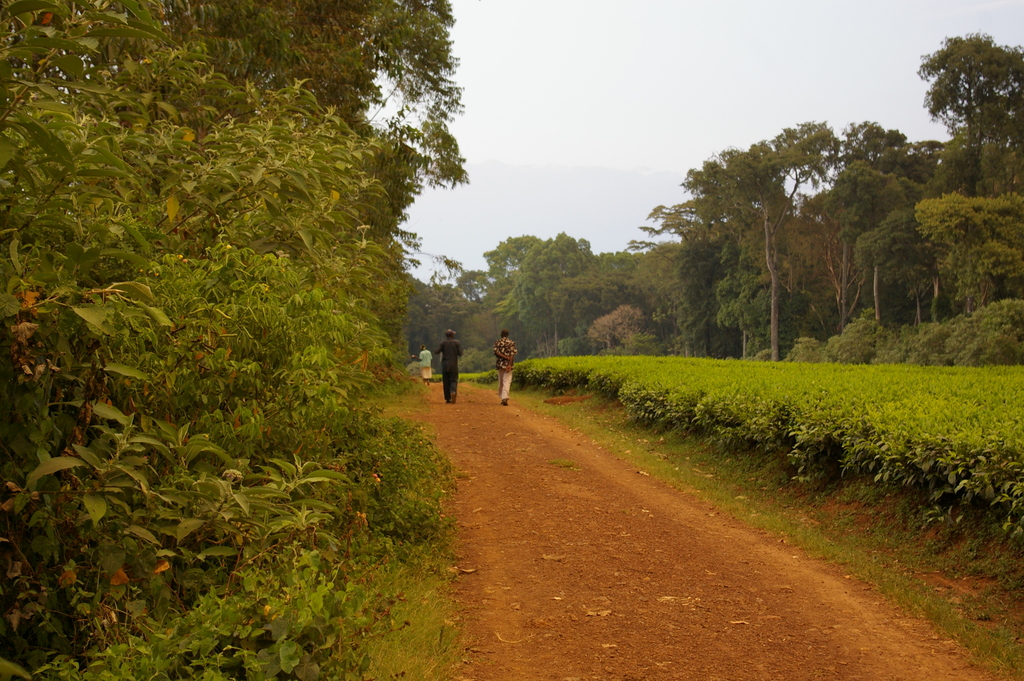
Beyond sugarcane, Kakamega is a productive mixed-farming county. Maize and beans dominate food-crop cultivation, supplemented by millet, sorghum, sweet potatoes, soya beans, sunflower and bananas. The high rainfall and fertile soils support two cropping seasons in much of the county, although small land holdings limit marketable surpluses. Tea is grown in the cooler, higher-altitude zones toward the Nandi escarpment. The agricultural department, profiled by the County Government of Kakamega, has prioritised mechanisation, cold-chain logistics and agro-processing to lift smallholders from subsistence toward commercial production.
Dairy and Poultry: The Investment Frontier
Two livestock value chains stand out as the county's investment frontier. The dairy sub-sector offers opportunities across primary milk production, transport, processing, packaging and marketing, and the county has budgeted funds for affordable, good-quality heifers alongside a multiplication and demonstration centre at the Bukura Agricultural Training Centre to supply subsidised breeding stock. Poultry is the second pillar: the county has channelled funds into commercial indigenous-chicken programmes, distributing tens of thousands of improved chicks across all sixty wards and promoting better housing, feeding, value addition and marketing. For diaspora investors, these structured, county-backed value chains lower entry risk and align private capital with public extension support.
Artisanal Gold Mining
Kakamega has a long association with gold, dating to the gold rush of the 1930s around the Kakamega and Rosterman fields. Today gold mining persists largely as artisanal and small-scale activity, particularly in the Ikolomani and Lirhanda areas. Miners using rudimentary techniques extract modest quantities, but low recovery rates, the use of mercury and significant safety risks limit both incomes and sustainability. Formalising artisanal mining, improving safety, and introducing cleaner processing remain live policy questions, and the presence of measurable gold reserves continues to attract exploration interest under Kenya's mining licensing framework.
Kakamega Forest and Eco-Tourism
The county's signature natural asset is the Kakamega Forest, the only tropical rainforest in Kenya and a remnant of the great Guineo-Congolian forest belt that once stretched across central Africa. Managed in part as a national reserve, the forest harbours exceptional biodiversity, including hundreds of bird species, rare primates, butterflies, snakes and indigenous hardwoods found nowhere else in the country. The reserve is the county's leading tourist attraction and supports a growing eco-tourism economy of guides, lodges and community conservation groups. Balancing conservation against the pressures of a dense and growing population is one of the county's central development challenges, and agro-tourism around the forest is increasingly promoted as a complementary income stream.
Devolution, County Economy and Public Investment
Since the advent of devolution in 2013, the county government has become a major economic actor, directing budgets toward agriculture, health, water, roads and early-childhood education. Targeted allocations for heifers, poultry chicks and agricultural mechanisation illustrate a deliberate strategy of using public funds to seed private value chains. The county also hosts important institutions including the Masinde Muliro University of Science and Technology and the Bukura Agricultural College, which supply skills and research to the regional economy. National development frameworks coordinated through agencies such as the National Treasury shape the fiscal transfers on which county programmes depend.
Diaspora Angles and Opportunities
For the Kakamega diaspora, the most accessible entry points are agribusiness and real estate. Dairy and poultry ventures benefit from county co-financing and extension support; horticulture in avocado and sunflower offers export-linked upside; and apiculture and aquaculture suit smaller capital outlays. Remittances already underpin much of the county's housing construction and education spending, and diaspora-funded cooperatives can aggregate smallholder output to achieve the economies of scale that individual farmers lack. Eco-tourism ventures around Kakamega Forest, including lodges and guided experiences, present a differentiated opportunity tied to a globally significant conservation asset.
Conclusion
Kakamega County embodies the opportunities and tensions of western Kenya: fertile and densely settled, rich in agricultural tradition yet pressed to modernise, blessed with gold and a unique rainforest yet challenged to harness both sustainably. The decline of the old sugar monolith has accelerated a shift toward diversified, value-added farming in dairy, poultry and horticulture, increasingly backed by county investment. For residents and diaspora alike, the county's future lies in moving from subsistence density toward structured, market-oriented agribusiness while safeguarding the natural heritage that makes Kakamega unique.
More Articles

The Multiparty Era Reforms: Saba Saba, the Repeal of Section 2A and Kenya's Return to Political Pluralism
Jul 02, 2026

Eye Care in Kenya: Cataract, Trachoma and the Long Road to Universal Vision Health
Jul 02, 2026

Shaba National Reserve: Joy Adamson's Last Wilderness and Isiolo's Semi-Desert Safari Gem
Jul 02, 2026

The Rendille People of Northern Kenya: Camel Pastoralism, Clan Traditions and a Culture Under Pressure
Jul 02, 2026

Ukulima Sacco: From Ministry of Agriculture Staff Society to a National Cooperative Open to All Kenyans
Jul 02, 2026