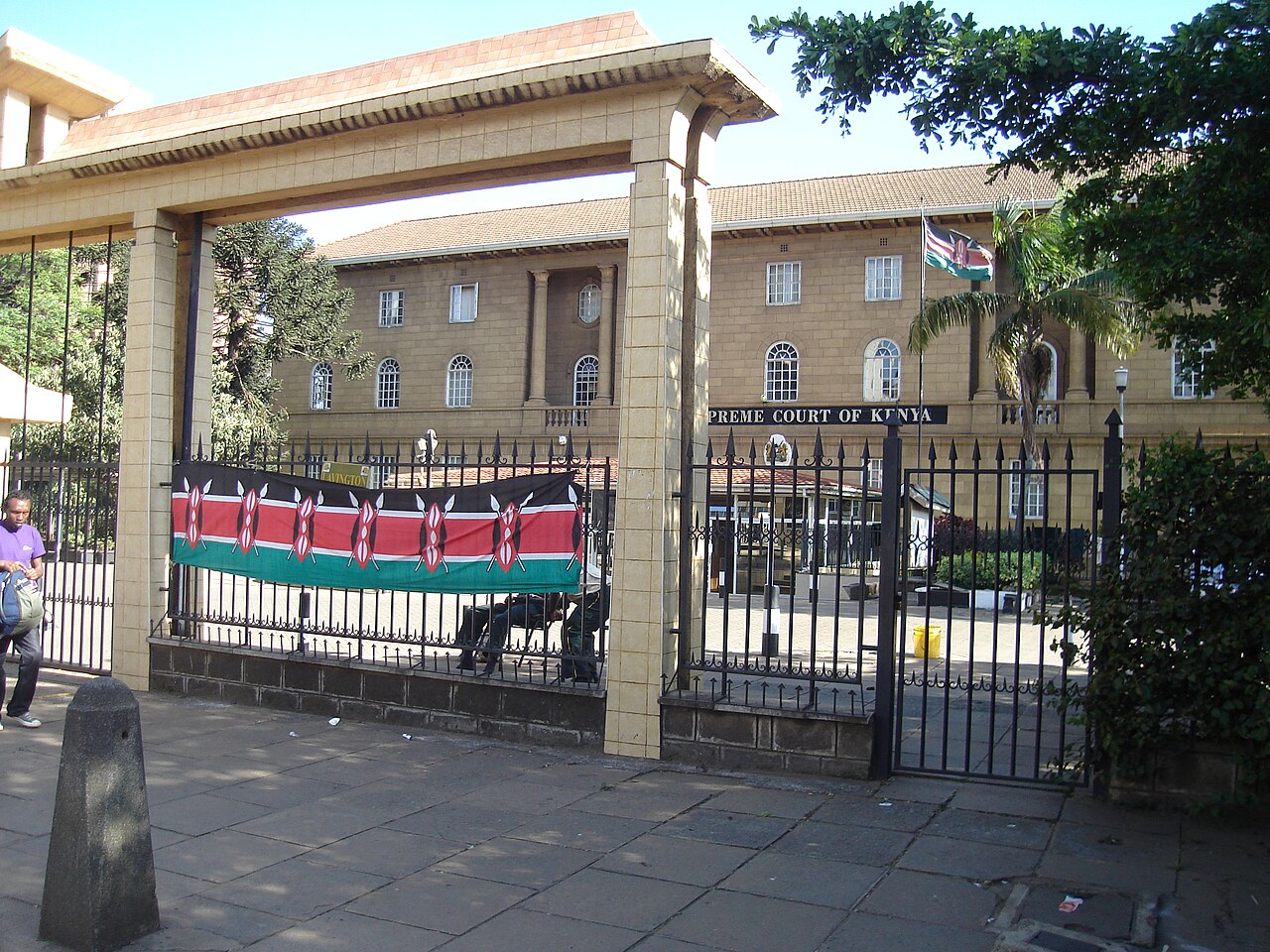
How to File a Constitutional Petition in Kenya: A Step-by-Step Citizen's Guide to Enforcing the Bill of Rights Under Articles 22 and 23 of the Constitution
How to File a Constitutional Petition in Kenya: A Step-by-Step Citizen's Guide to Enforcing the Bill of Rights Under Articles 22 and 23 of the Constitution
The Bill of Rights in the Constitution of Kenya, 2010 is one of the most progressive on the African continent. It guarantees rights ranging from the dignity of the person and freedom from torture to freedom of expression, fair trial, fair administrative action, freedom of religion, the right to property, the right to a clean and healthy environment, and access to justice itself. Crucially, the Constitution also provides the mechanism by which a citizen whose right has been denied, violated, infringed, or threatened can come to court to seek a remedy — without paying any filing fee at all. Article 22 grants every person the right to institute court proceedings to enforce a right in the Bill of Rights. Article 23 confers on the High Court (and on certain specialised courts) the jurisdiction to hear and determine such proceedings. The Constitution of Kenya (Protection of Rights and Fundamental Freedoms) Practice and Procedure Rules, 2013 — issued by the Chief Justice under Article 22(3) — set out the procedural detail. Yet most Kenyans whose rights are violated do not know that the petition route exists, what it costs (nothing in court fees), how to draft the petition, what evidence to attach, and what remedies the court can order. This guide walks through the full procedure, with reference to the Constitution, the 2013 Rules, and the practical realities of pursuing a constitutional petition in the Kenyan High Court.
The Constitutional Framework
Article 22 of the Constitution provides that "every person has the right to institute court proceedings claiming that a right or fundamental freedom in the Bill of Rights has been denied, violated or infringed, or is threatened." Importantly, the right to institute proceedings extends not only to the person whose right is affected but also to a person acting on behalf of another person who cannot act in their own name; a person acting as a member of, or in the interest of, a group or class of persons; a person acting in the public interest; and an association acting in the interest of one or more of its members. This broad standing is a deliberate feature designed to make rights enforcement accessible.
Article 23 then confers jurisdiction on the High Court — and on certain courts with the status of the High Court, including the Employment and Labour Relations Court and the Environment and Land Court for rights matters within their specialised jurisdictions — to hear and determine such applications. The remedies the court can order are broad: declarations of rights, injunctions, conservatory orders, declarations of invalidity of laws that violate the Bill of Rights, orders for compensation, and orders of judicial review.
The No-Fee Provision
One of the most underused features of the Kenyan constitutional petition system is the rule that no court filing fee may be charged for commencing constitutional petition proceedings. This is set out in the Constitution and operationalised in the 2013 Practice and Procedure Rules. The intent is to remove the cost barrier that would otherwise make rights enforcement the preserve of the wealthy. The no-fee rule applies only to the initial filing of the petition; ancillary costs (advocate's fees if you engage one, service of process, photocopying, transport) remain payable by the petitioner.
What Rights Can Be Enforced
The Bill of Rights covers Articles 19 to 59 of the Constitution. The rights protected include, among many others: the right to life; the right to equality and freedom from discrimination; the right to human dignity; the right to freedom and security of the person; the right to freedom from torture, cruel, inhuman or degrading treatment or punishment; the right to privacy; the right to freedom of conscience, religion, belief and opinion; the right to freedom of expression; the right to freedom of association; the right to peaceful assembly, demonstration, picketing and petition; the right to political rights; the right to freedom of movement and residence; the right to property; the right to a clean and healthy environment; the rights of consumers; the right to fair administrative action; the right of access to justice; the rights of arrested persons; the right to fair hearing; the rights of persons detained, held in custody or imprisoned; the rights of children, persons with disabilities, youth, minorities and marginalised groups, and older members of society; and the rights to economic and social rights including health, housing, food, water, social security, and education.
Who Can File: Standing
As noted, standing under Article 22 is broad. The categories of persons who can file include the person whose own right is violated, a person acting on behalf of another who cannot act for themselves (a parent for a child, a guardian for a person with disability), a person acting in the interest of a group or class (a class action representative), a person acting in the public interest (citizens, civil society, advocacy organisations), and associations acting in the interest of their members. The Kenyan High Court has interpreted standing generously in the post-2010 era to encourage rights enforcement.
Step 1: Identify the Right and the Violation
The first task in preparing a petition is to identify with precision which right has been violated and how. Vague petitions complaining of general unfairness are routinely dismissed; specific petitions citing the Article of the Constitution allegedly violated and the specific conduct constituting the violation are far stronger. Draft a clear statement of the violation: which actor (a government department, a private body, an individual exercising public power) did what, on which date(s), and how that conduct violated which Article of the Bill of Rights.
Step 2: Draft the Petition — Form A
The petition is filed using Form A from the Schedule to the 2013 Rules. The Form requires the heading identifying the High Court station and the parties (the Petitioner against the Respondent or Respondents), an introduction stating the parties' particulars, a statement of facts giving rise to the petition (the dates, the conduct, the relationship between the parties), the specific provisions of the Constitution allegedly violated, the legal arguments why the conduct constitutes a violation of those provisions, the prayer (the specific remedies sought from the court), and the signature of the petitioner or their advocate.
The petition should be supported by an affidavit deposing to the truth of the facts stated. The affidavit is sworn before a Commissioner for Oaths or a Notary Public. Documentary evidence supporting the petition — correspondence with the respondent, official documents, photographs, witness statements — should be exhibited to the affidavit and numbered as annexures.
Step 3: File at the High Court Registry
The completed petition, affidavit, and annexures are filed at the High Court Registry serving the area where the cause of action arose or where the petitioner resides. There is no filing fee. The Registry stamps the petition with a court reference number and issues a receipt. The court allocates the matter to a constitutional petition track and lists it for mention before a judge.
Step 4: Serve the Respondent
The petitioner must serve the petition, affidavit, and annexures on the respondent(s) within the time the Rules prescribe. Service is effected personally on the respondent or, where the respondent is a government department or public body, on the legal officer or chief executive of the body. The petitioner files an Affidavit of Service confirming that the respondents have been served. Without proper service, the court will not proceed.
Step 5: The Respondent's Reply
The respondent files a Replying Affidavit setting out their response to the petition — typically denying the allegations, setting out the justification or legal basis for the conduct complained of, and providing any supporting evidence. The petitioner may file a Rejoinder Affidavit responding to the Replying Affidavit. Once pleadings are closed, the matter is set down for hearing.
Step 6: The Hearing
Constitutional petition hearings are heard in open court. The petitioner (or their advocate) presents the case first, setting out the violation, the evidence, and the legal arguments. The respondent presents the response. Each side may cross-examine deponents on contested factual matters. The judge may ask questions and may request written submissions following the oral hearing. Hearings are typically completed in a single day for straightforward matters and over multiple days for complex matters.
Step 7: Judgment and Remedies
The court delivers judgment, typically within a few weeks of the hearing. If the court finds in favour of the petitioner, it may grant any of the remedies provided by Article 23(3): a declaration of rights stating that the conduct violated a specific Article of the Constitution; an injunction restraining the respondent from continuing or repeating the violation; a conservatory order preserving the status quo while the matter is resolved; a declaration of invalidity of any law that violates the Bill of Rights and is not justified under Article 24; an order for compensation (damages) for the violation; or an order of judicial review.
The remedy of compensation is particularly significant. Successful constitutional petitions have produced substantial damages awards against the Kenyan state, county governments, and private parties exercising public power for violations including unlawful detention, torture, denial of fair trial, denial of access to justice, denial of essential services, environmental damage, and many others.
Appeals
Either party can appeal the judgment of the High Court to the Court of Appeal, and further to the Supreme Court on matters of general public importance or where the Supreme Court has granted leave. The constitutional petition's importance can therefore extend far beyond the original parties.
Should You Engage an Advocate?
While the Rules do not require an advocate, constitutional petitions are technical legal documents and the strength of the legal argument typically determines the outcome. For straightforward matters where the facts are clear and the law is well-established, a self-represented petitioner can succeed. For complex matters — challenges to legislation, public interest litigation with significant policy consequences, matters of first impression — engaging an experienced constitutional advocate dramatically improves the chances of success. Several pro bono legal-aid organisations in Kenya, including the Law Society of Kenya's Legal Aid Committee, the Kenya Human Rights Commission, the Kituo Cha Sheria, the FIDA-Kenya, and the International Commission of Jurists Kenya Section, provide assistance to petitioners with limited means.
Common Reasons Petitions Fail
First, lack of specificity in identifying the right and the violation. Generalised grievances dressed up as constitutional petitions are routinely dismissed. Second, attempting to use the constitutional petition route for ordinary disputes that should be brought as civil claims or judicial review. The court will redirect the case if the proper route is something else. Third, failure to exhaust alternative remedies where they exist. The Constitution requires parties to use available alternative dispute resolution and statutory remedies before invoking the constitutional petition jurisdiction. Fourth, weak evidence. Petitioners must bring documentary evidence and witness affidavits supporting their factual claims. Fifth, delay. While the Constitution does not impose a strict limitation period for constitutional petitions, courts disfavour stale petitions where the petitioner has slept on their rights for years.
The Bigger Picture
The constitutional petition is one of the most powerful legal tools available to Kenyan citizens. It is genuinely accessible — no filing fee, broad standing, simplified procedure — and the remedies the court can order are substantial. The reform-oriented Kenyan judiciary has used the constitutional petition jurisdiction to advance rights protections in areas ranging from extrajudicial killings to environmental degradation, from disability rights to access to safe abortion in lawful circumstances, from press freedom to the right to information. Citizens who understand the petition route and use it strategically — whether to enforce their own rights or to advance public interest causes — are an important pillar of the constitutional order envisaged by the 2010 Constitution.
The Kenya Law portal hosts the full text of the Constitution, the 2013 Practice and Procedure Rules, and the case law on constitutional petitions. The Judiciary of Kenya publishes the High Court registry directory and procedural guides. The Kenya Human Rights Commission and the International Commission of Jurists Kenya Section are among the civil society organisations that publish lay-friendly explanatory materials and offer pro bono support.
More Articles

The Multiparty Era Reforms: Saba Saba, the Repeal of Section 2A and Kenya's Return to Political Pluralism
Jul 02, 2026

Eye Care in Kenya: Cataract, Trachoma and the Long Road to Universal Vision Health
Jul 02, 2026

Shaba National Reserve: Joy Adamson's Last Wilderness and Isiolo's Semi-Desert Safari Gem
Jul 02, 2026

The Rendille People of Northern Kenya: Camel Pastoralism, Clan Traditions and a Culture Under Pressure
Jul 02, 2026

Ukulima Sacco: From Ministry of Agriculture Staff Society to a National Cooperative Open to All Kenyans
Jul 02, 2026