Gikomba Market Nairobi: East Africa's Largest Second-Hand Clothing Market, the Mitumba Economy and the Border-Less Trade
Gikomba Market Nairobi: East Africa's Largest Second-Hand Clothing Market, the Mitumba Economy and the Border-Less Trade
Gikomba Market in Nairobi is East Africa largest second-hand clothing market and one of the most economically significant informal trading centres in the region. Located between the Nairobi Central Business District and the Pumwani-Eastleigh hinterland, the market sprawls across an estimated 12 hectares and supports an estimated 50,000 to 70,000 traders, porters, transporters, food vendors, security workers, brokers and supporting service providers. The mitumba trade, the Kiswahili term for the bales of second-hand clothing imported into Kenya through the port of Mombasa, generates billions of shillings in annual economic activity, supports millions of household budgets that depend on affordable clothing, and connects Kenya into a global supply chain originating in the United States, the United Kingdom, the European Union, China, the United Arab Emirates and other major exporters. This article examines the market structure, supply chain, regulatory debates and economic role of Gikomba.
Origins and Historical Development
Gikomba developed organically as a trading centre on the edge of the formal Nairobi commercial district from the colonial era onwards. The post-independence period saw rapid growth as informal traders established stalls along the Nairobi River banks and the surrounding streets. The mitumba trade expanded substantially from the 1980s as economic liberalisation, the rise of textile bale imports and the steady demographic growth of Nairobi created conditions for mass second-hand clothing distribution. By the 2000s Gikomba had become the dominant wholesale and retail node for mitumba in East Africa.
Market Structure and Daily Rhythm
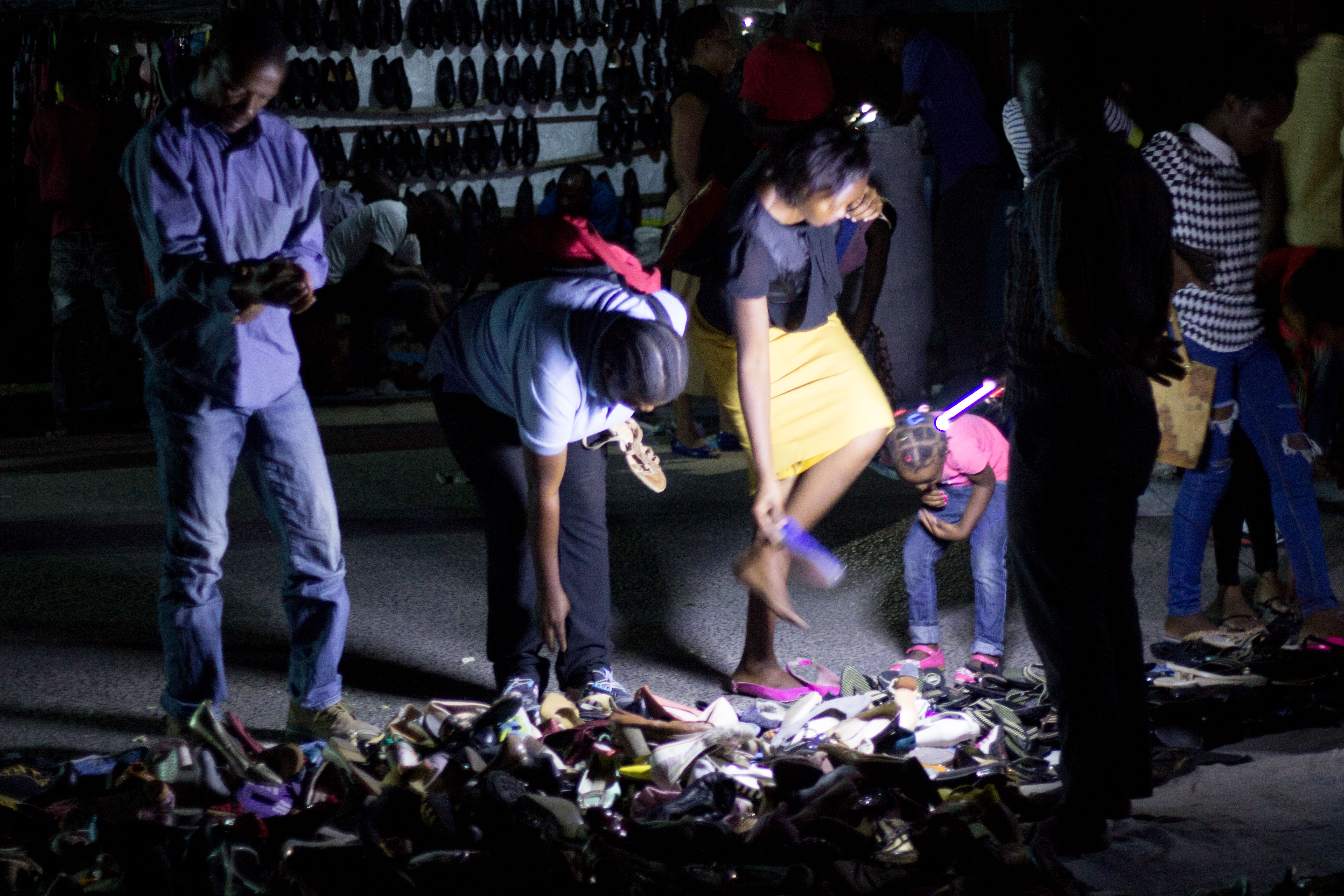
Gikomba operates from before dawn through late evening, with peak activity in the early morning hours when wholesale bales are opened, sorted and distributed to retailers. The market combines wholesale traders who receive container shipments from Mombasa, mid-level distributors who break bales into smaller lots, retail vendors who sell individual items to shoppers, and a vast supporting ecosystem of porters, transporters, food vendors, mobile money agents, repair workers and security personnel. The market layout combines dedicated sections for women clothing, men clothing, children clothing, shoes, accessories, bedding, household textiles and a smaller section for new clothing and accessories. The price gradient flows from the wholesale bales (KSh 5,000 to KSh 80,000 per bale) through mid-level distribution (a few hundred to a few thousand shillings per piece) to retail (KSh 50 to KSh 5,000 per piece depending on item, quality and brand).
The Mitumba Supply Chain
The mitumba supply chain begins with second-hand clothing collected through charity donations, retail returns, surplus inventory and household clearances in the United States, the United Kingdom, the European Union, Canada, China and other major exporters. The clothing is sorted, graded and baled by exporters in those countries, then shipped to Mombasa as bales of approximately 45 kilograms each. The bales are cleared through Mombasa customs, transported by road or rail to Nairobi (Naivasha Inland Container Depot for rail) and distributed to wholesale traders in Gikomba and other markets. The trade is subject to import duty, value-added tax, the Import Declaration Fee and the Railway Development Levy.
The Mitumba Ban Debate
The mitumba trade has been the subject of substantial regulatory and policy debate. The East African Community proposed a phased ban on second-hand clothing imports as part of its strategy to promote regional textile and garment manufacturing. Kenya, Uganda, Rwanda, Tanzania and Burundi committed in 2016 to phase out mitumba imports by 2019. The implementation has been highly contested. Rwanda implemented stricter restrictions and faced trade pressure from the United States including loss of AGOA preferences. Kenya has not implemented the phased ban, with the Ministry of Investments, Trade and Industry balancing the legitimate goal of supporting domestic textile manufacturing against the immediate impact on millions of households relying on affordable clothing and on the substantial employment in the mitumba trade. The Kenya Mitumba Association represents the trade and advocates for its continued operation.
Employment and Economic Role
The mitumba trade employs an estimated 2 million Kenyans across the supply chain when measured broadly. Gikomba alone supports 50,000 to 70,000 livelihoods directly. The trade provides affordable clothing to tens of millions of Kenyans across all economic strata, with first-hand and branded second-hand items often available at a small fraction of new clothing prices. The trade integrates Kenya into a global second-hand clothing supply chain and provides hard currency through customs revenue.
Infrastructure Challenges
Gikomba faces persistent infrastructure challenges. Fires, including major incidents in 2018 and several subsequent years, have destroyed substantial sections of the market and caused trader losses. Drainage is inadequate, leading to flooding in heavy rains. Solid waste management is a continuing concern. Roads through the market are congested, and parking and loading facilities are limited. The Nairobi City County has launched modernisation initiatives over decades with varying success, complicated by political negotiations with trader associations, contractor performance issues and competing land use claims.
Conclusion
Gikomba Market is more than a clothing market. It is a node in a global supply chain that links donor wardrobes in North America and Europe to Kenyan households across the income spectrum. The market challenges of fire risk, drainage, congestion and the ongoing regulatory debate around mitumba are real. The trade resilience, the entrepreneurial energy of its tens of thousands of traders, the affordable clothing access for millions of Kenyan households and the integration with regional trade flows make Gikomba a foundational institution in the East African urban economy. With thoughtful policy reform, infrastructure investment and constructive engagement with the textile manufacturing agenda, Gikomba can continue to play this role for decades to come.
More Articles

The Multiparty Era Reforms: Saba Saba, the Repeal of Section 2A and Kenya's Return to Political Pluralism
Jul 02, 2026

Eye Care in Kenya: Cataract, Trachoma and the Long Road to Universal Vision Health
Jul 02, 2026

Shaba National Reserve: Joy Adamson's Last Wilderness and Isiolo's Semi-Desert Safari Gem
Jul 02, 2026

The Rendille People of Northern Kenya: Camel Pastoralism, Clan Traditions and a Culture Under Pressure
Jul 02, 2026

Ukulima Sacco: From Ministry of Agriculture Staff Society to a National Cooperative Open to All Kenyans
Jul 02, 2026