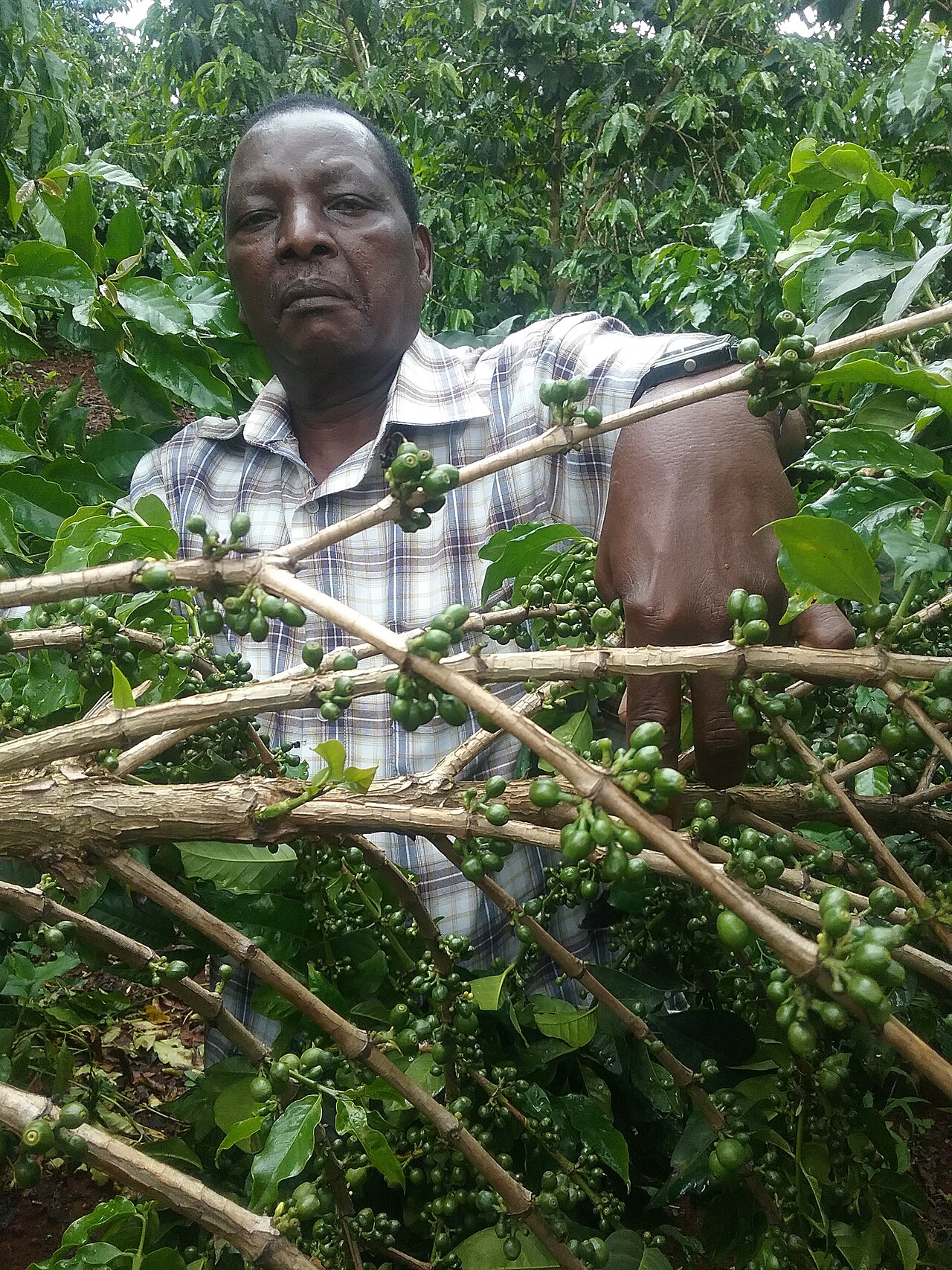
Commercial Macadamia Nut Farming in Kenya: A Deep Guide to Varieties, Land Preparation, Yields, Farm-Gate Prices, NUTPAK and the Path to KSh 1-2 Million per Acre Revenue
Commercial Macadamia Nut Farming in Kenya: A Deep Guide to Varieties, Land Preparation, Yields, Farm-Gate Prices, NUTPAK and the Path to KSh 1-2 Million per Acre Revenue
Kenya is the third-largest macadamia nut producer in the world after Australia and South Africa, with the bulk of national production concentrated in the central and eastern highland counties of Murang'a, Embu, Meru, Kirinyaga, Kiambu, Tharaka-Nithi, and Nyeri. Over 90 per cent of the harvest is exported, predominantly as in-shell or kernel-form nuts to China, the European Union, the United States, and Japan, with rising demand from the Middle East confectionery and bakery segment. Farm-gate prices in recent seasons have ranged from KSh 70 to KSh 230 per kilogram of in-shell nut, varying with global market conditions, the regulatory environment, and the quality grade of the harvest. Studies by the Kenya Plant Health Inspectorate Service (KEPHIS) and county extension services have documented annual yields of 67 to 179 kilograms per mature tree, with the highest commercial averages around 82 kilograms per tree per year in Murang'a County. The economic outcome from a well-managed acre of mature macadamia trees can reach KSh 1.8 million in gross revenue at favourable prices, putting macadamia among the highest-revenue-per-acre crops in Kenyan agriculture. This guide walks through the sector's structure, the varieties planted commercially, the land preparation and planting protocol, the management calendar, the market routes, the regulatory framework under the Agriculture and Food Authority, and the financial path from planting to peak production.
The Kenyan Macadamia Industry in Numbers
Kenya produces approximately 50,000 metric tonnes of macadamia nuts per year at the in-shell stage, generating export earnings of several billion shillings. The sector employs an estimated 200,000 smallholder farming households and several thousand workers in the licensed processing and export companies. The Macadamia Nuts Association of Kenya (NUTPAK) is the principal industry body. The Agriculture and Food Authority (AFA) Nuts and Oil Crops Directorate regulates the sector. KEPHIS regulates the phytosanitary aspects of export, including pest and disease certification. KALRO conducts the underlying research and variety improvement work.
The Commercial Varieties
Five varieties dominate commercial planting in Kenya. The "Murang'a 20" (M-20) variety, developed locally, produces a high-quality kernel with a thin shell that makes shelling efficient. The "Kirinyaga 15" (K-15) variety has similar quality profile and is well-adapted to Mount Kenya conditions. The Hawaiian-origin "HAES 246," "HAES 660," and "HAES 800" varieties are the imported foundation of most commercial plantings, valued for consistent yield and well-documented agronomic profiles. Grafted seedlings from certified nurseries cost between KSh 250 and KSh 500 per seedling. Farmers should buy seedlings only from KEPHIS-licensed nurseries; unlicensed nurseries often sell mislabelled material that wastes the first four years of investment.
Land and Climate Requirements
Macadamia trees thrive in deep, well-drained soils with a pH between 5.0 and 6.5, in altitudes from 1,300 to 2,500 metres above sea level, with average temperatures of 16-25 degrees Celsius and annual rainfall of 1,000-2,000 millimetres reasonably well distributed. The central and eastern highland counties — Murang'a, Embu, Meru, Kirinyaga, Kiambu, Nyeri, Tharaka-Nithi — match these conditions almost perfectly, which is why they have anchored the sector. The Western Kenya counties of Bungoma, Vihiga, and Kakamega are emerging as secondary production zones with appropriate microclimates.
Land Preparation and Planting
Land preparation begins approximately three months before planting. The land is cleared, ploughed, harrowed, and laid out in a square spacing of 8 metres by 8 metres (giving approximately 60 trees per acre) or 9 metres by 9 metres (approximately 50 trees per acre). The wider spacing accommodates the broad canopy of mature trees and allows efficient ground-level operations including harvesting. Planting holes are dug at 60 by 60 by 60 centimetres, with the topsoil mixed with well-composted farmyard manure and a phosphorus-heavy starter fertiliser. Grafted seedlings are planted at the start of the long rains (March-April in central Kenya) or the short rains (October-November) to maximise establishment.
Initial investment per acre — covering land preparation, seedlings, labour, irrigation in dry-spell-prone areas, and the first year's inputs — runs KSh 150,000-200,000. This is the largest single capital decision of the planting cycle and quality matters more than cost.
Management Calendar
Macadamia trees require steady but moderate management. Pruning is critical in the first three years to establish a strong, open canopy that supports future yield. Mulching with organic matter conserves moisture and adds long-term soil fertility. Fertilisation requirements step up as the tree matures, with annual applications of NPK fertiliser and supplementary manure during the rainy seasons. Pest pressure is moderate but vigilant control of the Macadamia Felted Coccid (a scale insect), the Macadamia Nut Borer (Thaumatotibia batrachopa), and the various lepidopteran pests is required. KEPHIS publishes the approved pesticide list and integrated pest management protocols.
Irrigation is recommended in regions with unreliable rainfall. Mature trees use approximately 100-150 litres of water per tree per week during dry periods. Drip irrigation is the standard method, with the initial system cost amortised over the long productive life of the orchard.
The Yield Curve and Production Timeline
Macadamia is a long-cycle crop. The trees begin bearing nuts in years three to four, with a small initial harvest that builds steadily. Peak production typically begins at years seven to ten. From peak onwards, a well-managed tree produces 70-80 kilograms of in-shell nuts per year on average, with the best-managed orchards delivering 100-180 kilograms per tree. The economically productive life of a macadamia tree is 40-60 years, making it a generational investment for the family that establishes the orchard.
The Market: Farm Gate, Processors, and Export
Kenya's macadamia value chain runs from farm to licensed processor to export. Smallholder farmers sell to one of several licensed marketing agents and processors, including Kenya Nut Company, Wondernut Limited, Top Quality Limited, Equatorial Nut Processors, Greenforest Foods, Jungle Nuts, and several other smaller players. The farm-gate price is set by an annual minimum guideline issued by the Agriculture and Food Authority Nuts and Oil Crops Directorate, with the actual transacted price varying by quality, region, and the prevailing global market. The 2024-25 farm-gate range was KSh 70-150 per kilogram for in-shell nuts at base quality, with premium nuts (large size, low moisture, clean shell) fetching KSh 150-230 per kilogram. Some farmers operating at scale or in cooperative arrangements have negotiated higher prices than the open market through direct supply contracts with processors.
Processors convert in-shell nuts into shelled kernels at one or more grade levels (Style 1 whole kernel, Style 2 wholes and halves, Style 4 large pieces, and so on). Export-grade shelled kernel typically commands USD 8-14 per kilogram FOB Mombasa, with the differential between farm-gate price and FOB price representing processor margin, packaging, logistics, and the financial structure of the export trade.
The Regulatory and Policy Frame
The macadamia sector has been the subject of significant policy debate. The Kenyan government periodically imposes export bans on raw in-shell nuts to compel value addition through domestic processing — a policy that protects local processors but can depress farm-gate prices during ban periods. The current AFA regulations permit export of nut-in-shell (NIS) above 14 mm diameter under licence and restrict smaller sizes to domestic processing. Farmers should monitor the AFA Nuts Directorate notifications carefully each season.
The AFA publishes the licensed buyer and processor list, the recommended minimum farm-gate prices, and the buying season opening dates. Farmers should sell only to licensed buyers with proper weighing equipment and traceable records.
Cooperative Marketing
Many smallholder macadamia farmers operate through cooperative societies that aggregate volume and negotiate better prices than individual farmers can secure. The cooperative model is most developed in Murang'a, Embu, and Meru, with several cooperatives operating processing or pre-processing facilities. Diaspora-funded farmers should consider cooperative membership both for the price benefit and for the technical extension and input-supply support that cooperatives provide.
Worked Economics: A 5-Acre Orchard
A 5-acre macadamia orchard planted at 60 trees per acre carries 300 trees in total. Initial planting investment is approximately KSh 750,000-1,000,000 across the 5 acres, plus annual maintenance of KSh 100,000-200,000 across the first three to four years before any meaningful harvest. Once the orchard reaches peak production at year 7-10, an average yield of 80 kilograms per tree across 300 trees produces 24,000 kilograms of in-shell nuts per year. At an average farm-gate price of KSh 120 per kilogram (a moderate, conservative estimate), gross revenue runs KSh 2.88 million per year. Net of variable operating costs (fertiliser, pest control, harvesting labour, transport to buyer), net profit typically runs KSh 1.8-2.4 million per year on a peak-production basis. The internal rate of return on a properly established orchard, calculated over the long productive life, runs in the 18-25 per cent range — exceptional for a long-cycle agricultural investment.
Risks and Caveats
The principal risks are: global price volatility (macadamia is a commodity exposed to international supply-and-demand swings, with periodic price corrections); regulatory volatility (export-ban policies can compress farm-gate prices in any given season); pest and disease pressure (particularly the Macadamia Felted Coccid and the Nut Borer); climate variability (drought in establishment years can kill seedlings); and the long capital lock-up period before peak production. Diaspora investors and patient capital with horizon longer than ten years are particularly well-suited to the asset class.
Practical First Steps
First, identify suitable land in a recognised macadamia-production zone with the right soil, altitude, and rainfall profile. Second, conduct a soil test to confirm pH and nutrient status before planting. Third, source grafted seedlings only from KEPHIS-licensed nurseries (the AFA website lists current licensees). Fourth, plan for the full four-year establishment period with budget reserve to maintain the orchard through pre-bearing years. Fifth, register with a cooperative or build a direct relationship with a licensed processor before peak production starts. Sixth, document everything — soil tests, fertiliser applications, pest control actions, harvest records — to support traceability claims and potential certification (organic, fair trade) that command premium pricing.
The Bigger Picture
Macadamia is one of the strongest long-term crop investments available to Kenyan farmers with land in the right zones. The combination of strong global demand, premium pricing, a 40-60 year productive life, and a maturing local processing capacity produces a sector where well-established orchards become generational family assets. The capital required is moderate but the patience required is significant — the first meaningful return typically arrives in year five or six. For diaspora investors, retirees, and family farms with established highland land, macadamia deserves serious analysis against the alternatives of coffee, tea, and dairy.
The Agriculture and Food Authority publishes the macadamia regulatory framework and licensed buyer list. The Kenya Plant Health Inspectorate Service handles the phytosanitary certification and nursery licensing. The Kenya Agricultural and Livestock Research Organization publishes the variety research and management guidance for the sector.
More Articles

The Multiparty Era Reforms: Saba Saba, the Repeal of Section 2A and Kenya's Return to Political Pluralism
Jul 02, 2026

Eye Care in Kenya: Cataract, Trachoma and the Long Road to Universal Vision Health
Jul 02, 2026

Shaba National Reserve: Joy Adamson's Last Wilderness and Isiolo's Semi-Desert Safari Gem
Jul 02, 2026

The Rendille People of Northern Kenya: Camel Pastoralism, Clan Traditions and a Culture Under Pressure
Jul 02, 2026

Ukulima Sacco: From Ministry of Agriculture Staff Society to a National Cooperative Open to All Kenyans
Jul 02, 2026