Commercial Cassava Farming in Kenya: MM 96/4271, KME, Mariakani Varieties, Coastal and Western Production and the Real Economics from Smallholder to Processor
Commercial Cassava Farming in Kenya: MM 96/4271, KME, Mariakani Varieties, Coastal and Western Production and the Real Economics from Smallholder to Processor
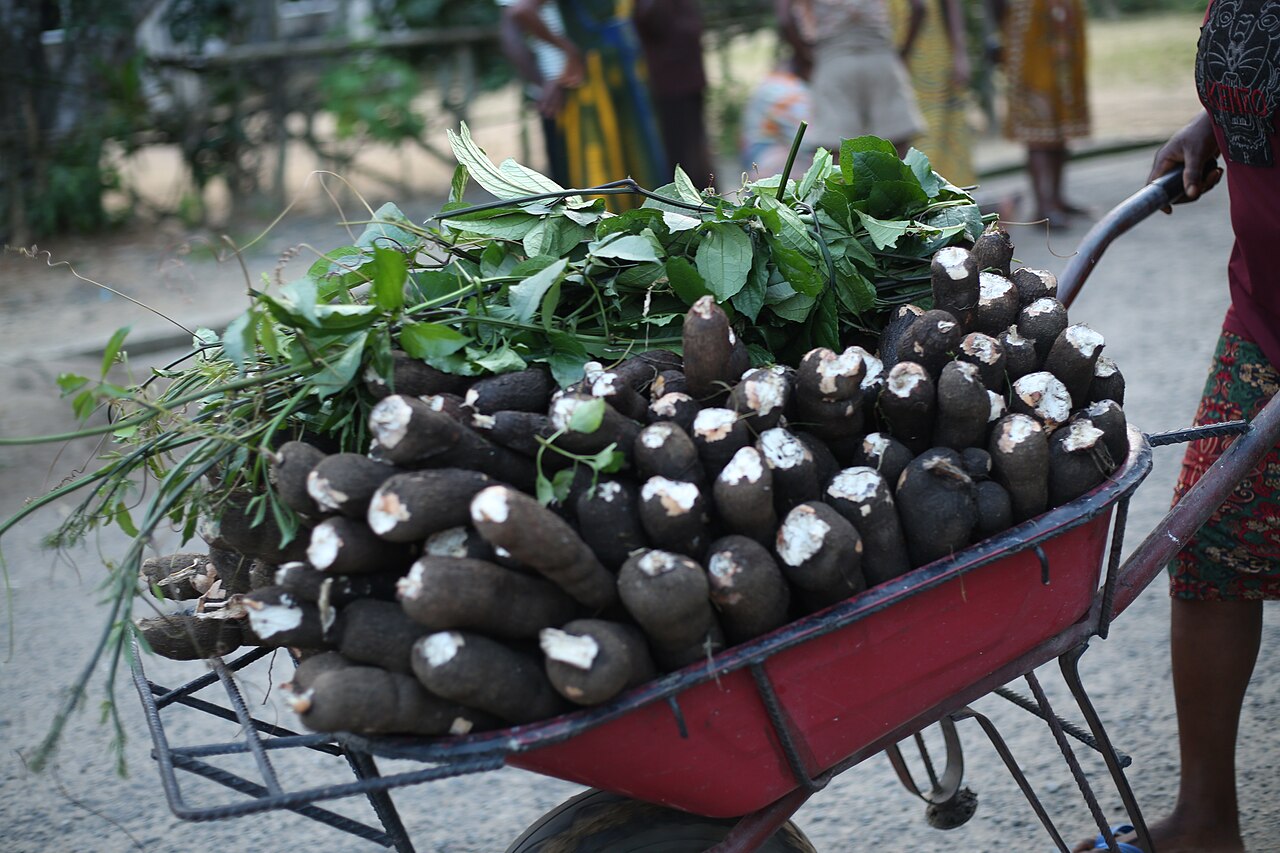
Cassava is Kenya's second-largest root crop after sweet potato and one of the most important food-security crops in the drier and more marginal production zones. The crop is exceptionally drought-tolerant, produces well on soils that would not support maize or other cereal crops, and stores in the ground for several months after maturity — making it a critical insurance crop for smallholder communities facing rainfall variability. Kenyan annual cassava production runs in the range of 800,000-1,000,000 metric tonnes from approximately 70,000-90,000 hectares concentrated in the coastal counties (Kilifi, Kwale, Lamu, Taita Taveta) and the Western Kenya counties (Busia, Bungoma, Kakamega, Vihiga, Siaya, Migori, Homa Bay). Improved varieties developed by KALRO and the International Institute of Tropical Agriculture (IITA) — including the MM 96/4271 series, the KME varieties, and the Mariakani local-improved selections — deliver 15-25 tonnes per acre under good management, substantially better than the 5-10 tonnes of unimproved local cassava. This guide walks through the principal varieties, the cassava agronomy, the cassava mosaic disease and brown streak disease pressure, the cassava processing sub-sector that has emerged in recent years, and the real economics.
The Kenyan Cassava Sector
Cassava (Manihot esculenta) has historically been a smallholder food-security crop in Kenya, planted as a backup against the failure of maize and other primary staples. The crop has become commercially relevant as improved varieties have entered farmer use, as the cassava processing sub-sector has developed products including high-quality cassava flour (HQCF) for bakery use, animal feed (cassava chips), industrial starch, and the broader food-product applications, and as urban demand for cassava as a fresh vegetable and in processed snacks has grown. The commercial value chain extends from village-level smallholders through to mid-scale processors and a small number of larger industrial operations.
The Improved Varieties
The MM 96/4271 series — a KALRO release in collaboration with IITA — has been the most commercially impactful improved cassava variety in Kenya, with strong resistance to the cassava mosaic disease, good yield potential, acceptable taste, and reasonable processing characteristics. The KME varieties (KME 1, KME 2, KME 3, KME 4) are coastal-area selections suited to coastal conditions. Mariakani is a local-improved variety widely planted in Kilifi and Kwale counties. Tajirika is a newer release with strong commercial characteristics. The choice of variety depends on the production zone (coastal varieties for Coast Province; Western-Kenya-adapted varieties for the Lake counties), the intended use (sweet varieties for fresh consumption; bitter varieties typically with higher dry matter for processing), and the disease pressure in the area.
Vegetative Propagation: The Foundation
Cassava is propagated from stem cuttings — sections of mature stem 20-30 centimetres long with several nodes — rather than from seed. The quality of the cuttings is the single most important determinant of crop success. Clean cuttings from disease-free certified sources produce healthy productive crops; cuttings from disease-bearing parent plants accumulate viral inoculum and depress yields catastrophically. The KALRO Cassava Programme operates Cassava Multiplication Sites producing certified clean cuttings; commercial farmers should source from these sites or from certified multipliers rather than relying on informal cutting exchange that can transmit diseases.
The Agronomy
Cassava thrives in deep, well-drained sandy-loam soils with a pH between 5.5 and 7.5. The crop tolerates marginal soils that would not support other staples. Land preparation involves ploughing or hand-tillage, followed by ridging for drainage in higher-rainfall zones. Cuttings are planted at 1 metre by 1 metre spacing (giving approximately 4,000 plants per acre), inserted at a 45-degree angle with the lower nodes buried. Basal manure and modest DAP support establishment. Cassava is a relatively light feeder and responds well to organic matter; excessive fertilisation produces lush foliage at the expense of root development. Maturity ranges from 9 to 18 months depending on variety. Harvest is by careful lifting of the roots to avoid breakage.
Pests and Diseases
The cassava mosaic disease (caused by African cassava mosaic virus and the East African cassava mosaic virus) and the cassava brown streak disease (caused by the Cassava brown streak virus and the Ugandan cassava brown streak virus) are the two principal disease threats. Both are transmitted by whitefly vectors and can devastate crops where susceptible varieties are planted in conditions of high vector pressure. Management combines resistant varieties (the MM 96/4271 series and other resistant releases), certified clean planting material, sanitation of infected plants, vector management where economically viable, and crop rotation. The cassava mealybug, cassava green mite, and various other pests cause additional pressure.
The Processing Sub-Sector
Kenyan cassava processing has expanded substantially since 2010. The high-quality cassava flour (HQCF) sub-sector produces a wheat-flour substitute used in bread, biscuits, and other baked goods (typically as a 10-30 per cent substitute for wheat flour, reducing import dependency on wheat). Cassava chips for animal feed serve poultry and pig operations as an energy ingredient. Industrial starch is produced for adhesive, paper, textile, and food industry uses. The processing margin is meaningful — value addition from raw cassava to HQCF typically captures KSh 30-50 per kilogram beyond the farm-gate price.
Markets and Pricing
Kenyan cassava farmers reach the market through smallholder fresh-tuber sales, wholesale markets, cassava processors, and the regional cross-border trade. Farm-gate prices for fresh cassava typically run KSh 15-35 per kilogram, varying by location and season. Processed cassava flour retails at KSh 80-150 per kilogram in supermarkets, supporting a margin-rich value chain for processors and the farmers who supply them.
Worked Economics: One Acre Commercial Production
An acre of well-managed improved cassava produces 15-25 tonnes of marketable roots per cycle of 12-15 months. Gross revenue at an average farm-gate price of KSh 20 per kilogram runs KSh 300,000-500,000. Operating costs (cuttings, fertiliser, labour for ridging and harvest, transport) typically run KSh 40,000-100,000. Net profit per cycle therefore runs KSh 200,000-400,000 per acre. The cycle is longer than for most field crops (12-15 months), so the annualised return is somewhat lower than these per-cycle figures suggest. Farmers who can value-add through small-scale processing (drying chips, producing flour) capture substantially more of the value chain.
The Bigger Picture
Cassava deserves more attention than it receives in Kenyan agricultural policy and commercial conversations. The crop's drought tolerance, productive use of marginal land, food-security contribution, and the growing processing-industry opportunity together produce a sub-sector with strong long-term economics. The constraint has been the supply of certified clean planting material and the limited extension support for the improved varieties. For smallholders in the coastal and Western Kenya production zones, returning professionals, and diaspora-funded family farms on marginal land, cassava deserves serious consideration as a productive use of resources that would not support other staples.
The Kenya Agricultural and Livestock Research Organization hosts the cassava breeding research and the Cassava Multiplication Sites. The Kenya Plant Health Inspectorate Service regulates the cassava planting material standards.
More Articles

The Multiparty Era Reforms: Saba Saba, the Repeal of Section 2A and Kenya's Return to Political Pluralism
Jul 02, 2026

Eye Care in Kenya: Cataract, Trachoma and the Long Road to Universal Vision Health
Jul 02, 2026

Shaba National Reserve: Joy Adamson's Last Wilderness and Isiolo's Semi-Desert Safari Gem
Jul 02, 2026

The Rendille People of Northern Kenya: Camel Pastoralism, Clan Traditions and a Culture Under Pressure
Jul 02, 2026

Ukulima Sacco: From Ministry of Agriculture Staff Society to a National Cooperative Open to All Kenyans
Jul 02, 2026