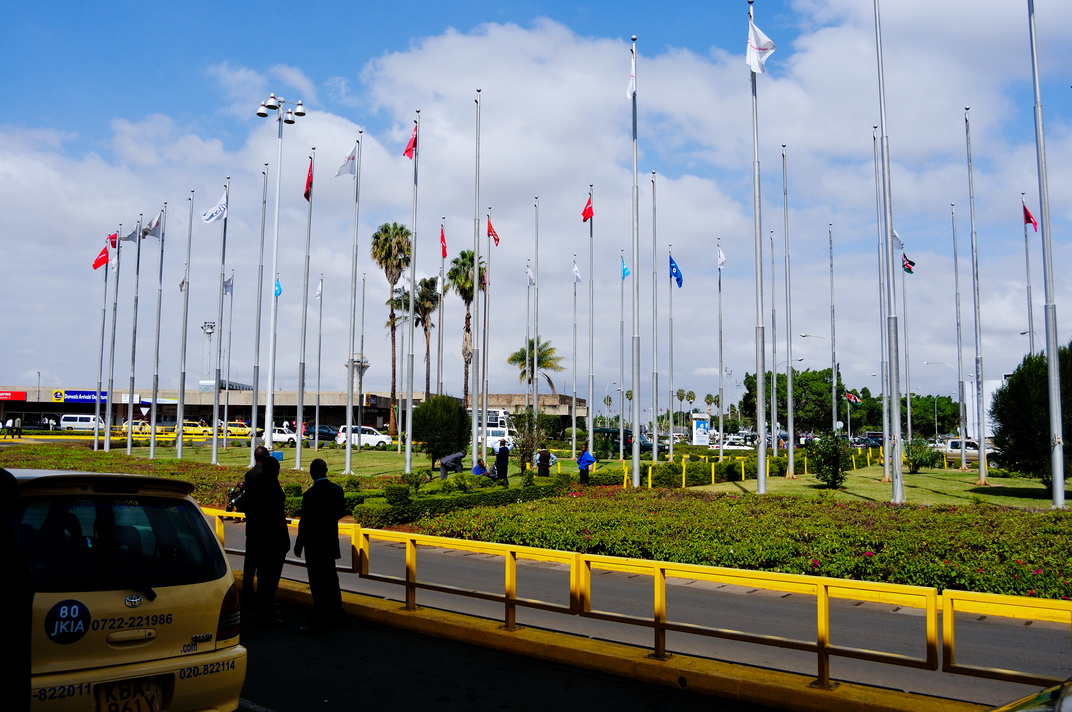
Kenya–Adani JKIA Deal Cancellation in 2026: What Killed the Sh238 Billion Concession and the New Path for Airport Expansion
Kenya–Adani JKIA Deal Cancellation in 2026: What Killed the Sh238 Billion Concession and the New Path for Airport Expansion
The Kenya Airports Authority formally confirmed before the High Court on 24 February 2026 that the proposed Sh238 billion concession with the Adani Group for the modernisation of Jomo Kenyatta International Airport (JKIA) had been terminated. The confirmation closed a politically charged chapter in Kenya's infrastructure story that began in mid-2024 with a privately initiated proposal and ended with a sequence of street protests, court petitions and a fraud indictment in the United States against Adani's founder. For Kenyans in the diaspora who fly through Nairobi several times a year, the cancellation reopened a familiar question: when, and by whom, will JKIA finally be expanded?
How the Concession Was Structured
The Adani proposal envisaged a 30-year build-operate-transfer arrangement under which Adani Airport Holdings would have financed, designed and constructed a second runway, refurbished the existing Unit 1 terminal and built a new passenger terminal. In exchange, the company would have collected airport revenues, including passenger service charges, parking fees, concession fees from retail tenants and ground-handling charges, for the full concession period before transferring the upgraded asset back to the State. The Sh238 billion price tag covered the construction works alone; the recoverable revenue over 30 years would have been considerably higher.
The proposal was submitted under the Public Private Partnerships Act, 2021, which allows the originator of an unsolicited proposal to receive a project development fee and to be considered alongside competitive bidders during a "Swiss challenge" stage. Critics argued the JKIA process was not transparent enough at this stage and that the financial model heavily favoured the developer at the expense of long-term passenger fees.
The Opposition That Built Through 2024 and 2025
Three pressure points combined to make the deal politically unsustainable. The first was a constitutional petition filed at the High Court by the Law Society of Kenya, the Kenya Human Rights Commission and the Kenya Aviation Workers Union arguing that the lease violated articles 10, 201 and 227 of the Constitution on public participation, prudent use of public resources and fair procurement. The second was a strike by aviation workers in September 2024 that briefly grounded JKIA operations. The third was the indictment unsealed in November 2024 in the Eastern District of New York charging Adani founder Gautam Adani and other executives with securities fraud and an alleged bribery scheme in connection with solar contracts in India. While the indictment did not concern JKIA, it severely damaged the political case for handing Kenya's largest airport to the same corporate group.
President William Ruto announced in his State of the Nation address in late 2024 that the JKIA concession, together with a separate Adani transmission line deal with the Kenya Electricity Transmission Company, would be terminated. That announcement, however, was an executive instruction; the formal contractual and administrative steps stretched well into 2026.
The Formal Termination in 2026
In a sworn affidavit filed in February 2026, the Kenya Airports Authority confirmed that the privately initiated proposal had been terminated and that no concession agreement had been executed. The High Court directed the parties to file supplementary responses by 13 March 2026, with petitioners' rejoinders due by 17 April 2026, and scheduled the matter for mention on 6 May 2026 for further directions. The Authority's position was that, with the proposal withdrawn, the petition challenging the proposal had been overtaken by events, although the petitioners pressed for a substantive judgment on the public participation and procurement issues to set a precedent for future projects.
On 3 March 2026, the State Department for Aviation and Aerospace published a fresh tender for the design, development and modernisation of JKIA, this time as an open competitive procurement rather than an unsolicited proposal. The notice invited eligible international and local consortia to submit sealed bids covering a new passenger terminal with a design capacity of at least 20 million passengers per year, a second runway, and the rehabilitation of Unit 1.
What the New Tender Looks Like
The tender uses a hybrid financing model rather than a pure 30-year BOT. The State has signalled that it prefers an engineering, procurement and construction (EPC) contract for the physical works, financed through a blend of multilateral lending and an airport-development levy on departing passengers, with operations remaining under KAA. Where private capital is used, the State has indicated that the concession period will be shorter than the originally proposed three decades. The procurement is being supervised by the Public Procurement Regulatory Authority and is expected to follow the timelines set out in the Public Procurement and Asset Disposal Act, 2015.
The headline numbers in the new tender are modest compared with the original Adani figures. Initial estimates suggest a phased programme of Sh160 billion to Sh200 billion over five to seven years, with the second runway prioritised in phase one because it is the single biggest constraint on JKIA's ability to handle additional flights during the morning and evening peak windows.
What the Cancellation Means for Diaspora Travellers
JKIA handled approximately 8.8 million passengers in 2024, against a nominal terminal design capacity of 7.5 million. The aircraft movements per hour during peak periods have been at or above the limit allowed by the single runway since 2019. For travellers, this manifests as long immigration queues, congested baggage halls and frequent slot-related delays for flights from Europe, the Middle East and South Africa. The cancellation does not, on its own, fix these issues; what it does is restart the clock on a programme that should have begun in 2018 when the Greenfield Terminal proposal was first abandoned.
Diaspora passengers who fly Kenya Airways, Emirates, Qatar Airways, Turkish Airlines, KLM, Air France, British Airways, Lufthansa and Ethiopian Airlines through Nairobi can expect the queueing situation to remain unchanged for the next 18 to 24 months. KAA has signalled that interim works will include additional immigration counters, biometric e-gates for Kenyan and East African Community passport holders, and a re-organisation of the international arrivals corridor in Unit 1, but a step change in capacity will come only with the new runway and terminal.
Why the Decision Matters Beyond Aviation
The collapse of the Adani concession has wider implications for how Kenya structures large infrastructure projects. The Privately Initiated Proposal route under the PPP Act, 2021 was designed to attract unsolicited offers from developers who could move faster than the public sector, but the JKIA experience exposed a credibility problem: any deal that was not preceded by a competitive process attracts a presumption of opacity, particularly when the counterparty is later named in a foreign criminal proceeding. National Treasury officials have indicated they will tighten the PPP regulations during 2026 to require stricter due diligence on counterparties and to introduce a mandatory public participation phase before contract signature.
The judgment, when it comes, is also expected to influence the pipeline of pending PPP transactions, including the Nairobi–Mau Summit road concession, the second Nyali bridge in Mombasa, and the proposed Konza Data Centre. Each of these is now being re-examined against the same constitutional standards that the petitioners invoked in the JKIA case.
The View From the Diaspora
For Kenyans abroad, the Adani saga is more than a domestic governance story. The diaspora contributed Sh587 billion in remittances in 2024 and Sh628 billion in 2025; many of those funds eventually pay for the very tickets that pass through JKIA. The diaspora also includes a large population of investors who participate in M-Akiba, infrastructure bonds and Kenya's Eurobonds. The way the JKIA dispute was handled, including the timely transparency of the High Court process, has shaped diaspora perception of Kenya's infrastructure governance ahead of the next round of sovereign borrowing. A clean, competitive procurement for the new JKIA tender is therefore not only an aviation question but a sovereign credibility question.
What to Watch in the Next Twelve Months
Three milestones will matter most. The first is the High Court mention and any subsequent judgment, which will clarify the standards that future unsolicited PPP proposals must meet. The second is the bid submission deadline for the new JKIA tender, after which the shortlist and financial close will give a realistic timeline for ground-breaking. The third is the parliamentary review of the PPP Act, 2021, which the National Treasury has signalled it will table during the 2026 session.
For authoritative updates, diaspora readers can monitor the Kenya Airports Authority website, the Ministry of Roads and Transport press releases and the National Treasury PPP pipeline. The High Court rulings are published on Kenya Law and remain the authoritative record of the proceedings.
Whatever the final shape of the replacement project, the Adani-JKIA episode has set a higher procedural bar for Kenyan infrastructure. The question for 2026 and 2027 is whether the new tender can clear that bar and finally deliver the runway, the terminal and the passenger experience that East Africa's largest international gateway has needed for the past decade.
More Articles

The Multiparty Era Reforms: Saba Saba, the Repeal of Section 2A and Kenya's Return to Political Pluralism
Jul 02, 2026

Eye Care in Kenya: Cataract, Trachoma and the Long Road to Universal Vision Health
Jul 02, 2026

Shaba National Reserve: Joy Adamson's Last Wilderness and Isiolo's Semi-Desert Safari Gem
Jul 02, 2026

The Rendille People of Northern Kenya: Camel Pastoralism, Clan Traditions and a Culture Under Pressure
Jul 02, 2026

Ukulima Sacco: From Ministry of Agriculture Staff Society to a National Cooperative Open to All Kenyans
Jul 02, 2026